

Introduction
The Dülmen horse, also known as the Dülmen wild horse, represents a significant cultural heritage of Westphalia. Residing for centuries in the Wildpferdebahn (wild horse enclosure) in Merfelder Bruch, these horses are among the oldest German horse breeds. The breed is characterized by its robustness and frugal way of life. This article explores both the historical significance and the characteristic features of the Dülmen horse, which, due to its rarity, has been classified as critically endangered since 1994.
Profile: Dülmen Wild Horse
| Origin | North Rhine-Westphalia, Germany |
| Main breeding area | Merfelder Bruch in the Dülmen region |
| Distribution | Locally confined to the Merfelder Bruch, but known worldwide |
| Lifespan | 25 to 30 years |
| Size | Average 125 to 135 cm (pony breed) |
| Weight | Approximately 300 to 400 kg |
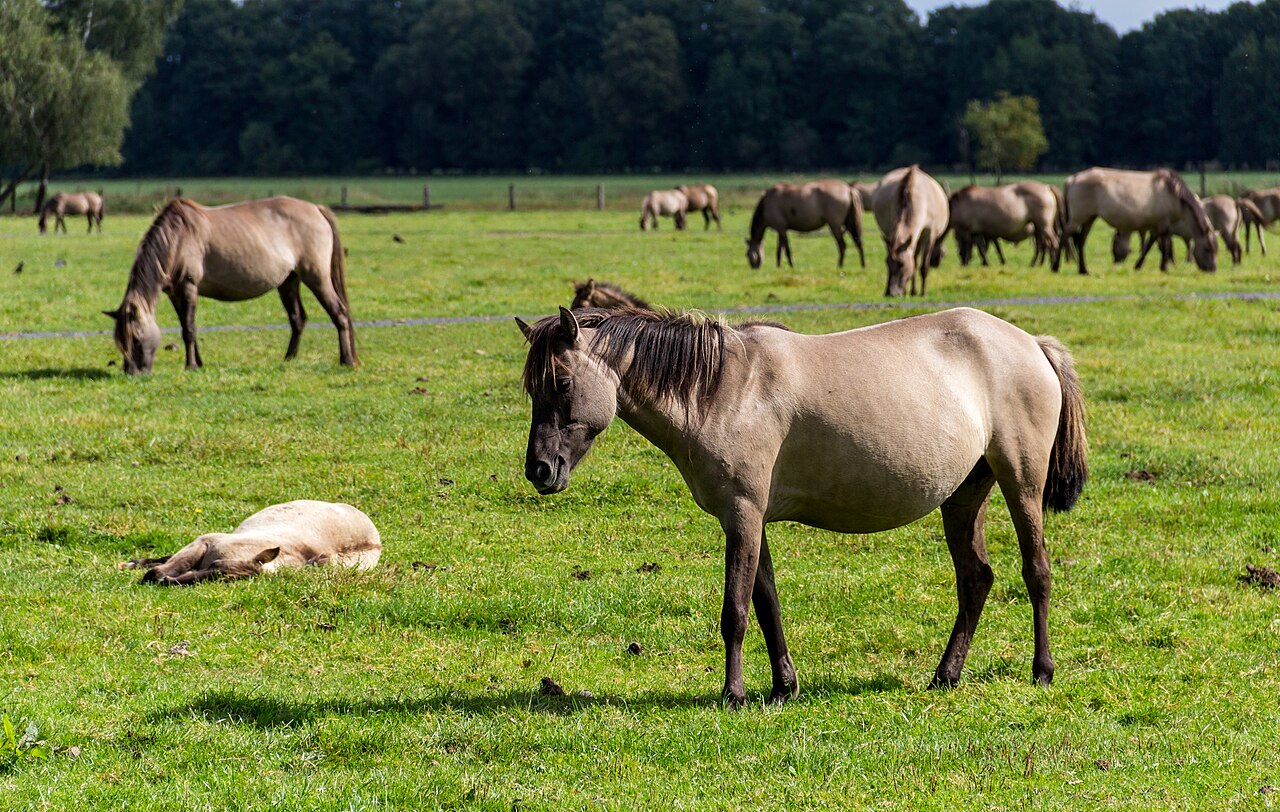
| Color | Mainly grey or brown dun with a characteristic dorsal stripe, more rarely grey or chestnut |
| Type | Pony |
| Temperament | Gentle, attentive, and quick to learn |
| Body | Compact with strong musculature, sloping shoulder, moderately long neck, and strong limbs |
| Suitable for | Family horse, children's riding, recreational riding |
| Keeping and care | Living in the wild in Merfelder Bruch, regular health checks and monitoring, adapted hoof care and nutrition |
Origin and History of the Dülmen Horse Breed
Early Records and Development
The Dülmen horses were first mentioned in historical records in 1316, when Herrman de Merfeld and Johannes de Lette secured hunting, fishing, and wild horse rights. Over the centuries, the breed has undergone natural selection, strengthening its robustness in the wild environment of Merfelder Bruch. Its breeding history is closely linked to the geographical and social changes in Westphalia.
Efforts for the Preservation and Conservation of the Breed
Extensive conservation measures were taken after it was recognized in 1847 how vital a protected habitat was for these horses. Duke Alfred von Croÿ then captured twenty wild horses and established a reserve of 132 acres in Merfelder Bruch to save the breed from extinction. This commitment is considered a turning point for the Dülmen horses, which are listed as critically endangered on the Red List of endangered farm animal breeds.
In the 19th century, Dülmen horses experienced a drastic reduction in their habitat due to agricultural intensification. Duke Alfred von Croÿ's efforts were crucial for the breed's salvation; in 1847, he enclosed the remaining wild herd in Merfelder Bruch and offered them protection. He later integrated another 200 Emscherbrücher horses into the herd, which contributed to strengthening the population. Controlled breeding and the annual selection and auctioning of young stallions serve not only genetic diversity but also the maintenance of the typical appearance and behavior of Dülmen horses.
Historical Significance and Cultural Importance
The Dülmen wild horses are not only a striking symbol of Germany's natural history but also an important part of the cultural heritage of the Dülmen region. Their existence since the 14th century underscores their deep historical roots and significance.
The cultural significance of the Dülmen wild horses is reflected in local and national appreciation. The annual wild horse catch, a traditional event that attracts many visitors, is a vivid expression of regional traditions and strengthens regional identity. This event not only contributes to the region's economy but also promotes awareness and appreciation for nature conservation. The horses are thus a symbol of pride and the connection of people to their natural environment.

Physical Characteristics of the Dülmen Horse
Coat Color and Pattern
The typical appearance of the Dülmen horse predominantly features grey or brown dun tones, adorned with a characteristic dorsal stripe that runs from the mane to the tail. Other colors occur less frequently; however, greys are extremely rare, and chestnuts are very uncommon. Additionally, dark stripes, similar to zebra stripes, may appear on the legs, emphasizing a wild pattern. White markings are undesirable in this breed.
Conformation and Body Structure
The Dülmen horse exhibits a rectangular body structure with a weakly defined wither. The horse's shoulder is sloping, which positively affects its agility. The neck is moderately long and slightly arched. The head and ears are medium-sized, with a straight or slightly concave nasal bridge being particularly noticeable. The hindquarters of the Dülmen horse are strongly muscled and well-developed, highlighting their robustness and performance capability.
Further specifications of the body structure include a broad forehead and small, hard, and almost round hooves. These characteristics are essential for survival in their semi-wild habitat. The somewhat existing underneck and the strong build of the Dülmen horse are the result of natural selection and adapted breeding efforts aimed at preserving and strengthening the breed's original characteristics.
Size and Proportions
The average height of Dülmen horses at the withers is between 125 and 135 cm, clearly classifying them as a pony breed. Despite their small stature, they display impressive compactness and resilience. These proportions are ideal for their way of life in a nature reserve and underscore their efficiency as feed converters.
The proportionality and compactness of the Dülmen horse support its ability to easily withstand harsh weather conditions and natural challenges. Their size also makes them a preferred choice for children's riding horses and for riders looking for a robust yet manageable horse. Their physical dimensions are a key element contributing to the popularity of Dülmen horses in various equestrian disciplines and as family horses.

Temperament and Behavior of the Dülmen Horse
Dülmen horses are known for their good-natured and friendly disposition. They exhibit natural calmness while being lively and attentive to their surroundings. These qualities make them particularly suitable as family horses and for interaction with children. Their peaceful and uncomplicated nature facilitates handling and care by humans.
Intelligence and Trainability
Dülmen horses are considered particularly quick to learn and adaptable. They can quickly learn new commands and tasks, which underlines their trainability. This intelligence makes them versatile work and leisure horses that can be successfully used in various disciplines.
Thanks to their high intelligence and ability to adapt well to new situations, Dülmen horses are particularly suitable for training purposes. They are not only easy to train but also show great enthusiasm when learning new skills. These characteristics are evident in the traditional use of the breed in agriculture and even in mining in earlier times, where quick and effective learning was vital for survival.
Robustness and Adaptability
The robust constitution of Dülmen horses allows them to thrive under various climatic and ecological conditions. Their pronounced resistance to diseases and their ability to get by with minimal resources make them particularly suitable for harsh working conditions or difficult environments.
Their physical robustness and genetic adaptability have been shaped over centuries by living in the semi-wild environment of Merfelder Bruch. This has endowed Dülmen horses with strong health and the ability to adapt to a wide range of circumstances. The horses are known for their ability to survive well even under less ideal conditions, making them a symbol of survivability and endurance.
Breeding History and Development of the Dülmen Horse
The Dülmen horses, one of the oldest German horse breeds, were first mentioned in historical documents in 1316. Their preservation was particularly promoted in the 19th century through the initiative of Alfred von Croÿ, who settled twenty wild horses in the Merfelder Bruch area in 1847. This area became the main breeding ground due to its expansion to around 350 hectares. Throughout the 20th century, the breed was purposefully improved by crossbreeding with pony breeds such as Welsh ponies, Mongolian ponies, Exmoor ponies, Huculs, and Polish Koniks to diversify the population and minimize the effects of inbreeding.
Early Breeding Programs
During the founding period of Dülmen horse breeding in Merfelder Bruch, wild horses were captured by Alfred von Croÿ, and a protected habitat was created. This critical measure was crucial for the survival and further development of the breed.
Conservation Efforts and Management
The Annual Wild Horse Catch and Its Significance
The annual wild horse catch is a central traditional event that significantly contributes to the preservation and management of the Dülmen wild horses. Young stallions are caught from the herd and later auctioned off to ensure they go to responsible hands. This event helps to maintain the genetic diversity of the herd and minimize the risk of serious injuries from dominance fights.
Health Checks and Monitoring
Regular health checks and monitoring are invaluable for maintaining the vitality of the Dülmen wild horses. Experts conduct thorough inspections to detect early signs of illness or injury. This proactive management is crucial for the long-term health and well-being of the horses.
Further examinations and measures include monitoring the horses' nutrition and general health status. Such checks are particularly important during coat changes, as the horses are more susceptible to nutrient deficiencies and related diseases at this time. Regular observation helps to identify potential problems early and initiate appropriate treatments to ensure the health and performance of the wild horses.
Genetic Diversity and Prevention of Inbreeding
To preserve the genetic diversity of the Dülmen wild horses and minimize the risk of inbreeding, targeted measures such as the wild horse catch are carried out. By removing and rehoming individual young stallions, it is ensured that the herd remains healthy and vital. This is fundamental to maintaining the biological diversity and robustness of the horses.
The preservation of genetic diversity is essential for maintaining the health of the horse population. By preventing inbreeding, genetic defects and a narrowing of the gene pool are avoided. Research and careful documentation of each animal's genealogy are crucial to prevent breeding overlaps and ensure diversity within the population. This also guarantees the herd's adaptability to changing environmental conditions.
Care, Health, and Diseases of Dülmen Wild Horses
Hoof Care and Regular Checks
Hoof care plays a crucial role in the health and mobility of Dülmen wild horses. Despite their semi-wild state, their hooves are regularly checked for injuries and wear. This preventative measure helps to prevent serious mobility problems and ensures the well-being of the animals in their natural environment.
Robust Constitution and Natural Immunity
Dülmen wild horses are characterized by an extraordinary robustness and natural immunity, which they have developed over centuries. Their adaptability to the harsh environment in Dülmen contributes to generally strong health and makes them resistant to many common horse diseases.
The robust constitution of Dülmen wild horses is not only a sign of their evolutionary adaptation but also a decisive factor for their survival in the wild. Their ability to feed on natural fodder, which includes a variety of grasses and herbs, not only supports their physical health but also promotes holistic vitality. This natural diet spectrum is fundamental to their immunity and their ability to deal with locally prevalent diseases.
Common Health Problems and Treatment
Despite their general resilience, Dülmen wild horses are not immune to diseases such as 'kotwasser' (loose droppings), laminitis, or mud fever. When such diseases occur, early detection and professional treatment are crucial to minimize the animals' suffering and restore their health as quickly as possible.
Treating these health problems requires specialized knowledge and experience to ensure that interventions are effective and do not worsen the animals' condition. In particular, the treatment of laminitis, an inflammatory disease of the hooves, can be complex and requires immediate and expert intervention. The use of adapted care products and cooperation with veterinary professionals play a decisive role in maintaining the health of this unique horse breed.
The Importance of Nature Conservation and Protective Measures
Preservation of Genetic Diversity and Natural Behavior
The preservation of the genetic diversity and natural behaviors of Dülmen wild horses is crucial for the continued existence of this unique horse breed. Through targeted measures such as the annual wild horse catch, it is ensured that the herd structure is maintained and inbreeding is avoided. This contributes to the preservation of a robust and healthy population.
Raising Awareness and Promoting Education
Raising public awareness and educating the public about Dülmen wild horses are essential steps to ensure the long-term protection and appreciation of these animals. Events such as the wild horse catch and excursions to the Wildpferdebahn in Merfelder Bruch introduce visitors to the importance of these horses and conservation measures.
One of the most important measures for raising awareness is the involvement of schools and educational programs specifically designed to raise awareness of the Dülmen wild horses' need for protection and their ecological role. For example, the core curriculum could include visits to the reserve, where children and young people learn directly from biologists and understand the importance of biodiversity conservation.
Securing the Future of Dülmen Wild Horses
To secure the future of the Dülmen wild horses, continuous efforts in care, genetic monitoring, and sustainable herd management must be undertaken. Supported by the Duke of Croÿ and conservation initiatives, a balance between preservation and a natural way of life is sought, which is essential for the survival of these wild jewels.
Long-term protection efforts also include securing the financing of these measures. This can be achieved through partnerships with environmental organizations, European Union funding programs, and private sponsors. Additionally, effective monitoring strategies to oversee the health and welfare of the animals are essential to be able to react in a timely manner to potential threats.
Conclusion
The Dülmen wild horses are characterized by a unique way of life in the wild and their robust health, which they have developed over centuries in the rugged landscape of North Rhine-Westphalia. Their preservation, supported by the annual wild horse catch and continuous protection measures, underlines the importance of these animals for biodiversity and Germany's cultural heritage. Awareness and appreciation of their wild beauty and ecological role are crucial for the continued protection of this fascinating horse breed.
Questions regarding the topic: The Dülmen Wild Horses
1. Can one see the wild horses in Dülmen?
Yes, visitor groups of 10 or more people have the opportunity to experience the wild horses in their natural environment. A guided tour by an expert allows visitors to observe the animals and learn more about them. These tours take place Monday through Friday by prior appointment and last approximately one hour. It is important to note that dogs are not permitted.
2. When are the wild horses in Dülmen caught?
The wild horse catch is an annual tradition that has taken place in the Merfelder Bruch since 1907. This event is held on the last Saturday of May. In 2024, the wild horse catch falls on Saturday, May 25th. During this event, some of the wild horses are caught and used for various purposes.
3. Are the Dülmen wild horses fenced in?
Yes, the Dülmen wild horses live in a fenced area called Merfelder Bruch, which covers approximately 400 hectares. Within this area, the horses can live relatively freely and are largely left to themselves. The natural environment of the Merfelder Bruch offers the wild horses a varied landscape, consisting of meadows, heathlands, coniferous forests, and oak stands.
4. How many wild horses are there in Dülmen?
There are approximately 300 to 400 Dülmen wild horses living in Dülmen. This population is largely uninfluenced by humans and has settled in the Merfelder Bruch, a nature reserve near Dülmen.
5. Where are the wild horses in Dülmen?
The wild horses live in the Merfelder Bruch, a nature reserve west of Dülmen in Münsterland. This area serves as a natural habitat for the Dülmen wild horses and offers them sufficient space and resources to live and thrive.
6. How much do Dülmen wild horses cost?
Prices for Dülmen wild horses vary, but they can cost between 2,500 and 3,000 Euros. Due to their rarity and the threat of extinction, only a few animals are available for sale.
7. Are Dülmen wild horses real wild horses?
Biologically speaking, Dülmen wild horses are no longer true wild horses. Since the population is isolated and does not receive genetic diversity from other populations, human intervention is necessary to manage the population and maintain genetic diversity. An example of this is the annual wild horse catch, where some of the animals are caught and sold.
8. How big is a Dülmen wild horse?
The size of a Dülmen wild horse typically ranges between 125 and 135 centimeters at the withers. This size clearly classifies them as a pony breed. Despite their comparatively small body size, they exude remarkable compactness and resilience. These characteristics are ideal for their life in the wild, especially in the Merfelder Bruch, where they move.
9. What breed are the Dülmen wild horses?
The Dülmen wild horses are a fascinating pony breed whose origins date back to the earliest times. Native to the Merfelder Bruch in Westphalia, an area with a rich history and diverse wildlife, these horses have adapted and evolved over centuries. This adaptability to their natural environment has contributed to them being one of Germany's oldest and most original horse breeds.
10. Why are there no wild horses left?
The original wild horses are largely extinct, primarily due to habitat loss, interbreeding with domestic horses, and hunting by humans. However, there are now efforts to protect and reintroduce wild horses in various parts of the world.
11. How far do wild horses walk in a day?
Wild horses must travel long distances in their natural habitats to find sufficient food and water. They typically move for about 12-16 hours a day, covering about 30 kilometers at a walk.
12. What enemies do wild horses have?
The natural enemies of wild horses vary depending on their habitat. In some areas, these include wolves, tigers, and larger predators. The life expectancy of wild horses is usually between 25 and 30 years. The gestation period is almost one year, and wild horses usually have one or sometimes two foals.
13. Why are there no wild horses in Germany?
While there are no wild horses in Germany in the strict sense, efforts are being made to reintroduce wild horses in protected areas. Przewalski's horses are a steppe species and prefer very barren and uninhabited habitats. Therefore, there are no natural conditions for wild horses in Germany.
14. How much do wild horses weigh?
Przewalski's wild horses differ externally from domestic horses and typically weigh about 200-300 kilograms, about half the weight of a domestic horse. They are smaller and more compact, which helps them adapt to barren habitats.
15. Where do the last wild horses live?
The last wild horses, known as Przewalski's horses, live in the steppes of Mongolia. These horses are considered the last surviving wild horses and are the subject of intensive conservation efforts to ensure their survival.
16. How many kilometers does a wild horse walk?
The daily mileage of a wild horse depends on various factors such as ground conditions and the animals' movement patterns. On average, wild horses cover about 10-15 kilometers per day, unless there are special circumstances that cause them to make longer journeys.
17. What are the wild horses in the USA called?
The wild horses in North America are called Mustangs. Their ancestors were domestic horses introduced to the New World by Spanish conquistadors from the 16th century onwards. Biologically speaking, Mustangs are not considered true wild horses as they are descended from domesticated horses.
18. What else are wild horses called?
Wild horses are also known by various other names that reflect their wild nature and origins in nature. In addition to the well-known Mustangs that roam the vastness of North America, Exmoor ponies are also often referred to as "wild horses." These ponies originate from Exmoor in Great Britain, one of the country's roughest and most untouched landscapes. They have many characteristics commonly associated with wild horses, although they are actually domesticated ponies.
19. Can Dülmen wild horses be ridden?
Yes, Dülmen wild horses can be ridden. They are attentive, eager to learn, and enjoy work, which makes them ideal riding partners. However, it is important to ensure proper training and treatment to guarantee the horses' well-being.
20. Who owns the wild horses in Dülmen?
The wild horses in the Merfelder Bruch near Dülmen belong to the Duke of Croy. This area serves as a natural habitat for the horses, where they can move largely freely.
Sources:
- News on the topic: Dülmen Wild Horse
- Duke of Croÿ's Administration: Wild Horses in the Merfelder Bruch
- City of Dülmen: Wild Horses in the Merfelder Bruch
- Philipp Scholz: Westfalen regional: Wild Horses in the Merfelder Bruch (Westfalen regional, Landschaftsverband Westfalen-Lippe)
- Valerie Porter, Lawrence Alderson, Stephen J.G. Hall, D. Phillip Sponenberg (2016). Mason's World Encyclopedia of Livestock Breeds and Breeding (sixth edition). Wallingford: CABI. ISBN 9781780647944.
- The Endangered Livestock Breed of the Year 2014 (in German). Society for the Conservation of Old and Endangered Domestic Animal Breeds. Archived 20 March 2019.
- Margret Bunzel-Drüke, Carsten Böhm, Peter Finck, Gerd Kämmer, Rainer Luick, Edgar Reisinger, Uwe Riecken, Johannes Riedl, Matthias Scharf, Olaf Zimball: „Wilde Weiden“. Praxisleitfaden für Ganzjahresbeweidung in Naturschutz und Landschaftsentwicklung. 2nd edition. Working Group for Biological Environmental Protection in the District of Soest, Bad Sassendorf-Lohne 2009, ISBN 978-3-00-024385-1.
Other horse breeds:
- Arabian Horses
- Icelandic Horse
- Friesian Horse
- Palomino Horse
- Andalusian Horse
- The Norwegian Fjord Horse
Editorial Guidelines of Horse Vitality Company
At Horse Vitality Company, we create every article according to strict quality standards, relying on reputable sources and scientific research. Our editors are proven experts in equine health and provide you with well-founded, trustworthy information.
Expertise and Quality Assurance
- Qualified Authors: Our editors possess extensive specialized knowledge in equine health and animal care.
- Double Check: Each article is additionally reviewed by a second expert to ensure accuracy and relevance.
Sources and Transparency
- Reputable Sources: We only use trustworthy sources and scientific studies to substantiate the content.
- Disclosure: We disclose potential conflicts of interest and ensure transparency.
Reader-Friendliness and Actuality
- Reader-Friendly Preparation: Our content is continuously optimized to make it as understandable and accessible as possible.
- Actuality: We regularly review our articles and update them as needed to ensure they are always up-to-date.
Interaction and Feedback
- Reader Orientation: Our goal is to provide you with initial guidance. For individual health or care questions, we recommend consulting a veterinarian or animal naturopath.
- Feedback Opportunity: We invite our readers to provide feedback and ask questions. Your suggestions help us continuously improve our content and tailor it to your needs.
These guidelines ensure that the content of Horse Vitality Company always meets the highest standards of expertise, authority, and trustworthiness.


