

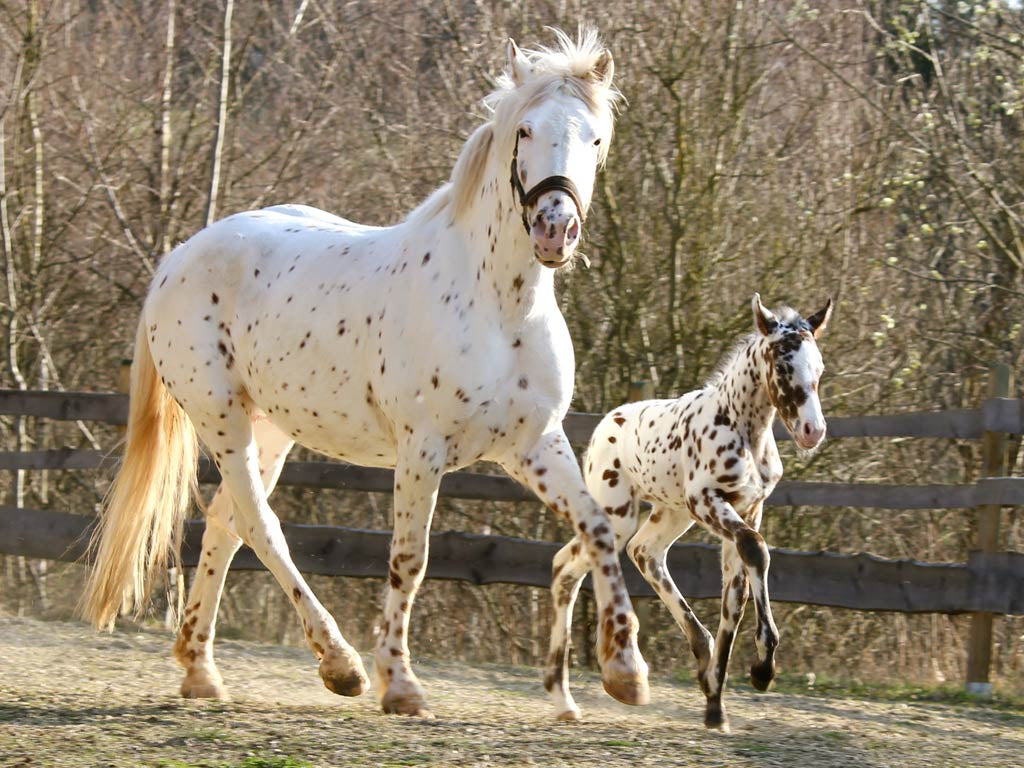
The Knabstrupper: A Traditional Horse Breed with Striking Coat Colors
The Knabstrupper horse breed is characterized not only by its striking coat pattern but also by its friendly and willing temperament. As Denmark's oldest horse breed, it has a fascinating history dating back to the 16th century. In this informative blog post, you'll learn everything you need to know about the origin, appearance, and typical characteristics of this impressive breed. Whether you're interested in dressage, show jumping, eventing, or a loyal pleasure horse – the Knabstrupper could be just the right horse for you! Happy reading!

Profile: Knabstrupper Horses
| Origin | Denmark |
| Main Breeding Area | Denmark, Germany |
| Distribution | Europe, mainly Denmark and Germany |
| Bred since | 1536 |
| Life Expectancy | 25 - 30 years |
| Height | 150 to 160 cm |
| Weight | 500 - 650 kg |
| Color | Appaloosa spotting |
| Type | Warmblood |
| Character | Open, friendly, intelligent, willing to work, sensitive |
| Body |
Strong, compact build; large and friendly eyes, Roman nose; |
| Suitable for | Leisure, show jumping, dressage, competition |
| Keeping and Care |
Undemanding to keep; Plenty of exercise and movement |
History and Origin of the Knabstrupper
Origins of the Frederiksborg
The Knabstrupper has its origins in Denmark and descends from the Frederiksborg. This horse breed was bred at the royal stud farm Frederiksborg, founded in 1536, and is characterized by its Appaloosa spotting. Frederiksborg horses were often crossed with Spanish bloodlines, which further shaped their unique character and appearance.
Development of the Breed
The targeted breeding of Knabstruppers began at the Knabstrup stud farm, initiated by Major Villars Lunn. However, breeding suffered greatly from a fire in 1891, which killed many horses. In 1952, breeding was re-established with the remaining horses, and finally, in 1972, the official Knabstrupper breeding association was founded in Denmark.
The development of the Knabstrupper breed was a challenge. After the devastating fire, breeders had to work carefully with the little remaining genetic material, which made the survival and preservation of the breed difficult. To ensure the diversity and health of the breed, horses from other Spanish breeds such as PREs or Lusitanos were occasionally crossed in. These measures helped to restore the vitality of the Knabstrupper and contributed to the fact that the breed today exists in both baroque and sporty types.
Knabstrupper: Physical Characteristics
Build: Baroque and Sporty Type
The Knabstrupper can be divided into two different breeding directions: the baroque and the sporty type. The baroque type has a compact and powerful build, while the sporty type is characterized by the infusion of foreign blood and corresponds to the modern sport horse. It is important that only a baroque Knabstrupper bred without the infusion of foreign blood for three generations counts as purebred.
Coat Colors: Appaloosa Spotting, Leopard, Few Spot, Blanket, Snowflake, and Solid
The characteristic coat color of the Knabstrupper is Appaloosa spotting, which comes in five variations: Leopard (white base coat with black or brown spots), Few Spot (completely white), Blanket (dark coat with white areas on the back and croup), Snowflake (dark coat with white spots), and Solid (genetically predisposed Appaloosa spotting that does not appear).
The variety of coat colors in the Knabstrupper is particularly striking and attracts attention. Each coat variant has its own unique characteristics that emphasize the special character of this breed. Especially the Leopard and Few Spot are rare and impressive sights. It is important to know that light-colored horses like the Few Spot are particularly sensitive to sunlight and are often prone to sunburn.
Knabstrupper: Character and Temperament
Friendly and People-Oriented
The Knabstrupper is naturally very friendly and people-oriented. It likes to build a close bond with its owner and values the company of people. This horse breed is known for being loyal and maintaining a harmonious relationship with its humans, which makes a Knabstrupper a wonderful companion.
Open and Curious
Another outstanding quality of the Knabstrupper is its openness and curiosity. These horses bravely approach new situations and handle them calmly. They are always eager to explore new things and quickly learn to adapt to different environments.
Thanks to their open and curious nature, Knabstruppers perform well in various disciplines, where they demonstrate how adaptable and willing to learn they are. Their courage and eagerness to explore make them ideal horses for riders who enjoy trying new things and seeking challenges.
Intelligent and Eager to Learn
The Knabstrupper is known for its intelligence and eagerness to learn. Their clever minds allow them to quickly understand new tasks and adapt to new requirements. These qualities make them excellent partners in training and education.
Knabstruppers are very attentive and focused at work. They are always ready to please and show a high willingness to work. Their pronounced intelligence and eagerness to learn make them excellent candidates for demanding disciplines such as classical dressage and haute école.
Sensitivity and Emotional Intelligence
Knabstruppers can be quite sensitive and therefore require a gentle, patient, and understanding approach. This sensitivity makes them receptive to their rider's emotional state and helps them quickly recognize subtle signals.
Due to their high emotional intelligence, these horses are able to form a deeper connection with their human. They often react to the smallest changes in their rider's body language and mood, which makes them empathetic and attentive companions.
Balanced Temperament
A particularly positive characteristic of the Knabstrupper is its balanced and calm temperament. These horses are not easily flustered and keep a cool head even in stressful situations.
The ability to remain calm in hectic or stressful environments makes the Knabstrupper a reliable partner in both leisure and competition settings. Their calm nature significantly contributes to their rider also being able to relax and feel comfortable.
The Knabstrupper: Suitable for Children and Beginners
A Knabstrupper can be a challenge for children and beginners due to its high sensitivity. This horse breed requires an experienced rider who has the ability to correctly interpret the horse's behavior and respond appropriately to its needs. Despite their friendly and loyal character, Knabstruppers are not necessarily ideal for inexperienced riders, as they require a calm, patient, and understanding hand. For beginners or children who are just starting to ride, calmer and more robust horse breeds might be more suitable.
Special Needs and Requirements
A Knabstrupper places special demands on its keeping and care. Due to its intelligent and willing-to-work nature, it needs not only regular physical but also mental challenges. Species-appropriate keeping includes sufficient exercise and social contact with other horses. Furthermore, careful and understanding handling is particularly important due to its sensitivity to ensure the horse's well-being and build a close bond with the owner.
Health and Longevity of Knabstrupper Horses
Average Life Expectancy: 25-30 Years
A Knabstrupper can reach an impressive life expectancy of 25 to 30 years. This makes it a long-term companion that can accompany you for many years. This horse breed is characterized by its robustness and resilience, which contributes to its longevity.
Breed-Specific Diseases: Equine Recurrent Uveitis and Sunburn
Like all horse breeds, the Knabstrupper can also be prone to certain breed-specific diseases. Particular mention should be made here of equine recurrent uveitis and sunburn. Both conditions, if not recognized and treated in time, can have serious health consequences for your horse.
Equine recurrent uveitis occurs chronically and in episodes and can lead to blindness. A Knabstrupper often has a so-called "human eye," which is susceptible to this disease. Sunburn particularly affects the light skin in pink areas, which typically occur on the muzzle and nostril areas. These areas are more sensitive to sunlight and therefore require special protection.

Care and Keeping: Recommendations for Knabstruppers
Species-Appropriate Keeping: Space, Socialization, and Protection
A Knabstrupper needs sufficient space to move freely, as horses are naturally steppe animals. You can keep it either in an open stable with shelter, as free of mud as possible, which offers protection from extreme weather conditions, or in a stall, combined with daily multi-hour stays in a large paddock or pasture. Furthermore, this horse breed is extremely sociable and needs contact with other horses to feel comfortable.
Species-Appropriate Feeding: Nutrient-Rich Diet and Individual Needs
Knabstruppers are generally easy keepers and excellent feed converters. They get by with little and sparse feed and therefore need a diet that takes this characteristic into account. You should ensure that your Knabstrupper receives a sufficiently large amount of high-quality roughage such as hay or haylage. If concentrated feed is needed, adjust the amount to your horse's energy requirements. Your veterinarian can help you determine the need for mineral feed.
Feeding a Knabstrupper requires special attention because they have a robust metabolism and get by with a small amount of feed. Overfeeding can lead to health problems. The main focus should be on providing high-quality roughage. If necessary, concentrated feed can also be added to support, but always in moderate amounts, according to the energy requirement. Specific mineral feed may be necessary to meet all nutrient needs, so consulting a veterinarian or feed advisor is advisable.
Gaits and Disciplines for Knabstruppers
Walk, Trot, and Canter
The Knabstrupper has the three basic gaits: walk, trot, and canter. This horse breed is characterized by particularly light-footed and ground-covering movements that come into their own in all three gaits. The walk is even and calm, the trot rhythmic, and the canter dynamic and supple, which gives the Knabstrupper an elegant appearance.
Suitable Disciplines: Dressage, Show Jumping, Eventing, and Pleasure Riding
Thanks to their intelligence and eagerness to collect, Knabstruppers are excellently suited for classical and baroque dressage up to haute école. Their joy of movement, agility, and maneuverability also make them perfect partners in show jumping and eventing. They are also very popular as pleasure horses due to their friendly and balanced character.
In dressage, the Knabstrupper impresses with its ground-covering movements and its ability to concentrate. In show jumping, they demonstrate their agility and high jumping ability. In eventing, they benefit from their maneuverability and endurance. For the pleasure rider, the Knabstrupper is an ideal companion, impressing with its sensitivity and balance. However, remember that these horses need an experienced rider to fully develop their potential and ensure harmonious handling.
Conclusion
The Knabstrupper, with its robust yet sporty build, friendly, willing-to-work, and sensitive character, as well as its balanced temperament, is excellently suited for disciplines such as dressage, show jumping, eventing, and also as a pleasure horse. If you are looking for a versatile and loyal partner in equestrian sport, the Knabstrupper could be just right for you. With a life expectancy of 25 to 30 years and robust health, it is also a long-term asset for any horse lover.
Questions about the Knabstrupper horse breed
1. Are Knabstruppers suitable for beginner riders?
Knabstruppers are very well suited for beginner riders because they have a calm and balanced temperament. These horses are known for their patience and friendliness, which makes handling and learning easier. Their versatile abilities also make them attractive for various riding disciplines, helping beginners to try out different riding styles.
2. What are Knabstruppers particularly suitable for?
Knabstruppers are versatile horses that are particularly suitable for dressage, show jumping, and pleasure riding. Their calm nature and willingness to learn also make them ideal for therapy work with people. In addition, due to their striking coat pattern, they are popular show horses and attract many eyes at events.
3. What is the origin of the name "Knabstrupper"?
The name "Knabstrupper" originates from the Danish stud farm Knabstrup, where this horse breed was developed in the 19th century. The breed emerged from crossing a Spanish mare with native Danish horses, resulting in their distinctive spotted coat. This historical connection has shaped the breed's name and recognition.
4. Are Knabstruppers warmbloods?
Yes, Knabstruppers are warmbloods, meaning they possess a mix of traits from thoroughbreds and cold-blooded horses. They combine the strength and endurance of cold-bloods with the agility and temperament of thoroughbreds. This combination makes them particularly versatile and capable in various riding disciplines.
5. Which horse is best for beginners?
For beginners, horses with a calm and balanced temperament are best suited, such as Haflingers, Quarter Horses, or Icelandics. These breeds are known for their reliability and good nature, which makes the learning process easier and safer. An experienced and well-trained horse is also crucial to provide beginners with a positive start in riding.
6. How much weight can a Knabstrupper carry?
A Knabstrupper can generally carry about 15 to 20 percent of its own body weight. As these horses weigh between 500 and 700 kilograms on average, they can easily carry riders and loads of about 75 to 140 kilograms. It is important to observe the load limit to ensure the health and well-being of the horse.
7. What is the difference between an Appaloosa and a Knabstrupper?
The main difference between an Appaloosa and a Knabstrupper lies in their origin and breeding history. Appaloosas come from the USA and are known for their speed and versatility, especially in Western riding. Knabstruppers, on the other hand, originate from Denmark and are known for their striking coat pattern and their suitability for dressage and show jumping. Both breeds have spotted coat patterns, but differ in their areas of use and characteristics.
8. Which horse breed is the largest in the world?
The largest horse breed in the world is the Shire Horse, known for its impressive size and strength. Shire Horses can reach a shoulder height of over 1.80 meters and often weigh more than a ton. This cold-blooded breed was originally bred for heavy agricultural work and for pulling heavy loads.
9. Can Knabstruppers be used in show jumping?
Yes, Knabstruppers are well-suited for show jumping, as they possess good jumping ability and athleticism. Their versatility and calm temperament make them reliable partners in this discipline. They can be successfully used in both amateur and professional show jumping.
10. What is the life expectancy of a Knabstrupper?
With good care and species-appropriate husbandry, a Knabstrupper can reach a life expectancy of approximately 25 to 30 years. Their robust health and longevity contribute to their ability to serve as loyal companions for many years. Regular veterinary check-ups and a balanced diet are crucial for a long and healthy life.
11. Which horse breed has black spots on its coat?
Horses with black spots on their coat are often Appaloosas or Knabstruppers. Both breeds are known for their characteristic, spotted coat patterns, which can appear in various patterns and colors. These striking coat markings make them particularly unique and easily recognizable.
12. To which breed does Pippi Longstocking's horse belong?
Pippi Longstocking's horse, Little Old Man, is often depicted as a spotted horse reminiscent of a Knabstrupper. In the books and films, the exact breed is not specified. However, the distinctive spots and friendly nature of the horse fit well with the characteristics of a Knabstrupper.
13. Are Knabstruppers beginner-friendly?
Knabstruppers are beginner-friendly because they have a calm and balanced temperament. Their patience and friendliness make them ideal for inexperienced riders and children. Their versatility allows beginners to try out various riding disciplines and gain confidence.
14. Which horse breeds are considered cold-bloods?
Cold-blooded breeds include horses such as Shire Horses, Clydesdales, Percherons, and Belgian Draught Horses. These breeds are known for their large body mass, strength, and calm demeanor. They were traditionally bred for heavy work in agriculture and for pulling loads.
15. What are horses with spotted coats called?
Horses with spotted coats are often referred to as Appaloosas or Knabstruppers. These breeds are known for their characteristic, spotted coat patterns, which can appear in various patterns and colors. Their striking coat markings make them particularly unique and easily recognizable.
Sources:
- Commons: Knabstrupper
- Wikipedia: Knabstrupper
- News on the topic: Knabstrupper
- Association for the Preservation and Breeding of the Baroque Original Knabstrupper
- Breeding Program for the Knabstrupper Breed of the German Horse Breeding Association e.V. (ZfdP), German Horse Breeding Association e.V.
Other Horse Breeds:
Editorial Guidelines of Horse Vitality Company
At Horse Vitality Company, we create every post according to strict quality standards and rely on reputable sources and scientific research. Our editors are proven experts in the field of equine health and provide you with well-founded, trustworthy information.
Expertise and Quality Assurance
- Qualified Authors: Our editors have extensive expertise in equine health and animal care.
- Double Check: Every article is additionally reviewed by a second expert to ensure accuracy and relevance.
Sources and Transparency
- Reputable Sources: We only use trusted sources and scientific studies to substantiate the content.
- Disclosure: We disclose potential conflicts of interest and ensure transparency.
Reader-Friendliness and Actuality
- Reader-Friendly Preparation: Our content is continuously optimized to make it as understandable and accessible as possible.
- Actuality: We regularly review our articles and update them if necessary to ensure they are always up-to-date.
Interaction and Feedback
- Reader Orientation: Our goal is to provide you with initial guidance. For individual health or care questions, we recommend consulting a veterinarian or animal naturopath.
- Feedback Option: We invite our readers to provide feedback and ask questions. Your suggestions help us to continuously improve our content and tailor it to your needs.
These guidelines ensure that the content of Horse Vitality Company always meets the highest standards of expertise, authority, and trustworthiness.


