

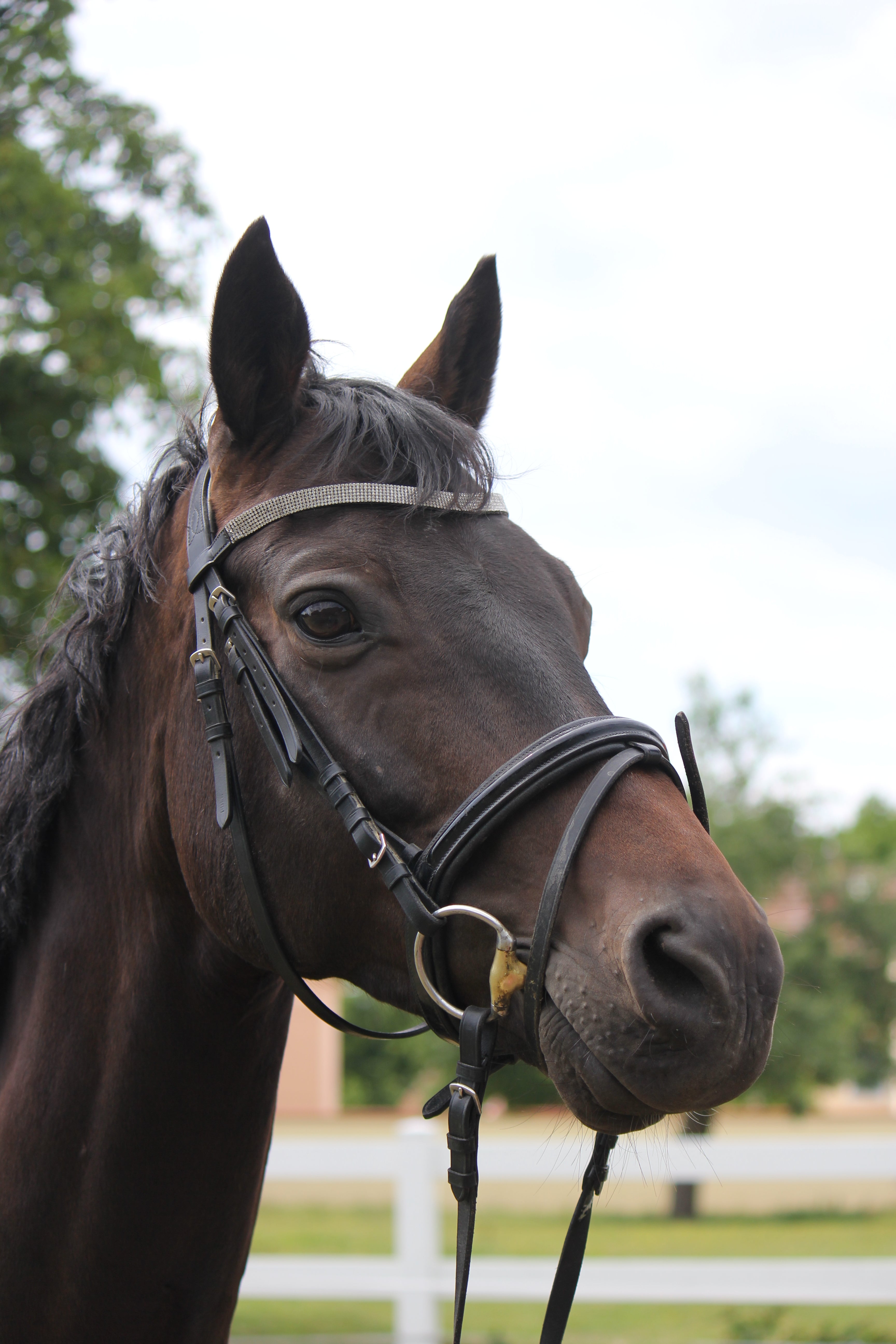
Trakehner Horses: Elegance with a Long Tradition
The Trakehner horse breed, whose origins trace back to East Prussia in the 13th century, is known for its elegant appearance, muscular physique, and remarkable willingness to perform. These horses, often considered particularly sensitive and strong-willed, are successfully represented in dressage, show jumping, and eventing. Trakehners are characterized by their unmistakable noble head, long neck, and powerful hindquarters. These horses, which can form strong bonds with their owners, are ideal for experienced riders and impress with their affectionate and good-natured temperament.

Profile: Trakehner
| Origin | Germany |
| Main Breeding Area | Main Stud Trakehnen, then East Prussia |
| Distribution | Worldwide |
| Bred since | 1732 |
| Life Expectancy | 25 - 30 years |
| Size | 160 to 175 cm |
| Weight | 500 - 700 kg |
| Color | All colors |
| Type | Warmblood |
| Temperament | sensitive, willing to perform, strong-willed, people-oriented |
| Body |
slender, elegant, muscular, long neck, narrow head, long-legged |
| Suitable for | Riding, sport, and carriage horse |
| Care and Keeping |
Large pastures and regular training; Trakehners are more suitable for experienced horse owners; No special care necessary; |
Origin and History of Trakehner Horses
Origins and Development of the Breed
The Trakehner horse breed has its origins in the 13th century in East Prussia, specifically in the small town of Trakehnen. The breed developed through the targeted crossbreeding of Arabian and English thoroughbreds to produce horses with exceptional endurance, speed, and elegance. These characteristics made Trakehners a popular choice for military use and later for sporting disciplines such as dressage and show jumping.
The Main Stud Trakehnen and its History
The Main Stud Trakehnen was founded in 1732 by Prussian King Frederick William and played a central role in the development of the Trakehner breed. Initially established for breeding enduring carriage horses, the focus soon shifted to creating elegant and fast horses through the crossbreeding of thoroughbreds. The distinctive Trakehner brand was introduced in 1787 and serves as a trademark of the breed.
During World War II, the stud experienced a difficult period. With the end of the war, thousands of people and hundreds of horses had to leave Trakehnen, which almost meant the end of Trakehner breeding. Only a few stallions survived this difficult time, and it took a while for breeding to recover. Nevertheless, Trakehners managed to establish themselves as one of the leading sport horse breeds and are now synonymous with elegance, power, and athletic excellence.
Appearance and Conformation of Trakehners
Physique and Proportions
The Trakehner impresses with its noble and elegant, yet muscular physique. The head is usually slender, the neck long, and the hindquarters powerful. A Trakehner's eyes are large and attentive. This medium-sized horse breed is also suitable for smaller riders due to its proportional features.
Coat Colors and Brand Mark
Trakehners come in all conceivable coat colors, though browns are common. A distinctive feature of Trakehners is their brand mark, which resembles a double elk antler and points to the breed's rich breeding history.
The striking brand mark is a symbol of their origin and the pride of the breeders. Trakehners born directly at the historic Main Stud Trakehnen originally received a single elk antler as a brand, while purebred Trakehners outside the stud carried a double antler. This tradition reflects the appreciation and heritage of Trakehner breeding.
Gaits and Movement
Trakehners are known for their powerful gaits. The walk is ground-covering, and in trot, they show a long moment of suspension. The canter is energetic and characterized by good impulsion.
These characteristics make Trakehners an excellent choice for various equestrian disciplines. Their elegant movement and athletic performance make them excel in dressage, show jumping, and eventing. Rideability and dynamic movement are characteristic of this horse breed and contribute to their reputation as first-class sport horses.
Character and Temperament of Trakehners
Sensitivity and Strong Character
Trakehner horses are known for their high sensitivity and strong-willed nature. This combination makes them demanding partners in equestrian sports, posing a particular challenge for experienced riders. They have a spirited and strong-willed demeanor, which is not suitable for novice riders.
Affection and Attachment
Although Trakehners are often considered difficult, they are also known for their affection and attachment to people. They easily form a strong bond with their owners and show a very friendly and good-natured temperament.
The Trakehners' ability to build a close relationship with their owners makes them valuable partners in sports. These horses are not only capable but also trusting and loyal, making them ideal companions for ambitious riders. These qualities contribute to their popularity despite their sensitivity.
Suitability as a Sport Horse
Trakehners are considered ideal sport horses due to their high willingness to perform and rideable nature. In disciplines such as dressage and show jumping, they excel with their graceful and elegant movements, as well as their speed and agility.
The combination of sensitivity and performance makes Trakehners excellent competition partners. Their powerful gaits and ability to adapt to various disciplines, in particular, make them versatile sport horses. With the right riding experience and saddle stability, Trakehners are incomparable partners in sports.

Famous Trakehner Stallions
Caprimond and his Offspring
The Trakehner stallion Caprimond is considered an absolute legend in breeding. The foundation sire sadly passed away in 2014, but left behind world-renowned offspring, primarily successful in dressage. Caprimond was characterized by his elegant appearance and expressive movements, which he reliably passed on to his offspring. His legacy lives on in numerous successful dressage horses.
Hohenstein and his Achievements
Hohenstein, crowned "Stallion of the Year" in 2002, passed on his outstanding rideability and typical Trakehner character to over 30 approved stallions and over 100 State Premium Mares. He passed away in 2013 at the age of 22, but left a significant breeding legacy.
Hohenstein was known for his exceptional ability to pass on not only his quality of movement but also his friendly and sensitive character to his offspring. His foals are characterized by rideability, willingness to perform, and a calm, balanced temperament, qualities that made him a highly sought-after breeding stallion.
E.H. Sixtus and his Successes
E.H. Sixtus, who passed away in 2022 at the proud age of 33, was considered a successful show jumper and passed on this talent to many of his offspring. In addition to his prominent role in show jumping, his offspring can also be found in dressage, eventing, and driving competitions.
E.H. Sixtus significantly influenced Trakehner breeding through his versatility and willingness to perform. He was characterized by his excellent jumping abilities and endurance, which made him an indispensable stallion in breeding. His offspring are now successful in many disciplines and proudly carry on his legacy.
Kostolany and his Dual Talent
Kostolany should not be overlooked when listing famous Trakehner stallions. The black stallion was successful in both dressage and show jumping and reliably passed on this dual talent to all his offspring.
Kostolany, honored as "Stallion of the Year 2009," passed away in 2013 at the age of 29. His offspring now excel in high-level eventing, dressage, and show jumping competitions. Kostolany was known for his elegance and athletic abilities, which made him a coveted breeding stallion. His dual talent makes him a true all-rounder and a valuable addition to any bloodline.
Trakehners in Various Disciplines
Dressage and Eventing
Trakehner horses are characterized by their elegant and graceful movements, which make them perfect partners for dressage. With their ground-covering gaits and long moment of suspension in the trot, they shine in dressage. In eventing, Trakehners demonstrate their flexibility and willingness to perform by excelling in both the dressage test and cross-country.
Show Jumping and Driving Competitions
In show jumping, Trakehners are fast and agile, which makes them outstanding show jumpers. Their powerful musculature and pronounced withers help them to clear high obstacles with ease. In driving competitions, they also prove to be reliable partners, impressing with their endurance and strong will.
A particularly remarkable stallion in this discipline was E.H. Sixtus, who was not only a successful show jumper himself but also passed on his abilities to many offspring. These dual talents, in both jumping and driving, make Trakehners versatile horses that set high standards in breeding and sport.
Successes in Various Disciplines
Trakehners have earned a firm place in a wide range of disciplines and are considered the quintessential sport horses. Thanks to their distinct character and high willingness to perform, they enjoy great popularity in the equestrian world and offer outstanding performance in almost every discipline.
Famous Trakehners like Caprimond and Hohenstein left their mark not only in breeding but also in the competition arena. The offspring of these stallions have achieved great success in dressage, show jumping, and eventing. These continuous successes at the highest level solidify the Trakehner's reputation as enduring, sensitive, and exceptionally capable.
Breeding and Selection of Trakehners
Crossbreeding with Thoroughbreds and Arabians
Only purebred Arabians and English Thoroughbreds are crossed into Trakehner breeding. This targeted crossbreeding produces the characteristic features: a noble head, a long, well-formed neck, and sloping shoulders. This selection significantly contributes to the graceful and powerful appearance of Trakehners.
Selection and Breeding Goals
One of the main goals of Trakehner breeding is the ideal combination of elegance and performance. Breeders focus on preserving the sensitive and strong-willed nature of the horses while further developing their rideable qualities. Special attention is also paid to training them into versatile sport horses.
Selection within breeding is based on strict criteria. Horses must show excellent gaits, a friendly disposition, and a high willingness to perform. Only animals that meet these requirements are allowed to be used for breeding. This ensures that Trakehners maintain their reputation as excellent sport horses and their high quality is preserved.
Evaluation and Assessment of Trakehners
The evaluation of Trakehners follows strict guidelines and includes several aspects such as appearance, gaits, and temperament. At breed shows and inspections, they are judged in various disciplines to demonstrate their versatility and performance.
The assessments are of great importance to ensure the quality of Trakehners. Trakehners that perform positively in these evaluations receive important awards, which increase their value in breeding. This is particularly relevant for breeding planning, as only the best animals are used to pass on their genes.
Conclusion
Trakehner horses are characterized by their noble and muscular physique with a slender head and powerful hindquarters, making them visually captivating. Originally bred in East Prussia and refined by crossing with Arabian and Thoroughbred horses, they possess a pronounced wither and powerful gaits. Their character is marked by sensitivity, high willingness to perform, strong will, and a special friendliness towards humans. These qualities make them ideal sport partners for experienced riders and impressively demonstrate their versatility in various disciplines.
Questions about the Trakehner Horse
1. How much does a Trakehner horse cost on average?
The price for a Trakehner can vary greatly, but on average it ranges between 10,000 and 30,000 Euros. Depending on pedigree, training level, and age, prices can also be significantly higher. Top competition horses can be much more expensive.
2. Is a Trakehner a cold-blooded horse?
No, the Trakehner is not a cold-blooded horse, but rather a warmblood. They are characterized by their elegance, agility, and willingness to perform. These qualities make them excellent sport and leisure horses.
3. Are Trakehners good show jumpers?
Yes, Trakehners are very good show jumpers and have a long tradition in show jumping. They possess the necessary strength, agility, and courage to master demanding courses. Their versatility also allows them to excel in other disciplines.
4. How much weight can a Trakehner carry?
A Trakehner can usually easily carry a rider weighing up to 80 kg. Their strong build and musculature also allow them to carry heavier riders. However, it is important to consider the rider's weight in relation to the horse's size and fitness.
5. Where is Trakehner breeding still done today?
Trakehners are bred worldwide today, with significant breeding centers in Germany, the USA, and Canada. There are also active breeding programs in Russia and other European countries. The Trakehner breeding community is well-connected internationally and promotes the exchange of bloodlines.
6. Why do riders and breeders choose Trakehners?
Trakehners are known for their versatility, elegance, and willingness to perform. They are excellent for various disciplines such as dressage, show jumping, and eventing. They are also characterized by their intelligence and sensitivity, which makes them ideal partners in sport and leisure.
7. What are the character traits of Trakehners?
Trakehners are known for their intelligence, sensitivity, and strong will. They are very eager to learn and respond well to gentle and consistent training. Their friendliness and reliability make them popular riding and sport horses.
8. Are Trakehners still branded?
Yes, Trakehners are traditionally still marked with a brand. This shows the double elk antler, the emblem of the Trakehner breeding. This practice serves for clear identification and is a sign of belonging to the Trakehner breed.
9. What food does a Trakehner need?
Trakehners need a balanced diet consisting of hay, grass, and specially formulated horse feed. Supplements can be added as needed and depending on workload. Good feed quality and sufficient quantities are crucial for their health and performance.
10. What does a typical Trakehner look like?
A typical Trakehner has an elegant, athletic build with well-defined muscles and strong limbs. They have a noble head with expressive eyes and an overall harmonious appearance. Their movements are supple and powerful, which makes them particularly stand out in dressage.
11. Are Trakehners difficult to handle?
Trakehners are not necessarily difficult, but they are very intelligent and sensitive horses that require an experienced and empathetic hand. They respond well to subtle aids and appreciate a calm, patient approach. With the right training and care, they are excellent partners.
12. What characteristics are typical for a Trakehner?
Trakehners are known for their elegance, endurance, and versatility. They have an athletic build, strong limbs, and a noble head. Their movements are supple and expressive, which makes them particularly suitable for dressage.
13. Do Trakehners belong to the thoroughbred horses?
Trakehners are not pure thoroughbreds, but the breed contains a high proportion of thoroughbred blood. This influence gives them their characteristic elegance, speed, and endurance. They combine the best qualities of warmblood and thoroughbred.
14. How long can a Trakehner live?
With good care and husbandry, Trakehners can reach an age of 25 to 30 years. Their life expectancy strongly depends on their health, diet, and general well-being. Regular veterinary examinations contribute to longevity.
15. What is the current name of Trakehnen?
The place Trakehnen, the origin of the breed, is now located in Russia and is called Yasnaya Polyana. It was once the center of Trakehner breeding in former East Prussia. The tradition of Trakehner breeding continues worldwide even today.
16. How large is the Trakehner population in Germany?
In Germany, there are estimated to be around 4,000 to 5,000 Trakehners. This number varies, as it can fluctuate from year to year depending on breeding activities and registrations. Trakehners are a highly valued and cherished breed among German breeders.
Sources:
- Commons: Trakehner
- Wikipedia: Trakehner
- News on the topic: Trakehner
- Trakehner Association
- Trakehners in Russia (English)
- Rothe, Wolfgang, Wiemer, Daniela: Local Atlas Trakehnen, The Main Stud, its Outlying Estates and the Village, a Settlement-Historical Documentation, Ed. Prussia 2011, ISBN 978-3-9811896-0-5
- History of Trakehner breeding in Mecklenburg
Other horse breeds:
Editorial Guidelines of Horse Vitality Company
At Horse Vitality Company, we create every contribution according to strict quality standards and rely on reputable sources and scientific research. Our editors are proven experts in equine health and offer you well-founded, trustworthy information.
Expertise and Quality Assurance
- Qualified Authors: Our editors have extensive expertise in equine health and animal care.
- Double Check: Each article is additionally reviewed by a second expert to ensure accuracy and relevance.
Sources and Transparency
- Reputable Sources: We only use trustworthy sources and scientific studies to substantiate the content.
- Disclosure: We disclose potential conflicts of interest and ensure transparency.
Reader-Friendliness and Actuality
- Reader-Friendly Presentation: Our content is continuously optimized to make it as understandable and accessible as possible.
- Actuality: We regularly review our articles and update them as needed to ensure they are always up-to-date.
Interaction and Feedback
- Reader-Oriented: Our goal is to provide you with initial guidance. For individual health or care questions, we recommend consulting a veterinarian or animal naturopath.
- Feedback Option: We invite our readers to provide feedback and ask questions. Your suggestions help us continuously improve our content and tailor it to your needs.
These guidelines ensure that the content of Horse Vitality Company always meets the highest standards of expertise, authority, and trustworthiness.


