

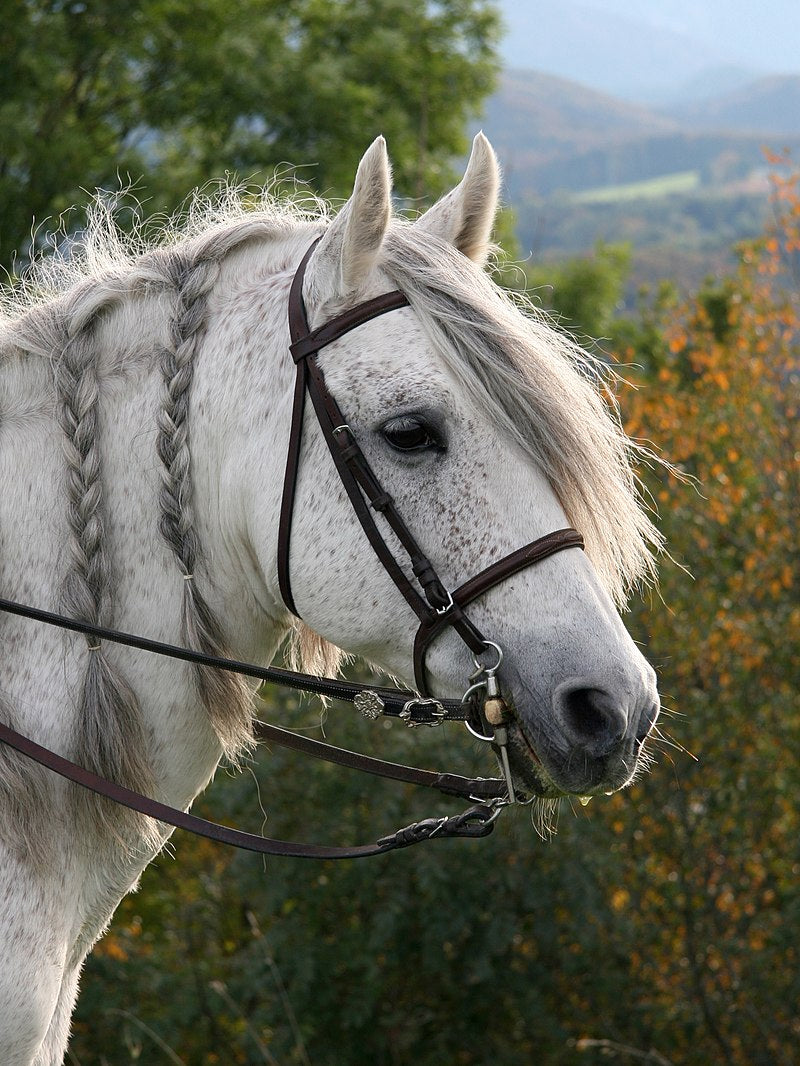
Graceful and Powerful: The Andalusian
When it comes to Andalusian horses, horse enthusiasts immediately think of elegance, strength, and a fascinating history. These majestic animals are often referred to as the "perfect horse," exuding a unique aura that sets them apart from other breeds. With their flowing manes and graceful gait, they embody the beauty and power so valued in the equestrian world.
The Andalusian is characterized by a gentle nature, impressive physical traits, and fascinating talents. From their versatility in dressage to their loyalty to their humans, these horses have much to offer. With careful care and attention, Andalusians can become lifelong companions, providing unforgettable moments and a deep bond.
Andalusian Profile
| Origin | Andalusia, Spain |
| Main Breeding Area | In the regions of Andalusia and Extremadura in southeastern Spain |
| Distribution | Worldwide |
| Life Expectancy | 25 to 30 years |
| Height | 150 to 169 cm |
| Weight | 450 - 550 kg |
| Color | From traditional grey to black, bay, and chestnut. Their coat patterns can be solid or speckled. |
| Type | Warmblood |
| Temperament | Gentle, reliable, and docile |
| Body | Compact and well-proportioned build with a powerful neck, broad chest, and slender, powerful limbs. |
| Suitable for | Recreational riding, dressage, show jumping, eventing, and traditional Spanish riding displays |
| Care and Maintenance | Regular care of hooves, coat, and mane |
The Noble Character of Andalusian Horses
Temperament and Personality
The Andalusian impresses not only with its external beauty but also with its unique temperament and gentle personality. Despite its fiery character, the Andalusian is naturally gentle, reliable, and incredibly docile. This combination makes it particularly suitable not only for experienced riders but also for beginners.
Intelligence and Trainability
Andalusians are not only beautiful but also extremely talented and intelligent. In the high school of equestrian art, they demonstrate impressive elegance and skill. From complex dressage movements to challenging maneuvers, they master every task with ease. Their intelligence and trainability make them popular partners for equestrian events and ceremonies worldwide.
Further insights into their intelligence and trainability show that Andalusians are also ideally suited for complex dressage exercises and demanding maneuvers. Their quick comprehension and ability to learn new commands make them versatile and successful riding partners.
The Unique Bond between Andalusians and Humans
Andalusians are not only partners in equestrian sports but also loyal companions who build a deep emotional bond with their humans. Often referred to as "one-man horses," they show unparalleled loyalty and devotion. This unique connection makes them reliable and loving companions who remain faithful for life.
Further information on the unique bond between Andalusian horses and their owners shows that these noble animals are not only talented and beautiful but also emotionally connected. This deep relationship makes them ideal partners who are reliable not only in everyday life but also in equestrian sports.
The Majestic Appearance of Andalusian Horses
Physical Characteristics and Build
Andalusians are known not only for their majestic appearance but also for their compact and well-proportioned build. Their head, whether with a straight or convex profile, sits on a powerful neck that flows into a broad chest. The slender, powerful limbs of these horses give them not only good jumping ability but also a graceful, flowing gait.

Color Variations and Coat Patterns
Andalusians offer a variety of color variations and coat patterns that make them even more unique and attractive. Depending on genetics, Andalusians can appear in various colors, including grey, black, bay, and chestnut. Patterns range from solid to speckled or striped. This diversity makes every Andalusian a unique beauty.
Further information on color variations and coat patterns can help breeders and enthusiasts better understand the genetics and aesthetic qualities of this fascinating horse breed.
The Iconic Mane and Tail
A characteristic feature of Andalusian horses is their iconic mane and tail. With their flowing curls and thick strands, they give the horses a majestic aura that sets them apart from other breeds. Therefore, grooming the mane and tail is of great importance for the presentation and aesthetic aspect of Andalusians.
Further information on grooming and styling tips for the legendary mane and tail of Andalusians can help preserve and enhance their natural beauty.
Historical Significance and Origin
Roots in Andalusia, Spain
The Andalusian has its origins in the region of Andalusia, Spain, and is closely linked to the history and culture of this area. For centuries, these majestic horses have been a symbol of grace and strength in the equestrian world. The landscapes and flamenco music of this region are reflected in the elegance and temperament of the Andalusians.
The Influence of Different Cultures on the Breed
The history of the Andalusian is marked by influences from various cultures, including the Romans and Moors, who significantly shaped the breeding of these horses. Through careful selection and breeding over centuries, the unique breed we know today emerged. The fusion of traditional skills and traits with modern riding techniques makes the Andalusian a fascinating and versatile horse.

Andalusians in Historical Wars and Arts
Andalusians played a crucial role in warfare and the arts of past times. Their agility and intelligence made them valuable working and warhorses, cherished by many cultures. Furthermore, they were pioneers in the art of dressage, impressing with their elegance and skills in various equestrian disciplines. Their legacy as the royal horse of Europe and their versatility make them an important part of history and culture.
The Andalusian Horse in Equestrian Disciplines
Dressage: Movements and Training
Andalusians are known for their impressive elegance and abilities in dressage. These horses master demanding movements such as piaffe and canter pirouette with ease and grace. Their docile nature and reliability make them ideal partners for dressage competitions and for novice riders.
Show Jumping and Eventing
Andalusians also demonstrate their talent and versatility in show jumping and eventing. With their powerful limbs and good jumping ability, they master obstacles and courses with ease. This horse breed is suitable both for demanding show jumping courses and for the versatile tasks in eventing.
Further training in these disciplines can increase the price of an Andalusian, as their versatile abilities are valued and sought after.
Traditional Spanish Riding Displays
Andalusians play a special role in traditional Spanish riding displays. These elegant horses showcase their skill and agility in performances such as Doma Vaquera. The deep bond between human and horse becomes clearly visible in these impressive displays, and spectators will be captivated by the beauty and grace of the Andalusians.
Iberian horsemanship, as demonstrated in such performances, is an important part of Spanish culture and history.
Proper Care for Andalusian Horses
Nutrition Management
Proper nutrition plays a crucial role in the health and performance of Andalusian horses. It is important to offer a balanced mixture of hay, grass, and high-quality feed that meets the specific needs of these noble animals. Sufficient supply of vitamins, minerals, and proteins should be ensured to prevent deficiencies.
Exercise and Training Considerations
Regular exercise and targeted training are of great importance for Andalusian horses to promote their fitness and mental health. Through varied exercises such as dressage, rides, and groundwork, they can develop their natural abilities and strengthen their bond with the rider. It is important to adapt training progressively and individually to avoid overexertion and injuries.
Further considerations for exercise and training include, for example, choosing the right saddle and accessories to ensure the horse's comfort during training. Observing rest and recovery phases is also crucial to support optimal performance and health.
Health Monitoring and Preventive Care
Regular health monitoring and preventive care are fundamental measures to detect and treat potential health problems early. This includes regular veterinary examinations, vaccinations, deworming, and dental checks. It is important to regularly care for the hooves and to pay attention to changes in the horse's behavior or body condition to identify possible illnesses or ailments in good time.
Avoiding overexertion, stress, and a balanced diet are also crucial for the long-term health and well-being of the Andalusian. With careful health monitoring and preventive measures, owners can help ensure their Andalusian horse lives a healthy and happy life.
Understanding and Managing Health Concerns
Genetic Disorders and Breed-Specific Ailments
Although Andalusians are robust horses, they can sometimes exhibit genetic disorders and breed-specific ailments. Some stallions are prone to inguinal hernias, while grey Andalusians can sometimes develop melanomas. It is important to watch out for signs like laminitis and Cushing's disease. However, with proper care and nutrition, you can best help your Andalusian manage these health problems.
Weight Management and Nutritional Needs
Andalusians are true foodies and can tend to put on a few extra pounds. Therefore, it is important to keep a watchful eye on their diet. Metabolic problems can also occur. Regular exercise and a balanced diet are crucial to maintain your Andalusian's ideal weight and prevent potential health problems.
Keeping Andalusian Horses Mentally Stimulated
It is important to consider not only the physical but also the mental needs of your Andalusian. Through varied training, such as learning new dressage movements or incorporating mental challenges into the daily routine, you can ensure that your horse remains mentally stimulated and happy. Active involvement in caring for and working with your Andalusian fosters the bond and creates a positive environment for its well-being.
Purchasing an Andalusian Horse
Recognizing the Quality of an Andalusian
To recognize the quality of an Andalusian, one should pay attention to various characteristics. A high-quality Andalusian will have a majestic appearance and a balanced physique. Make sure the Andalusian is gentle, reliable, and docile in character, as these traits can reflect the quality of the horse. In addition, the physical characteristics such as head, neck, chest, and limbs should correspond to the breed standard to ensure that it is a high-quality Andalusian.
Influence of Bloodlines on Price
The bloodlines of an Andalusian can have a significant impact on the price of the horse. Particularly noble bloodlines, such as the rare Carthusian breeding, can drive up the price. If an Andalusian comes from a renowned breeding line and has received specialized dressage training, this will also affect the price. It is important to carefully check the horse's origin and lineage to accurately assess the value and quality of the Andalusian.
International Purchase and Import Regulations
When purchasing and importing an Andalusian internationally, certain regulations must be observed. Depending on the country of origin and the respective laws, different regulations and provisions may apply. It is advisable to inform yourself about the applicable regulations before purchasing an Andalusian from abroad to ensure a smooth purchase and transport of the horse. Professionalism and experience in handling international horse transactions are crucial to avoid potential problems and comply with legal requirements.
Conclusion
The Andalusian is undoubtedly a horse with an impressive history, a unique personality, and unparalleled elegance. From their majestic appearance to their historical significance and versatile talents, these horses have captured the hearts of people worldwide. Proper care of these robust animals is essential to maintain their health and vitality. With careful attention, expert care, and a dose of love, Andalusians can inspire and delight owners and riders alike.
Questions about: Andalusian Horses
1. What activities are Andalusians suitable for?
Andalusians are suitable for a wide range of activities. Due to their docility, discipline, and adaptability, they are particularly well-suited for dressage. In addition, they also enjoy circus tricks. Thanks to their size of 150 to 169 cm, they are well-suited for both teenagers and adults.
2. How old can an Andalusian horse get?
Under good care conditions, Andalusian horses can generally lead a long and fulfilling life. Their average life expectancy typically ranges between 25 and 30 years. This means they can often be loyal companions to their owners for many years. However, an Andalusian's lifespan can be influenced by various factors, including the quality of care, nutrition, exercise, veterinary attention, and genetic predispositions. By taking care of an Andalusian's well-being and looking after it lovingly, one can contribute to it leading a healthy and fulfilling life.
3. Are Andalusians prone to diseases?
Andalusians, especially PRE (Pura Raza Española) horses, are considered robust and resilient. Nevertheless, like all horse breeds, they can have certain health risks. A common condition that can occur is laminitis, an inflammation of the hoof laminae.
4. What coat colors do Andalusians have?
Traditionally, Andalusians are often grey, but can also have black or brown coat colors. Since 2013, the palomino coat color has also been permitted for Andalusians.
5. How much weight can an Andalusian carry?
The carrying capacity of an Andalusian can vary depending on its individual condition and build. An example of this is Diego, an Andalusian that can carry up to 95 kilograms. However, it is important to note that the maximum carrying capacity of a horse depends on various factors such as age, health, fitness, and training. It is advisable to keep a rider's weight in appropriate proportion to the horse's weight to avoid overloading and potential injury.
6. Are Andalusians robust horses?
Yes, Andalusians are considered robust horses, characterized by their resilience and versatility. They are capable of handling a variety of tasks and are known for their balanced and friendly nature. Nevertheless, it is important to emphasize that even robust horses like Andalusians require species-appropriate husbandry, including adequate exercise, feeding, and veterinary care, to maintain their well-being and health.
7. Do Andalusians belong to the Warmblood category?
Yes, the Andalusian, also known as the Spanish horse, belongs to the warmblood category. This horse breed originates from southeastern Spain and is characterized by its versatility, grace, and elegance. Warmbloods like the Andalusian are known for their balanced combination of temperament, willingness to perform, and adaptability, which makes them popular riding and sport horses.
8. Are Andalusians suitable for children?
Andalusians, due to their size and stature, are generally not suitable for children under 3 years of age. Small parts like bridles or saddle accessories could pose a potential choking hazard. However, for older children with appropriate riding skills and experience, Andalusians can be excellent riding partners. They are characterized by their gentleness and friendliness, which makes them reliable and safe horses for riding lessons or recreational riding.
9. What is the origin of Andalusians??
Andalusians originate in Spain, particularly in the regions of Andalusia and Extremadura. These majestic horses are closely linked to the history and culture of Spain and have been bred over centuries for various purposes, including as war and riding horses, for ceremonies and shows, and for agricultural work. Their unique appearance and graceful movements have made them one of the most famous and valued horse breeds in the world.
10. How long does it take for an Andalusian to reach full maturity?
The development of an Andalusian from foal to adult horse typically takes about six to seven years. During this time, the foal goes through various growth phases and develops physically and mentally. At around six to seven years of age, an Andalusian usually reaches its full physical maturity and size. It is important to provide the horse with appropriate care, nutrition, and training during this developmental phase to promote healthy development.
11. Is an Andalusian a grey horse?
Andalusian horses are traditionally often grey, meaning their coat is white and their skin is dark. This characteristic coat color is typical for the breed, but Andalusians can also have other colors, including black or brown. Since 2013, the palomino coat color has even been permitted for Andalusians, which allows for greater variety in the color palette of these noble horses. Despite their different coat colors, Andalusians retain their characteristic elegance and grace, making them one of the most sought-after horse breeds.
12. What is typical for Andalusians?
Andalusians are known for their high trainability and sensitivity. They tend to form very strong bonds with one person and can be considered "one-person horses." This breed often shows a strong personal relationship with its owner and can be reserved towards strangers. Andalusians are considered courageous, loyal, and mentally clear, as reputable breeders place great emphasis on character and temperament stability. These qualities make them popular companions for experienced riders and people seeking a close bond with their horse.
13. How big are Andalusians and how long do they live?
Andalusians typically range in height from 155 to 165 centimeters. These majestic horses have an average life expectancy of about 20 to 25 years. However, it is important to note that an Andalusian's size and lifespan can depend on various factors such as health, care, and genetic predisposition. Proper care and a balanced diet can help an Andalusian lead a healthy and fulfilling life.
14. How much does an Andalusian horse cost?
The prices for Andalusians can vary greatly depending on the horse, usually between approximately €3,000 and €60,000. However, this price range is only a rough guideline, as the price always depends on the individual horse. Particularly valuable bloodlines, such as the rare Carthusian breeding, or special dressage training can increase the price.
Sources:
- News on the topic: Andalusian horse
- Official representation of the Spanish studbook in Germany
- International Andalusian & Lusitano Horse Association
- The Foundation for the Pure Spanish Horse
- Royo, L.J., I. Álvarez, A. Beja-Pereira, A. Molina, I. Fernández, J. Jordana, E. Gómez, J. P. Gutiérrez, F. Goyache: The Origins of Iberian Horses Assessed via Mitochondrial DNA. In: Journal of Heredity. 96. Jahrgang, Nr. 6, 2005, S. 663–669, doi:10.1093/jhered/esi116, PMID 16251517
Other Horse Breeds:
Horse Vitality Company Editorial Guidelines
At Horse Vitality Company, we create every post according to strict quality standards, relying on reputable sources and scientific research. Our editors are proven experts in equine health and provide you with well-founded, trustworthy information.
Expertise and Quality Assurance
- Qualified Authors: Our editors have extensive expertise in equine health and animal care.
- Double Check: Each article is additionally reviewed by a second expert to ensure accuracy and relevance.
Sources and Transparency
- Reputable Sources: We only use trustworthy sources and scientific studies to substantiate the content.
- Disclosure: We disclose potential conflicts of interest and ensure transparency.
Reader-Friendliness and Actuality
- Reader-Friendly Preparation: Our content is continuously optimized to make it as understandable and accessible as possible.
- Actuality: We regularly review our articles and update them as needed to ensure they are always up-to-date.
Interaction and Feedback
- Reader-Orientation: Our goal is to provide you with initial guidance. For individual health or care questions, we recommend consulting a veterinarian or animal naturopath.
- Feedback Opportunity: We invite our readers to provide feedback and ask questions. Your suggestions help us continuously improve our content and tailor it to your needs.
These guidelines ensure that the content of Horse Vitality Company always meets the highest standards of expertise, authority, and trustworthiness.


