

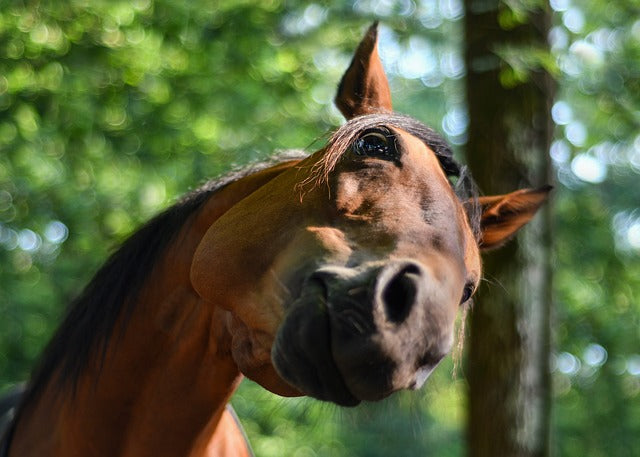
What helps with bites from mosquitoes, horseflies & co
Insect bites can be not only uncomfortable but also dangerous for your horse, especially if it has an allergic reaction to the insect bite. If your horse reacts strongly to mosquitoes, horseflies, or midges, proper prevention and treatment are crucial. In this article, you will learn how to relieve symptoms and provide relief to your horse with simple, natural home remedies. From cooled herbal infusions to effective cooling, here you will find practical and empathetic tips to support your horse during insect season.

Insect bites in horses: A widespread problem
Tormenting pests
Mosquito and horsefly bites can be incredibly tormenting for horses. Attacks by blackflies and large horseflies can completely disturb even the calmest horse. A simple bite can take on enormous proportions, and secondary consequences range from welts to widespread urticaria and bleeding eczema. It becomes particularly problematic if your horse is hypersensitive or allergic to these bites.
The most common allergic reactions in horses
The most common form of allergy in horses is hypersensitivity to insect bites. Most often, the allergic reaction is triggered by proteins in the insect's saliva, which can lead to skin rashes and severe itching. Two specific diseases have been unequivocally identified as allergic reactions: summer eczema and urticaria.
In summer eczema, bites from female midges cause severe itching and skin inflammation. These tiny biting midges are particularly active at dawn and dusk. Urticaria, better known as hives, manifests as sudden welts and a general skin rash. Regardless of the type of reaction, whether allergy or intolerance, it is crucial to help your horse quickly to alleviate its suffering. The itching and swelling due to an allergic reaction to insect bites in horses are well known to many horse owners.
Understanding allergies and intolerances
What is an allergy?
An allergy occurs when your horse's immune system overreacts to an allergen. In a type 1 allergy, the allergen enters the body through the skin or mucous membranes. The immune system recognizes these as a threat and then produces antibodies. If your horse comes into contact with the same allergen again, histamines and other messengers are released, which can cause severe allergic reactions, such as welts or widespread urticaria.
The difference between allergies and intolerances to mosquito bites in horses
Not every hypersensitivity is an allergy. While allergies are caused by a specific immune response, intolerances are more general hypersensitivity to certain substances. An allergy leads to immediate and often severe immune system reactions, whereas an intolerance, though unpleasant, is usually not as severe.
Allergies can be unequivocally diagnosed by IgE-mediated reactions. Especially in horses, only summer eczema and urticaria have so far been identified as true allergic reactions. Regardless of whether it is an allergy or an intolerance, horses suffer from the symptoms and must be treated. Itching remains itching and requires appropriate care to ensure the animal's well-being.
Prevention is better than cure
Reducing insect breeding habitats
It is essential to regularly clear pastures and paddocks of manure to significantly reduce insect breeding habitats, especially for flies. A clean and tidy environment is the first step to minimizing the burden of annoying insects. If you make this task a regular routine, you will contribute significantly to your horse's well-being.
Using fans and fly sprays
Fans in the stable or shelter are an effective way to keep the less flight-capable Culicoides midges away. A strong airflow makes it almost impossible for these insects to reach your horse. Likewise, pyrethrin-based fly sprays can provide temporary relief. These sprays usually only work for a few hours, so it is important to apply them regularly.
The combination of both methods offers your horse the best protection. While the fan provides a constant barrier against insects, fly sprays can offer an additional layer of protection, especially during peak insect activity in the morning and evening.
An effective home remedy against insect bites in horses is the HVC Fly Spray. This natural product not only protects against mosquitoes, ticks, and horseflies but also nourishes your horse's coat. The soothing and regenerating ingredients like aloe vera and glycerin provide moisture and have a cooling effect.
The spray also contains neem oil, which is effective against various pests, and eucalyptus oil, which has antibacterial properties. Citronella oil helps eliminate unpleasant odors and has a mild antiseptic effect, while peppermint oil relaxes muscles and tea tree oil has anti-inflammatory properties and reduces itching. Simply shake well before use and spray generously onto the coat to provide your horse with optimal protection and care.
Pasture management and water sources
In the morning and evening, when insects are most active, your pasture management should be adjusted to minimize the burden on your horse. Horses should not be turned out to pasture during these times if possible. In addition, bodies of water are ideal breeding grounds for insects, so your horse should be kept away from such areas.
Through thoughtful pasture management, you can significantly reduce the time your horse spends in insect hotspots. In combination with other precautions, this contributes significantly to minimizing bites and allergic reactions and providing your horse with a stress-free environment.
Supporting affected horses through adapted nutrition
The importance of zinc
Zinc is important for the functional health of the skin and plays an essential role in the healing process after insect bites. Especially during allergy season, the need for zinc increases enormously. A lack of zinc can slow down healing and weaken the immune system. Therefore, you should ensure that your horse receives sufficient zinc, either through feed supplements or zinc-rich foods.
Protein reduction
A protein-reduced diet can alleviate the symptoms of insect bites, as excess protein can strain skin metabolism and the immune system. This often leads to an aggravation of skin reactions and itching. Make sure to give your horse food that meets, but does not exceed, its protein requirements.
To reduce protein intake, you can focus on feed types that contain less protein. For example, you can choose less protein-rich grass and hay varieties. In addition, special feed additives can help regulate protein levels and thus prevent skin irritations. This not only relieves the skin but also contributes to your horse's general health.
Maintaining a healthy gut flora
A healthy gut flora is crucial for your horse's overall health. The gut is the cradle of health, and intact gut flora can strengthen your horse's allergy resistance. Effective microorganisms can be applied not only internally but also diluted to the affected skin areas to promote healing and relieve itching.
To keep your horse's gut flora healthy, you should ensure a balanced diet that is rich in fiber and low in sugar and starch. Effective microorganisms and probiotic supplements can support beneficial bacteria in the gut, thereby strengthening the immune defense. This helps your horse better cope with allergic reactions and heal faster.

Homeopathic remedies for insect bites
Ledum: First aid for bites
Ledum is a proven homeopathic remedy for first aid for insect bites. It helps reduce swelling and pain and works particularly well for fresh bites and small wounds. Your horse will feel more comfortable in a very short time.
Apis: For widespread swelling
Apis is particularly helpful for an inflamed bite in horses when a large swelling with local heat has developed. It has anti-inflammatory and cooling effects, which can significantly speed up healing.
Apis is an essential component of your homeopathic emergency kit for horses. Particularly useful for large, red, and hot swellings, it helps reduce inflammation and relieve pain. The fast action of this remedy ensures that your horse calms down more quickly.
Histaminium: If the horse reacts strongly allergic
Histaminium is used to regulate your horse's general allergic reaction. It can help control histamine release in the body, thereby alleviating symptoms such as itching and skin irritations.
Histaminium plays a key role in combating systemic allergic reactions. It is particularly helpful if your horse reacts strongly to insect bites or even suffers from urticaria. This remedy helps your horse recover faster and be less stressed.
Urtica: For nettle-like rashes with itching
Urtica is ideal if your horse reacts to insect bites with a nettle-like rash. It relieves itching and speeds up skin healing.
Urtica is particularly valuable if your horse develops a widespread, itchy rash reminiscent of a stinging nettle reaction. This homeopathic remedy helps reduce inflammation and itching and promotes faster healing of the affected skin areas. Especially helpful for edema on the horse's abdomen after an insect bite.
Cardio Spermum D4: For severe itching
Cardio Spermum D4 is particularly effective for severe itching caused by insect bites. It can be applied as a cooling tincture to the affected areas for immediate relief.
Cardio Spermum D4, also known as heartseed, is a powerful remedy for intense itching. It has a calming and cooling effect on the skin and supports the healing of severely itchy and inflamed areas. This remedy is particularly useful for horses that are very sensitive to insect bites.
Cooling and soothing remedies for horses: Help for swollen bites
Insect bites in horses: Herbal teas against skin irritations
A cooled herbal infusion can work wonders if your horse suffers from skin irritations. Chamomile and parsley, in particular, have proven to be soothing and healing. A herbal infusion made from these plants cools pleasantly and helps to soothe the affected skin areas. Simply boil the infusion, let it cool, and then carefully apply it to the irritated areas.
Curd, aloe, and acetic clay for relief
Curd, aloe vera, and acetic clay are great helpers when it comes to natural remedies for insect bites. These home remedies effectively relieve the symptoms caused by bites and stings. You can apply them directly to the affected areas to soothe irritations and support healing. Aloe vera, in particular, has anti-inflammatory and cooling effects.
Curd helps with its cooling effect and is particularly suitable for immediate relief. Another insider tip is acetic clay, which has anti-inflammatory properties and is well suited for treating bites. Apply it in a thin layer, let it work for some time, and then rinse it off carefully. Aloe vera is also a natural all-rounder: its cooling and anti-inflammatory effects can work wonders. However, be careful if your horse has open wounds, and if in doubt, consult a veterinarian to avoid allergic reactions. Experiment with these natural remedies and protect your horse from the annoying consequences of insect bites.
Conclusion
It is understandable that you want to help your horse quickly with insect bites. And so you ask yourself: insect bite in a horse, what to do? Cooling herbal solutions from chamomile or parsley, as well as proven home remedies like acetic clay, quark, and aloe, have a soothing effect on the skin and effectively relieve symptoms. Additionally, homeopathic remedies such as Ledum, Apis, or Cardiospermum D4 can be helpful. An adapted diet with increased zinc intake and a protein-reduced diet supports your horse's skin health. Through these measures, you can significantly reduce the burden and itching caused by insect bites.
These questions about insect bites in horses are frequently asked:
1. How can insect bites in horses be treated?
For insect bites in horses, cooling compresses or special ointments from the pharmacy can help. Applying apple cider vinegar or aloe vera can also alleviate the symptoms. In severe cases, a veterinarian should be consulted to rule out possible allergic reactions.
2. How can an inflamed bite in a horse be reduced?
To reduce swelling after an insect bite, cold compresses or ice packs can be applied. A cooling gel or an anti-inflammatory ointment can also be helpful. Quark wraps are also a proven home remedy that has a decongestant effect.
3. Which home remedies relieve itching in horses?
For itching in horses, home remedies like apple cider vinegar or diluted tea tree oil can be used. Cold chamomile tea applied to the affected area can also have a soothing effect. A paste of baking soda and water can also reduce itching.
4. Which remedies work for inflamed bites in horses?
In horses, anti-inflammatory ointments or gels containing arnica, for example, can be helpful. The internal administration of herbs such as willow bark or devil's claw can also have an anti-inflammatory effect. In case of doubt, a veterinarian should be consulted to ensure the correct treatment.
5. What can be done immediately for insect bites in horses?
Immediate measures for insect bites include cooling the affected area and applying a soothing ointment. A mixture of water and baking soda can also be applied directly to the bite. In case of strong reactions, it is advisable to contact a veterinarian.
6. How do you treat a swollen insect bite in a horse?
For swelling, it helps to cool the affected area and, if necessary, apply anti-inflammatory ointments or gels. Quark wraps or cooling compresses can also relieve swelling. For persistent or severe swelling, a veterinarian should be consulted.
7. What to do for severe swelling after a bite?
In case of severe swelling after an insect bite, it is important to cool the area immediately and relieve the itching. If home remedies are not sufficient, an anti-inflammatory ointment can help. In case of suspected allergic reaction, a veterinarian should be consulted immediately.
Image sources:
Editorial guidelines of the Horse Vitality Company
At Horse Vitality Company, we create every post according to strict quality standards and rely on reputable sources and scientific research. Our editors are proven experts in the field of horse health and offer you well-founded, trustworthy information.
Expertise and quality assurance
- Qualified authors: Our editors have extensive specialist knowledge in horse health and animal care.
- Double check: Every article is additionally reviewed by a second expert to ensure accuracy and relevance.
Sources and transparency
- Reputable sources: We only use trustworthy sources and scientific studies to substantiate the content.
- Disclosure: We disclose potential conflicts of interest and ensure transparency.
Reader-friendliness and topicality
- Reader-friendly preparation: Our content is continuously optimized to make it as understandable and accessible as possible.
- Timeliness: We regularly review our articles and update them as needed to ensure they are always current.
Interaction and Feedback
- Reader Focus: Our goal is to provide you with initial guidance. For individual health or care-related questions, we recommend consulting a veterinarian or animal naturopath.
- Feedback Option: We invite our readers to provide feedback and ask questions. Your suggestions help us continuously improve our content and tailor it to your needs.
These guidelines ensure that the content of Horse Vitality Company always meets the highest standards of expertise, authority, and trustworthiness.


