

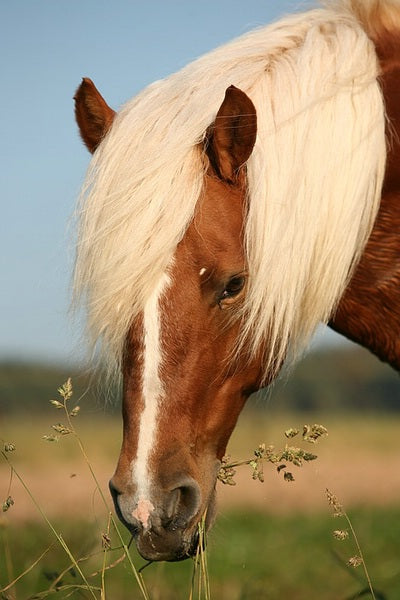
Haflinger Horses: Why They Are So Special
The Haflinger horse breed impresses with its distinctive character and astonishing versatility. Originally from the Tyrolean Alps, these robust and resilient ponies have a characteristic appearance with their golden coat and light mane. They are not only ideal leisure horses but also excellent partners for therapeutic applications. At the same time, caution is advised, as Haflingers are prone to benign skin tumors and muscle diseases. Their intelligence and eagerness to learn make them optimal companions for experienced riders who wish to work on challenging lessons with them.

Profile: Haflinger
| Origin | Austria |
| Main Breeding Area | Austria/South Tyrol |
| Distribution | Throughout Europe |
| Breeding Since | 1898 |
| Life Expectancy | 20 - 30 years |
| Size | 144 to 152 cm |
| Weight | 400 - 600 kg |
| Color | Chestnut in various shades; light long hair; markings on the legs and scattered white hairs undesirable |
| Type | Warmblood |
| Character | Calm, balanced, loyal, sensitive, intelligent, eager to learn, strong |
| Body |
Powerful, muscular build;
|
| Suitable for | Riding and driving for adults and children; also suitable for Western riding |
| Keeping and Care |
Large pastures and regular turnout; Special attention to hooves and feeding required; |
Origin of Haflinger Horses
History of the Haflinger Breed
The Haflinger breed originates from the southern Alps, particularly in Austria and Northern Italy. These robust horses were first documented in the 19th century and played a crucial role in transportation and agriculture in the mountainous regions. Their roots trace back to the crossbreeding of local Tyrolean mountain horses with Arabian horses.
Development of the Breed
Over the years, Haflinger breeding has been strictly regulated and refined. The official breeding line began with the stallion 249 Folie, considered the sire of modern Haflingers. Through targeted selection, emphasis was placed on characteristics such as robustness, versatility, and a friendly disposition, which made the breed particularly careful and family-friendly.
During the 20th century, the Haflinger breed spread beyond its original alpine pastures and gained international recognition. Today, Haflingers are valued not only in Europe but worldwide. Quality breeding control and the preference for certain traits contributed to the breed's health and longevity. Their low susceptibility to typical horse diseases and their strong build make them a particularly resilient and versatile horse breed, ideal for leisure activities and therapeutic purposes.
Haflinger: The Typical Appearance
General Characteristics
The Haflinger is a horse breed distinguished by its charismatic appearance and unmistakable look. These horses are known for their robust stature, which nevertheless conveys elegance and grace. A strong, muscular physique with a striking head and alert eyes makes the Haflinger an attractive sight.
Size and Weight
Haflingers are considered ponies but reach a considerable height of about 138 to 155 cm at the withers. Their weight typically ranges between 400 and 600 kilograms. For a pony, they are thus quite compact and powerful.
The size and weight of a Haflinger significantly contribute to its versatility. Despite their smaller stature, they are strong enough to carry heavier riders and are excellent for various disciplines such as dressage and trail riding. Their robust constitution remains a major advantage.
Color and Coat Pattern
A prominent feature of Haflingers is their solid, golden blonde coat. This color, along with the usually lighter mane and tail, is a particularly striking characteristic. Sometimes the mane can also be silver-white.
The uniform golden color gives Haflingers a noble and majestic expression that distinguishes them from other horse breeds. This splendid color is particularly enhanced when shimmering in the sunlight, making the Haflinger a true eye-catcher.
Build and Proportions
The Haflinger has a compact and balanced build with a well-muscled chest and strong limbs. The backline is straight, and the proportions are harmonious, which underscores their athletic abilities.
The balanced proportions of the Haflinger prove particularly advantageous in rough terrain and on long rides. Their strong physique makes them long-lived and enduring, making them ideal leisure horses. Their compactness also allows for high maneuverability, which is beneficial for driving and Western riding.
Character, Temperament, and Use of the Haflinger
Friendly and Balanced Temperament
Haflingers are characterized by their friendly and balanced temperament. This horse breed is known for its patience and gentleness, making them ideal family and leisure horses. Their amiable nature ensures that they are highly valued by both children and adults. Haflingers are not only reliable partners under saddle but also simply a joy in daily interactions.
Intelligence and Trainability
Haflingers are known for their exceptional intelligence and high willingness to learn. They can easily master complex lessons and greatly enjoy developing new skills.
Especially in trick training or even clicker training, which originated from dog training, Haflingers often show outstanding abilities. Their quick comprehension makes them perfect partners for advanced riders who enjoy the training and development of their horse.
Suitability for various riding disciplines
The versatility of the Haflinger is remarkable. It is suitable for dressage and show jumping, as well as Western riding and trail riding. Haflingers participate in these activities with great pleasure and demonstrate their outstanding abilities.
Unlike classic competition horses, Haflingers are generally less suited for high-level tournaments. Their strength lies more in their versatility and adaptability to different riding styles, making them perfect leisure and family horses. They also greatly enjoy driving in harness.
Therapeutic Use
Due to their gentle and patient nature, Haflingers are also frequently used as therapy horses. Their calm demeanor and ability to form strong bonds with people make them ideal for therapeutic applications.
Especially in remedial education and physiotherapy, Haflingers perform outstanding work. They help build trust and promote the motor skills of patients. Their gentle nature and patience are invaluable in this context and contribute significantly to the recovery and well-being of people.
Keeping and Feeding Haflinger Horses
Living Conditions and Environment
Haflingers are preferably kept in open stables, where they always have dry and clean shelter. This keeping allows the horses to move freely and explore their surroundings, which caters to their natural urge to move. They can be kept in mixed herds as well as among their own kind.
Nutritional Needs and Feeding Habits
Haflingers tend to overeat if they have unrestricted access to hay. Therefore, feed hay in controlled amounts and avoid excessive concentrates, unless the horse has exceptionally high demands. The right amount of feed ensures that the horse remains healthy and active.
Less is often more when feeding Haflingers. Free access to hay can quickly lead to obesity. Therefore, controlled hay feeding is important. Avoid concentrates unless the horse is heavily exercised.
Importance of Exercise and Movement
Haflingers have a strong urge to move and should therefore have sufficient space and opportunity for exercise. Especially in summer, spending time in the pasture around the clock is ideal, in addition to exercise by the rider. Their robust hooves usually do not require horseshoes.
Lack of exercise can quickly lead to health problems. Haflingers need extensive daily exercise, such as regular rides or turnout, to stay healthy. This also promotes their emotional well-being and strengthens the bond between horse and owner.
Haflinger Horses: Training and Care
Training Methods
Haflingers are gentle, but due to their intelligence and stubbornness, they need clear and consistent leadership. They are well-suited for advanced riders who can give clear instructions. Clicker training is particularly suitable for these smart horses. With sufficient patience and praise, Haflingers can also learn tricks and circus lessons.
Socialization and Handling
Haflingers should be accustomed early to handling with people and other horses to respect existing social structures in mixed herds. They are very sociable animals that can be kept in mixed herds as well as among their own kind. Regular social interactions promote their predictable and friendly behavior, making them ideal for beginner riders and children.
Due to their gentle nature and friendly disposition, Haflingers are particularly well-suited for families and leisure riders. They respond positively to an understanding but assertive hand, allowing for a stable and trusting relationship to be built. These social interactions are essential for the Haflinger's emotional well-being.
Care and Health Prevention
Haflingers require regular care to ensure their strong health. This includes checking for bare patches in the coat, wounds, and ticks. Regular deworming and mucking out the stable are also essential to create a dust- and pesticide-free environment.
While robust Haflingers can be resistant to many diseases, there are some that require special attention. These include Lyme disease, summer eczema, and PSSM. Early detection and treatment of these diseases are important for the horse's well-being. With proper care and attention, Haflingers provide many years of enjoyment in equestrian sports and as pets.

Haflinger Horses: Health and Diseases
Common Diseases in Haflingers
Haflingers are robust and resilient, but there are some health risks they face. A common ailment is summer eczema, an allergic reaction to mosquito bites. They also show a predisposition to equine sarcoids, a form of benign skin tumors, as well as Polysaccharide Storage Myopathy (PSSM), a muscle disease that can cause muscle pain and tremors after exertion. Lyme disease, transmitted by ticks, is also a growing concern.
Prevention and Treatment of Diseases
The prevention of these diseases is crucial for a Haflinger's health. Regular checking of the coat for ticks in summer can reduce the risk of Lyme disease. Skin changes should be recognized early and monitored to treat equine sarcoids. For PSSM, a special diet and regular exercise are important to alleviate symptoms.
Haflingers require comprehensive care tailored to their specific needs. Checking for and promptly removing ticks, as well as regularly inspecting the coat for bare patches and wounds, are essential. If summer eczema or skin tumors are suspected, veterinary advice should be sought immediately. The right diet and plenty of exercise are particularly important for PSSM to keep symptoms to a minimum.
Regular Veterinary Examinations
A regular veterinary examination is essential for a Haflinger's health. The veterinarian should be engaged at regular intervals to detect diseases early and initiate appropriate treatment if necessary.
Regular veterinary examinations are of great importance for prevention and early detection. The veterinarian can ensure that the Haflinger is free from ticks, skin changes, and other health problems. Regular deworming and vaccinations are also part of veterinary care to protect the Haflinger from potential dangers and maximize its resilience.
Life Expectancy and Purchase: What to Consider with Haflingers
Average Life Expectancy of Haflingers
The average life expectancy of a Haflinger horse is approximately 25 to 30 years. This pony breed is known for its robustness and resilience, which allows them a long and healthy life if properly cared for and fed.
Considerations When Buying a Haflinger
When buying a Haflinger, several factors should be considered. It is important that the potential owner already has experience with horses. Haflingers are particularly suitable for experienced riders, as they can be intelligent and sometimes stubborn.
If you want to buy a Haflinger foal, this requires special experience in training young horses. Such a purchase can be a real bargain and at the same time do some good, as many foals otherwise face a bleak fate as meat suppliers. Many organizations buy these foals and rehome them. Therefore, it is possible to get a foal for a low price, but usually without papers, which makes participation in tournaments difficult.
Tips for Finding a Reputable Breeder
When buying a Haflinger, it is essential to find a reputable breeder. Here are some tips:
- Learn about the horses' keeping conditions and health at the breeder's
- Look for experiences and reviews from other buyers
- Make sure the breeder can provide all necessary documents and proof
- Taking these factors into account can ensure that you receive a healthy and well-cared-for Haflinger.
Thorough research and visits to the breeder are crucial. Make sure the horses are kept in an appropriate environment and talk to other customers about their experiences. These measures will ensure that you purchase a healthy and well-behaved Haflinger horse.
Conclusion
The Haflinger horse breed, with its roots in the South Tyrolean Alps, captivates with its characteristic chestnut coat and blonde mane. These robust and versatile horses are not only visually appealing but also distinguished by a friendly and intelligent character. Their adaptability and amiable nature make them ideal leisure and therapy horses. Despite their many virtues, Haflingers are less suited for competitive sports, which, however, does not diminish their popularity as reliable family and leisure companions.
Questions about Haflingers
1. Is a Haflinger a good choice for beginners?
Yes, Haflingers are often an excellent choice for beginners. They are known for their friendly and good-natured character, which makes them particularly reliable. They are also patient and adaptable, which facilitates learning and handling them.
2. What makes Haflingers special?
Haflingers are special due to their versatility and characteristic appearance. They have a striking, golden coat with a light mane and tail. Furthermore, they are characterized by their robustness and endurance, making them suitable for many different riding and driving disciplines.
3. In which disciplines do Haflingers particularly excel?
Haflingers are particularly good in versatile uses, be it for leisure, trail riding, or dressage. Their endurance and strength also make them good partners in driving sports. In addition, their balanced temperament makes them ideal for therapeutic riding.
4. Are Haflingers often sick?
Haflingers are generally very robust and have good health. They are less susceptible to many of the diseases that can affect other horse breeds. Nevertheless, regular care and veterinary attention are important to maintain their long-term health.
5. What weight can Haflingers carry?
A Haflinger can usually easily carry a rider weighing up to about 75-80 kg. Their strong build and powerful musculature enable them to handle heavier loads. However, it is important to consider the rider's weight in relation to the horse's size and fitness.
6. Is it possible for adults to ride Haflingers?
Yes, adults can ride Haflingers without problems. This horse breed is strong enough to carry the weight of an adult rider, provided the weight is within an appropriate range. Their friendly and calm nature makes them pleasant riding partners for adults.
7. What is the life expectancy of a Haflinger?
Haflingers can reach an age of 25 to 30 years if well cared for. Their robust nature contributes to their long lifespan. Regular veterinary check-ups, a balanced diet, and sufficient exercise are crucial for a long and healthy life.
8. Is a Haflinger able to carry 80 kg?
Yes, a healthy and well-trained Haflinger can easily carry a rider weighing 80 kg. Thanks to their strong musculature and solid build, they are well-suited for such loads. However, it is important to monitor the horse regularly to ensure it remains in good physical condition.
9. Is the Haflinger a cold-blooded or warm-blooded horse?
The Haflinger is considered an "Edelblut," a mixture between cold-blooded and warm-blooded. This classification results from their robust nature and versatility. They combine the endurance and strength of cold-blooded horses with the agility and temperament of warm-blooded horses.
10. How long can you ride a Haflinger?
A Haflinger can often be ridden into old age, often up to 25 years or more. The exact duration depends on the individual health and fitness of the horse. Regular veterinary examinations and appropriate care contribute to the horse remaining rideable for a long time.
11. How much does a well-trained Haflinger cost?
A well-trained Haflinger can cost between 5,000 and 15,000 Euros, depending on age, training level, and lineage. Horses with special potential or success in competitions can also be more expensive. It is important to inquire about the horse's origin and training before purchasing.
12. Are Haflingers intelligent?
Yes, Haflingers are known for their intelligence and willingness to learn. They are quick to learn new tasks and often show pleasure in their work. Their intelligence and cooperativeness make them versatile and reliable partners in various riding disciplines.
13. For which riders are Haflingers particularly suitable?
Haflingers are particularly suitable for leisure riders, families, and beginners. Their balanced temperament and robustness make them ideal horses for riders of all ages and experience levels. They are also popular in therapeutic riding due to their gentle nature.
14. What should Haflingers not eat?
Haflingers should not eat foods that are generally harmful to horses, such as chocolate, bread, or sugary snacks. Certain plants, such as oak leaves and bark, are also poisonous to them. A balanced diet of hay, grass, and special horse feed is important for their health.
Sources:
- Commons: Haflinger
- Wikipedia: Haflinger
- News on the topic: Haflinger
- South Tyrolean Haflinger Breeders' Association
- Tyrolean Haflinger Horse Breeding Association
- Swiss Haflinger Horse Breeding Association
- Hans Joachim Schwark and Petra Petzold: Das Haflinger Pferd: mit 52 Tabellen. Magdeburg: Westarp-Wiss. [u. a.], 1996, ISBN 3-89432-172-5
Other Horse Breeds:
Editorial Guidelines of Horse Vitality Company
At Horse Vitality Company, we create every post according to strict quality standards, relying on reputable sources and scientific research. Our editors are proven experts in horse health and offer you well-founded, trustworthy information.
Expertise and Quality Assurance
- Qualified Authors: Our editors have extensive expertise in horse health and animal care.
- Double-Check: Every article is additionally reviewed by a second expert to ensure accuracy and relevance.
Sources and Transparency
- Reputable Sources: We use only trustworthy sources and scientific studies to underpin the content.
- Disclosure: We disclose potential conflicts of interest and ensure transparency.
Reader-Friendliness and Actuality
- Reader-Friendly Preparation: Our content is continuously optimized to make it as understandable and accessible as possible.
- Actuality: We regularly review our articles and update them if necessary to ensure they are always up-to-date.
Interaction and Feedback
- Reader-Orientation: Our goal is to provide you with initial guidance. For individual health or care questions, we recommend consulting a veterinarian or animal naturopath.
- Feedback Option: We invite our readers to provide feedback and ask questions. Your suggestions help us continuously improve our content and tailor it to your needs.
These guidelines ensure that the content of Horse Vitality Company always meets the highest standards of expertise, authority, and trustworthiness.


