

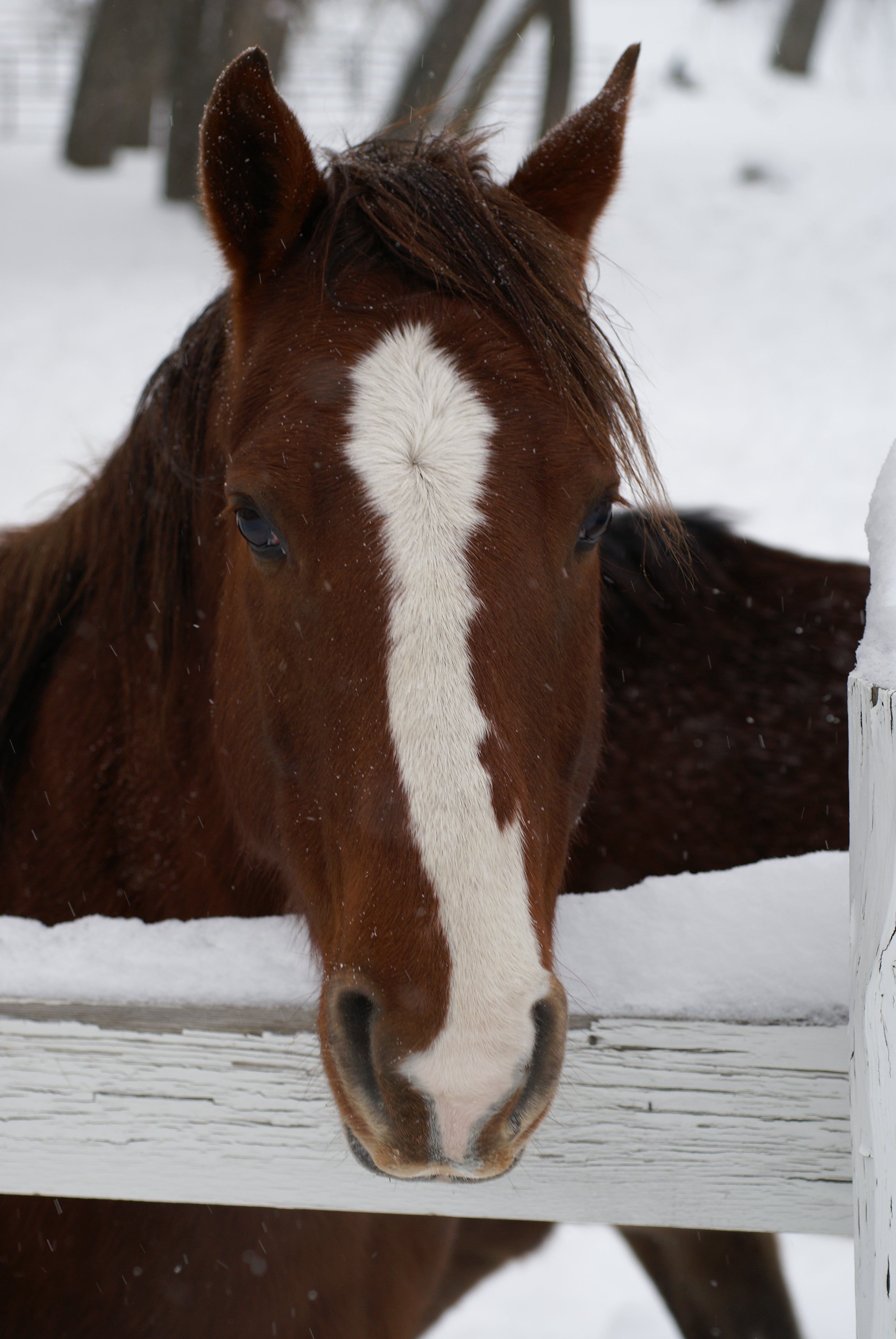
The Quarter Horse in Profile
In this blog post, we introduce you to the American Quarter Horse – one of the oldest and most versatile horse breeds in the world. Learn more about its history, its impressive physical and character traits, and how you can ideally care for your Quarter Horse. We also give you insights into the disciplines in which this breed particularly excels. If you're considering getting a Quarter Horse, or simply want to learn more about these remarkable horses, then you've come to the right place.

Profile: American Quarter Horse
| Origin | USA |
| Main breeding area | USA |
| Distribution | Worldwide |
| Bred since | 18th century |
| Lifespan | 25 - 30 years |
| Height | 150 to 165 cm |
| Weight | 500 - 600 kg |
| Color | All coat colors |
| Type | Warmblood |
| Character | Intelligent, calm, balanced, friendly, good-natured |
| Body |
compact build, short, wide head; very muscular hindquarters, wide stance; |
| Suitable for | Leisure riding, Western riding |
| Keeping and Care |
Not demanding in terms of keeping; Plenty of exercise and movement |
American Quarter Horse: History and Origin
The Roots of the Quarter Horse
The roots of the Quarter Horse lie in America. European settlers brought various horse breeds with them, including Andalusians, Barbs, Arabians, and English Thoroughbreds. From this mixture, the American Quarter Horse emerged. Originally, this horse was bred for riding, herding cattle, and as a work and draft horse.
Development of the Horse Breed
Towards the end of the 18th century, short-distance races over a quarter-mile distance became very popular. These races were called "quarter mile races." A certain horse breed proved particularly successful in these races: the American Quarter Horse. The name "Quarter Horse" therefore refers to the suitability of these horses for short, fast sprints.
These impressive horses demonstrated their outstanding abilities in quarter-mile races, which quickly made them known and popular. Their compact and muscular build, combined with remarkable strength and agility, gave them a competitive edge. This recipe for success led to the worldwide recognition of the Quarter Horse as a versatile and reliable horse breed, which is now valued not only in sports but also for leisure.
Appearance and Character of the Quarter Horse
Physical Characteristics
The American Quarter Horse is characterized by its compact and muscular build. It has a medium-long, well-muscled neck and a powerful chest. The head is relatively small with a broad forehead and friendly, large eyes. With a short to medium-long, strong back and well-muscled hindquarters, Quarter Horses are perfectly designed for strength, agility, and speed. These horses come in almost all coat colors, except for pintos, including brown, black, grey, chestnut, palomino, or buckskin.
Temperament and Personality
The Quarter Horse's temperament is calm, composed, and balanced, making it an ideal partner for riders of all ages and experience levels. These horses are intelligent, eager to learn, and attentive, which makes them particularly successful in various equestrian disciplines. Additionally, they are known for their friendliness and affection, which helps them form strong bonds with their owners.
Quarter Horses are very social and enjoy human company. They strive for deep relationships with their owners and are characterized by their great willingness to learn and ability to quickly acquire new lessons. These qualities make them excellent leisure horses and reliable partners in daily work. Due to their balanced nature, they are ideal for families with children. Their remarkable intelligence and good concentration lead to a close relationship of trust and facilitate training.
Quarter Horse: Lifespan and Health
Average Lifespan
The American Quarter Horse has an average lifespan of 25 to 30 years. This relatively long lifespan ensures that you and your Quarter Horse can spend many years together for training and leisure. With proper care and keeping, your horse can lead a long and healthy life.
Genetic Diseases
Unfortunately, Quarter Horses are susceptible to some inherited diseases. These include Polysaccharide Storage Myopathy (PSSM), Hyperkalemic Periodic Paralysis Disease (HYPP), and Hereditary Equine Regional Dermal Asthenia (HERDA). These diseases can cause serious health problems and significantly impair your horse's well-being.
Polysaccharide Storage Myopathy (PSSM) is a muscle disease caused by a carbohydrate metabolism disorder, leading to degenerative changes in the musculature. Hyperkalemic Periodic Paralysis Disease (HYPP) is also a metabolic disease that causes muscle spasms and paralysis. Hereditary Equine Regional Dermal Asthenia (HERDA) causes skin problems where the skin detaches and develops hard-to-heal wounds. It is recommended to perform a genetic test before purchasing a Quarter Horse to ensure that your future partner is not affected by these diseases.
Proper Keeping and Care of the American Quarter Horse
Space and Exercise
The American Quarter Horse is an active and energetic breed that needs sufficient space to move. A spacious turnout area or pastures are ideal to meet their natural need for movement. Make sure your Quarter Horse gets regular exercise, whether in the pasture or during training, to promote its physical and mental health.
Feeding and Health
The feeding of your Quarter Horse should be carefully adapted to its individual energy requirements. Since Quarter Horses are often easy keepers, they are more prone to obesity. A balanced amount of roughage forms the basis, while the amount of concentrate feed can occasionally be reduced or omitted entirely.
You should pay special attention to the health aspects of your Quarter Horse. They are prone to hereditary diseases such as Polysaccharide Storage Myopathy (PSSM) and Hyperkalemic Periodic Paralysis Disease (HYPP). Before purchasing, perform a genetic test to ensure that your future horse is not affected. Conscious and sustainable management of this breed will ensure that your Quarter Horse leads a long and healthy life.
The Gaits of the Quarter Horse
Walk, Trot, and Canter
Like most horse breeds, the Quarter Horse has three basic gaits: walk, trot, and canter. All three gaits are very soft and flat, making them very comfortable to sit. This makes the Quarter Horse ideal for all riders, regardless of their experience level. The even and calm walk, the fluid trot, and the powerful canter particularly distinguish this breed.
The Jog
A special gait of the Quarter Horse is the jog, a very slow trot, characterized by its particular comfort. This gait is flat and almost shock-free, offering you an incredibly relaxed and pleasant riding experience even on longer rides.
The jog is not only suitable for pleasure rides but is also used as a preferred gait in various equestrian disciplines such as Pleasure Riding. Due to its calm and even movement, the jog is particularly gentle on your horse's joints and allows it to remain at a trot for a longer time without much fatigue. This makes the Quarter Horse an excellent partner for recreational riders and also for Western riding competitions.
Suitable Disciplines
Western Disciplines
The American Quarter Horse is particularly suitable for various Western disciplines due to its intelligence, eagerness to learn, speed, and agility. Disciplines such as Reining, Pleasure, or Trail are predestined for the Quarter Horse. These disciplines require precise maneuvers, quick changes of direction, and tight turns, which the Quarter Horse masters perfectly due to its physical characteristics and balanced temperament.
Dressage and Jumping
Although the American Quarter Horse is primarily associated with Western riding disciplines, it is also excellently suited for dressage work and smaller jumps. Its calmness and composure make it an ideal partner, especially for beginners and children.
In dressage, the Quarter Horse shows its patience and willingness to learn, making it easy to acquire new lessons. In smaller show jumping, the Quarter can score points due to its musculature and agility. The soft and flat gaits of the Quarter Horse make riding very comfortable, which makes it a popular leisure horse. However, note that due to its compact stature, the Quarter Horse is suitable for less extreme heights in jumping, and strong stresses on joints and muscles should be avoided to prevent health problems.

Price and Purchase of the Quarter Horse
Factors Influencing the Price
The price of a Quarter Horse can vary greatly and depends on several factors:
- Bloodline: Horses with a known and successful bloodline are more expensive.
- Age: Younger horses typically cost less than fully trained, adult animals.
- Training Level: Well-trained and educated horses have a higher value.
- Health Status: A healthy horse without genetic diseases is worth more.
Tips for Buying
When buying a Quarter Horse, there are some important things to consider to ensure you choose the right horse:
- Perform a genetic test to ensure the horse has no genetic diseases.
- Visit the breeder or seller and observe the horse in its environment.
- Try out the horse several times to check its behavior and suitability.
If you consider the points mentioned, you will surely find the suitable Quarter Horse for you and your requirements.
A genetic test is particularly important to ensure that the horse does not suffer from diseases such as PSSM, HYPP, or HERDA. Visit the breeder or seller several times to get a complete picture of the horse. Try out the horse several times to make sure it meets your requirements and riding style.
- Genetic test: Check the horse for genetic diseases such as PSSM, HYPP, or HERDA.
- Visit: Observe the horse in its usual environment.
- Trial: Ride the horse several times to ensure it suits you.
Conclusion
The American Quarter Horse is a horse breed of remarkable versatility and impressive performance, convincing with its speed, agility, and friendly temperament. Originally developed in the United States, this breed has made a name for itself worldwide and is particularly popular in Western riding. Quarter Horses are characterized by their robust build, their intelligence, and their ability to adapt to various equestrian disciplines – be it barrel racing, trail riding, as a reliable leisure horse, or in show jumping. This horse breed is a loyal companion and valued partner for riders of all experience levels and enjoys great popularity among horse lovers around the world.
Questions on the Topic: American Quarter Horse
1. Why is this horse breed called Quarter Horse?
The name Quarter Horse comes from their ability to run exceptionally fast over short distances of up to a quarter of a mile. These horses are known for their speed and agility, especially in short-distance races.
2. Why do Quarter Horses have a high price?
Quarter Horses are often expensive due to their versatility, good training, and popular bloodlines. Their suitability for various equestrian disciplines and their pleasant temperament also contribute to their high market value.
3. Does the Quarter Horse belong to the Thoroughbreds?
Quarter Horses are not Thoroughbreds. They belong to the warmblood breeds, which are known for their strength, speed, and versatility, while Thoroughbreds are bred more for their endurance and speed over longer distances.
4. At what age do you start training a Quarter Horse?
Quarter Horses are typically started under saddle at around two to three years of age. At this age, they are physically and mentally ready to begin training, with the pace adapted to the individual development of the horse.
5. What loads can a Quarter Horse carry?
A Quarter Horse can generally carry up to 20 percent of its own body weight. Since these horses weigh approximately 450 to 600 kilograms, they can carry loads of up to 90 to 120 kilograms, which includes rider and equipment.
6. Are Quarter Horses suitable for beginner riders?
Quarter Horses are well-suited for beginners due to their calm and balanced temperament. They are easy to handle, versatile, and reliable, making them ideal partners for inexperienced riders.
7. What is the life expectancy of a Quarter Horse?
With good care and health management, Quarter Horses can live between 25 and 30 years. Their life expectancy depends on various factors such as diet, exercise, and genetic predisposition.
8. Is the Quarter Horse a pony?
Quarter Horses are not ponies; they belong to the light horse breeds. They are larger and sturdier than ponies, with an average height of about 1.50 to 1.60 meters.
9. Which horse is considered the most noble in the world?
The Arabian Thoroughbred is often considered the most noble horse in the world. This breed is known for its beauty, endurance, and noble character traits.
10. Can a Quarter Horse jump?
Quarter Horses are certainly capable of jumping and can be used in show jumping. Their athleticism and versatility make them good all-rounders, including in the field of show jumping.
11. Is Ostwind a Quarter Horse?
Ostwind, the famous movie horse, is not a Quarter Horse but a fictional horse without a specific breed assignment. The films use various horses for depiction, which often belong to different breeds.
12. How many Quarter Horses are there in Germany?
In Germany, there are several thousand registered Quarter Horses. The exact number varies as new horses are constantly being bred and registered.
13. Which breeds are included in the Quarter Horse?
The Quarter Horse has influences from various breeds, including English Thoroughbreds, Arabians, and Spanish horses. This mix has contributed to the development of their speed, strength, and versatility.
14. Can I break in my horse myself?
It is possible to break in a horse yourself if you have sufficient knowledge and experience in horse training. Otherwise, it is recommended to consult a professional trainer to ensure that the horse is trained correctly and safely.
15. How heavy do Quarter Horses get on average?
Quarter Horses weigh on average between 450 and 600 kilograms. The weight can vary depending on the horse's size, gender, and build.
16. Can you ride a Quarter Horse with a weight of 80 kg?
Yes, a Quarter Horse can easily carry a rider weighing 80 kg. These horses are strong and well-built to handle such loads, as long as the weight remains within their carrying capacity.
Sources:
- Commons: American Quarter Horse
- Wikipedia: American Quarter Horse
- News on the topic: Quarter Horse
- German Quarter Horse Association (DQHA)
- Swiss Quarter Horse Association (SQHA)
- Description of the Quarter Horse, breed standard, breeding directions, disciplines
- American Quarter Horse (Barnboox)
- Hardy Oelke: The Quarter Horse. ISBN 3-89118-030-6.
Further Horse Breeds:
Editorial Guidelines of Horse Vitality Company
At Horse Vitality Company, we create every post according to strict quality standards and rely on reputable sources and scientific research. Our editors are proven experts in the field of horse health and provide you with sound, trustworthy information.
Expertise and Quality Assurance
- Qualified Authors: Our editors have extensive expertise in horse health and animal care.
- Double Check: Every article is additionally reviewed by a second expert to ensure accuracy and relevance.
Sources and Transparency
- Reputable Sources: We use only trustworthy sources and scientific studies to substantiate the content.
- Disclosure: We disclose potential conflicts of interest and ensure transparency.
Readability and Topicality
- Reader-friendly Presentation: Our content is continuously optimized to make it as understandable and accessible as possible.
- Topicality: We regularly review our articles and update them as needed to ensure they are always up-to-date.
Interaction and Feedback
- Reader Orientation: Our goal is to provide you with initial guidance. For individual health or care questions, we recommend consulting a veterinarian or animal naturopath.
- Feedback Option: We invite our readers to provide feedback and ask questions. Your suggestions help us to continuously improve our content and tailor it to your needs.
These guidelines ensure that the content of Horse Vitality Company always meets the highest standards of expertise, authority, and trustworthiness.


