

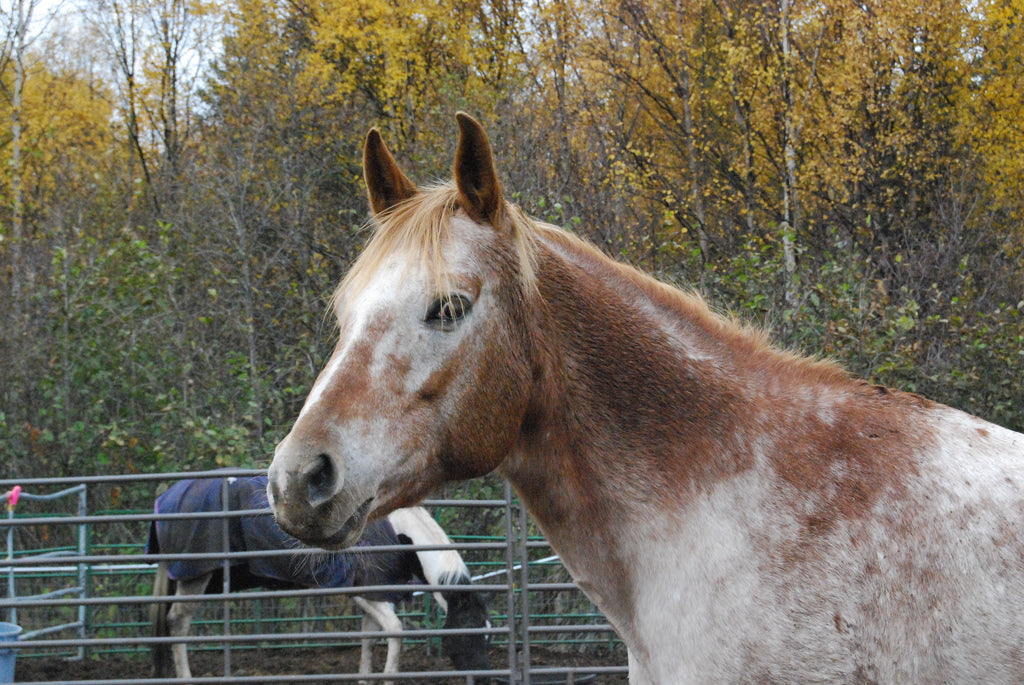
The Appaloosa: Native American Horse with Spanish Roots
Learn all about the fascinating world of Appaloosa horses! This horse breed stands out for its unique coat pattern, its intelligent and people-oriented character, and its versatile usability in various equestrian disciplines. Immerse yourself in the rich history and origin of Appaloosas, discover their characteristic external features, and learn what makes them such distinctive companions. This article provides comprehensive information, from keeping and feeding to breed-specific diseases and the endearing temperament of this extraordinary horse.

Profile: Appaloosa Horse
| Origin | USA |
| Main Breeding Area | USA |
| Distribution | Worldwide |
| Bred since | 1750 |
| Life Expectancy | 25 - 30 years |
| Size | 142 to 162 cm |
| Weight | 450 - 550 kg |
| Color | Predominantly spotted with typical coat patterns |
| Type | Warmblood |
| Character | Intelligent, willing to work, loyal, steady, calm |
| Body |
Muscular, athletic build; Noble head; Short, strong back; |
| Suitable for | Leisure riding, Western riding |
| Keeping and Care |
Sufficient exercise and movement; Easy-keeping feeding; |
History and Origin of the Appaloosa
Development from Spanish Horses
The Appaloosa developed from spotted Spanish horses that arrived in Mexico around 1500 with settlers from Spain and then moved on to America. These horses were characterized by their unique coat patterns and colors and formed the basis for the later development of this fascinating breed.
Influence of the Nez Percé Indians
The Nez Percé Indians played a decisive role in the development and refinement of the Appaloosa breed. They bred strong and colorful horses to be less easily detected in their environment and to have powerful riding and hunting horses.
Thanks to their careful breeding methods, Appaloosa horses became the versatile and robust animals we know today. The Nez Percé's breeding strategies included strict selection to preserve the best traits, which resulted in these horses excelling not only aesthetically but also functionally.
Early Breeding and Near Extinction
In the late 19th century, the Appaloosa breed almost disappeared, as many of the horses were killed in the war between Native Americans and European settlers. This led to a drastic decline in the population to the brink of extinction.
Especially in 1877, when the Nez Percé Indians had to flee to the Canadian border, the Appaloosa population significantly decreased. Only a small population survived these turbulent years, questioning the future of this unique horse breed.
Revival and Current Popularity
At the beginning of the 20th century, interest in saving and maintaining the Appaloosa breed was rekindled. Thanks to these efforts, the population of this horse breed could be significantly increased, and today it is one of the largest horse breeds worldwide.
Through targeted breeding programs and the dedication of enthusiasts, the number of Appaloosa horses grew to several hundred thousand. Today, they are known and appreciated not only in North America but also worldwide. In Germany, the Appaloosa Horse Club Germany has significantly contributed to the care and promotion of this fascinating breed since 1994.
Exterior of Appaloosa Horses
Compact, Muscular Body
The Appaloosa is characterized by a compact, square, and muscular build. With a well-muscled back, a sloping, strong shoulder, and a muscular, sloping croup, it is excellently suited for fast and agile movements. You will notice that this build gives the Appaloosa great agility and speed over short distances.
Distinctive Head Shape and "Human Eye"
The Appaloosa's head has a straight to slightly convex nasal line and often impresses with large, expressive eyes. One of the most striking features is the so-called "human eye", where the pupils are surrounded by white.
This special head shape contributes to the Appaloosa's unmistakable appearance. The "human eye" is not only a visual highlight but also a central criterion for its registration. This feature gives it a unique and almost human-like gaze, which further emphasizes its expressiveness and strength of character.
Spotted Skin and Striped Hooves
Another typical characteristic of the Appaloosa breed is its spotted skin, also known as "mottled skin". This is particularly visible in hairless areas such as around the mouth and often leads to striped hooves.
The spotted skin differs significantly in its pattern from the coat pattern and is a central distinguishing feature of the breed. This uniqueness extends to the hooves, which, with their striped coloring, draw particular attention to the characteristics of the Appaloosa. This feature is not only aesthetically interesting but also identity-forming for this diverse breed.
Variety of Coat Colors and Patterns
The Appaloosa captivates with an impressive variety of coat colors and patterns. There are 14 recognized basic coat colors and six different patterns that make the Appaloosa unique.
From "Blanket" to "Spots" to "Roan" – the different patterns give each Appaloosa an individual look. This variety is also reflected in the variance of colors, from solid to complex pattern mixtures. This versatility makes the Appaloosa a real eye-catcher and gives it an unmistakable visual identity that is unparalleled in the horse world.
Appaloosa Horses: Typical Coat Patterns and Colors
Blanket Pattern
The Blanket pattern is one of the most famous coat patterns of the Appaloosa. In this pattern, the horse has a large white blanket over its rump, clearly separated from the base color. This white area can also have additional dark spots, making the pattern even more attractive.
Spots Pattern
In the Spots pattern, the Appaloosa's spots are distributed over the entire coat. These spots can be either white or dark and vary in size and shape.
This pattern gives the Appaloosa its distinctive appearance and thus makes it a real eye-catcher. The flexibility of the spot size and distribution means that no two Appaloosas are alike. This makes the breed particularly individual and fascinating.
Roan Pattern
The Roan pattern is characterized by the uniform mixing of white and colored hairs over the horse's coat. This pattern can occur both in combination with other patterns and alone.
This mixture of hairs makes the Appaloosa's coat appear particularly vibrant. Particularly interesting about the Roan pattern is that it can become more intense over the years, which changes the horse's appearance over time.
Roan Blanket Pattern
The Roan Blanket pattern combines the characteristics of the Blanket and Roan patterns. It creates a white blanket over the rump, which is fleabitten and not pure white.
This special combination gives the Appaloosa a unique look that combines both classic and modern appearances. In addition, spots can also appear in this pattern, which gives the horse even more individuality.
Solid Color
An Appaloosa can also be solid-colored, which is referred to as a Solid pattern. Such a horse shows no other patterns on its coat and corresponds to one of the 14 recognized basic colors.
Even if a Solid Appaloosa does not show any striking spots or patterns, it remains an unmistakable representative of its breed due to other characteristic features such as the human eye or spotted skin.
Other Patterns and Variations
In addition to the known patterns, other coat variations can also occur in the Appaloosa. These can represent mixed characteristics of the patterns mentioned above or completely unique combinations.
These additional patterns and variations underscore the enormous diversity of the Appaloosa breed and contribute to the uniqueness of each horse. No matter what pattern an Appaloosa carries, you will always have a horse with an unforgettable appearance and a great character in front of you.
Registration Requirements for the Appaloosa Horse Breed
Coat Pattern
One of the main criteria for registering an Appaloosa is a visible pattern in the coat. This pattern can appear in various forms, such as Blanket, Spots, or Roan. It is important that the coat pattern is clearly recognizable, as it represents a central feature of this breed.
Spotted Skin
Another important feature that an Appaloosa must have is mottled skin. This spotted skin is visible where no hair grows, for example around the mouth or eyes.
The mottled skin of the Appaloosa is an unmistakable feature of this breed. It often leads to striped hooves and unique markings. These skin features are not only aesthetically pleasing but also a central criterion for registration as an Appaloosa. If this feature is missing, it will be classified as "not characteristic".
Further Characteristic Features
In addition to the mentioned requirements, the Appaloosa must also exhibit another breed-typical characteristic. A common example is the so-called human eye, where the white around the pupil is visible.
Other breed-typical characteristics can also include special movement patterns or temperament traits. These additional characteristics emphasize the versatility and exceptional abilities of the Appaloosa. Such features are not only a sign of good breeding but also make the Appaloosa a particularly valuable partner in equestrian sports and leisure.
Personality and Temperament of the Appaloosa
Intelligence and Willingness to Learn
The Appaloosa impresses with its intelligence and great willingness to learn. It is attentive, persistent, and able to quickly learn new things. These qualities make it a versatile partner for various disciplines. The Appaloosa wants to be challenged both physically and mentally, making it an ideal horse for ambitious riders.
Loyalty and People-Oriented Nature
Another outstanding characteristic of the Appaloosa is its pronounced loyalty and people-oriented nature. This horse breed strives for a deep relationship with its owner and always tries to please. They are naturally very friendly and have a balanced temperament.
The Appaloosa seeks closeness to humans and often develops a very close and trusting relationship. This close bond not only fosters trust but also the willingness to overcome shared challenges. As an Appaloosa owner, you can look forward to a deep, mutual bond characterized by trust and respect. This makes the Appaloosa a wonderful partner for anyone seeking a true connection with their horse.
Courage and Steadiness
The Appaloosa is known for its courage and steadiness. These horses remain calm and balanced even in unusual and stressful situations, making them reliable partners in all walks of life. Their composure allows them to keep a cool head and react quickly to new situations.
The Appaloosa's courage is particularly evident in Western riding, where it is often used in challenging and unpredictable scenarios. Its steadiness and calmness make it an ideal horse for sporting disciplines where a calm and thoughtful demeanor is required. This means you can always rely on your Appaloosa, no matter what situation you are in.
Suitability for Children and Beginners
Due to its friendly and balanced nature, the Appaloosa is also well suited for children and beginners. It is patient, forgives mistakes, and has soft, flat, and therefore easy-to-sit gaits. These qualities make it an ideal beginner's horse.
The Appaloosa shows exceptional patience towards less experienced riders and often reacts gently and understandingly to their uncertainties. For children, its calm nature provides a safe environment in which they can gain their first experience with horses. As a beginner, you will find a patient and reliable companion in an Appaloosa who will guide you step by step through the world of riding.

The Appaloosa: Health and Longevity
Average Life Expectancy
An Appaloosa can live on average between 25 and 30 years. This impressive life expectancy is a sign of the breed's robustness. With proper care, nutrition, and husbandry, you can enjoy many years with your loyal companion.
Common Health Problems
As with all horse breeds, there are also some breed-specific diseases in the Appaloosa for which there is a genetic predisposition. These include Polysaccharide Storage Myopathy (PSSM), Hyperkalemic Periodic Paralysis (HYPP), and Hereditary Equine Regional Dermal Asthenia (HERDA).
These diseases can significantly impair your Appaloosa's quality of life, which is why good preventive care and regular veterinary check-ups are essential.
Polysaccharide Storage Myopathy (PSSM)
PSSM is a genetic muscle disease in which sugar molecules cannot be properly metabolized. This leads to the storage of glycogen in muscle cells, which causes their death.
Symptoms of PSSM can include muscle tension and cramps, reluctance to move, and stiffness. Although PSSM is not curable, an adapted feeding and management of the disease can significantly improve the Appaloosa's quality of life.
Hyperkalemic Periodic Paralysis (HYPP)
HYPP is a hereditary metabolic disorder that can lead to muscle cramps and paralysis. This disease is particularly insidious because symptoms can appear suddenly and unexpectedly.
To manage HYPP, it is important to implement a feeding management that monitors and limits potassium levels. In addition, affected horses should be regularly monitored for symptoms to quickly react to possible attacks.
Hereditary Equine Regional Dermal Asthenia (HERDA)
HERDA is a genetic skin disease caused by abnormal collagen. This causes the skin to detach and poorly healing wounds to form.
Horses suffering from HERDA require particularly attentive care. Injuries should be avoided, and the affected skin must be thoroughly monitored and cared for to prevent infections.
Sunburn Prevention
Due to its often light skin, the Appaloosa is sensitive to sun exposure. Especially around the mouth and nostrils, sunburn can quickly occur.
To prevent sunburn, you should keep your Appaloosa in the shade during strong sun exposure or apply a special sunscreen. Pay particular attention to the pink skin areas, as these are particularly susceptible.
Care and Husbandry: Recommendations for Appaloosas
Housing and Socialization Needs
An Appaloosa is very uncomplicated to keep and needs sufficient space to move. You can keep it either in an open stable with a shelter or in a box with daily several hours of turnout in a paddock or pasture. Since Appaloosas are very social animals, they should never be kept alone. They thrive best in contact with other horses and need companionship to feel comfortable.
Nutrition and Feeding Requirements
Appaloosas are generally easy keepers and therefore only require an adequate amount of roughage, such as high-quality hay or haylage. Concentrates should only be fed as needed and according to the horse's energy requirements. It is important to adjust the feeding individually so that your Appaloosa remains in the best health.
Since Appaloosas are often good feed converters, high-quality hay and a good mineral feed are often enough to provide them with all the necessary nutrients. Individual feed advice or your veterinarian can be helpful if you are unsure about feeding.
The Importance of Regular Exercise
An Appaloosa is used to being active all day long, which is why sufficient exercise is essential. Exercise is not only important for the physical health, but also for the mental well-being of your horse. Regular exercise prevents boredom and reduces the risk of health problems.
Exercise allows the Appaloosa to maintain its natural agility, strength, and endurance while also providing mental stimulation. Through regular exercise, you not only strengthen your horse's muscles, but also foster a close bond between you and your animal partner. A dedicated exercise program helps your Appaloosa stay healthy and happy.
Special Abilities and Disciplines of the Appaloosa
"Indian Shuffle" Gait
The Appaloosa impresses not only with the three basic gaits walk, trot, and canter, but also with a unique gait, the so-called "Indian Shuffle". This gait is a four-beat ambling gait that is very soft, flat, and therefore particularly comfortable to sit. The "Indian Shuffle" is ideal for covering long distances at a fast pace. This ability comes from the crossbreeding of gaited horse breeds during the Appaloosa's breeding history.
Western Riding Disciplines
Thanks to its combination of strength, agility, speed, and intelligence, the Appaloosa is ideally suited for various Western riding disciplines. Whether reining, cutting, Western pleasure, or trail – the Appaloosa can excel in various areas of Western riding. Particularly striking is its talent in "Cow Sense", which makes it an ideal partner in working with cattle.
Reining tests your horse's control and precision, while cutting puts its ability to move quickly and precisely to the test. In Western Pleasure, the Appaloosa is judged on a calm, relaxed, and pleasant riding gait. In trail, on the other hand, its skill and adaptability to various obstacles are checked. Regardless of the discipline, the Appaloosa always shows its excellent abilities and its distinctive character.
Cow Sense and Cattle Work
One of the Appaloosa's most outstanding talents is its so-called "Cow Sense". This unique talent allows it to perfectly synchronize its movements with those of a cow. "Cow Sense" is partly inherited, but must also be specifically trained to utilize the horse's full potential.
With its Cow Sense, the Appaloosa is unbeatable, especially in cattle work. This includes disciplines such as team penning, team sorting, and ranch roping. In these areas, it demonstrates its exceptional skills in handling cattle, its speed, and its precision. The Appaloosa is thus not only a reliable partner, but also an impressive helper in practical work on the ranch.
Conclusion
The Appaloosa is a unique horse breed characterized by its remarkable history, striking appearance, and versatile character. Originally bred by the Nez Percé Indians and known for their iconic coat patterns, these horses are not only visually impressive but also intelligent, people-oriented, and easy to handle. With the right care and attention, an Appaloosa can be a loyal companion for leisure or Western riding, offering children and beginners alike a safe and fulfilling riding experience.
Questions on the topic: Appaloosa horse breed
1. Are Appaloosas good for beginners?
Appaloosa horses are suitable for beginners as they are considered calm and friendly. They have a balanced temperament and are often easy to handle. In addition, they are versatile, which makes them good all-rounders.
2. How much does an Appaloosa cost?
The prices for Appaloosa horses vary depending on age, bloodline, and training. On average, the costs range between 3,000 and 10,000 euros. However, particularly well-trained or award-winning animals can be significantly more expensive.
3. Are Appaloosas fast horses?
Appaloosas are known for their endurance and versatility, but they can also be fast. Their speed, however, varies depending on individual characteristics and training. Compared to specialized racehorse breeds, they are rather average in speed.
4. What does the name "Appaloosa" mean in English?
The name "Appaloosa" has no direct translation into English. It comes from the Palouse Indians, who bred this horse breed in the region of the Palouse River in the northwestern USA. The term is therefore more geographically and culturally determined.
5. Which horse is best for beginners?
For beginners, horses with a calm, balanced temperament, such as Haflingers, Quarter Horses, or Welsh Ponies, are suitable. These breeds are known for their good-naturedness and reliability. A well-trained and experienced horse is also important for getting started.
6. Are Appaloosas susceptible to diseases?
Appaloosa horses are generally robust but can have a genetic predisposition to certain eye diseases such as moon blindness. Regular veterinary check-ups and good care are important to detect and treat health problems early.
7. Can Appaloosas also be ridden in the English style?
Yes, Appaloosa horses can be ridden in both Western and English riding styles. They are versatile and suitable for various disciplines such as dressage, show jumping, and leisure riding.
8. Which horse is the most expensive in the world?
The most expensive horse in the world so far was the English Thoroughbred "Fusaichi Pegasus", which was sold for around 70 million US dollars. However, the prices for such horses vary greatly depending on bloodline, racing successes, and breeding potential.
9. Can you jump with an Appaloosa?
Yes, Appaloosa horses are certainly capable of jumping and can be used in show jumping. Their versatility and athletic abilities make them good partners in this discipline.
10. Is an Appaloosa a warmblood horse?
Appaloosas are not classically warmblood horses, although they often have similar characteristics. They are a distinct breed that stands out for its versatility and endurance.
11. Which horse breed is particularly people-oriented?
Arabian Thoroughbreds are known for their people-oriented and affectionate nature. They often develop a close bond with their owners and are very social. Pony breeds such as Shetland ponies can also be very people-oriented.
12. Where can you find Appaloosa horses?
Appaloosa horses are bred worldwide, especially in the USA, where they originated. There are also numerous breeders and owners in Europe who appreciate and care for this breed.
13. What are Appaloosas suitable for?
Appaloosa horses are versatile and suitable for various equestrian disciplines such as Western riding, dressage, show jumping, and leisure riding. Their robustness and endurance also make them good partners for long rides and trail riding.
14. What coat colors do Appaloosas have?
Appaloosa horses are characterized by their distinctive coat patterns, ranging from speckled to leopard-like coats. The base colors can vary, but they are often spotted or dappled.
15. What is the difference between an Appaloosa and a Knabstrupper?
The main difference between Appaloosa and Knabstrupper lies in their origin and breeding history. Appaloosas originally come from the USA, while Knabstruppers come from Denmark. Both breeds have similar speckled coat patterns, but differ in body type and character traits.
Sources:
- Commons: Appaloosa
- Wikipedia: Appaloosa
- News on the topic: Appaloosa
- Appaloosa Horse Club Germany
- Appaloosa Horse Club (English)
- Breed Characteristics (English)
Other horse breeds:
Editorial Guidelines of Horse Vitality Company
At Horse Vitality Company, we create every contribution according to strict quality standards and rely on reputable sources as well as scientific research. Our editors are proven experts in the field of horse health and provide you with well-founded, trustworthy information.
Expertise and Quality Assurance
- Qualified Authors: Our editors have extensive specialist knowledge in horse health and animal care.
- Double Check: Every article is additionally reviewed by a second expert to ensure accuracy and relevance.
Sources and Transparency
- Reputable Sources: We only use trustworthy sources and scientific studies to substantiate the content.
- Disclosure: We disclose potential conflicts of interest and ensure transparency.
Reader-friendliness and topicality
- Reader-friendly preparation: Our content is continuously optimized to make it as understandable and accessible as possible.
- Topicality: We regularly review our articles and update them if necessary to ensure that they are always up-to-date.
Interaction and Feedback
- Reader orientation: Our goal is to offer you an initial orientation. For individual health or care questions, we recommend consulting a veterinarian or animal naturopath.
- Feedback option: We invite our readers to provide feedback and ask questions. Your suggestions help us to continuously improve our content and adapt it to your needs.
These guidelines ensure that the content of Horse Vitality Company always meets the highest standards of expertise, authority, and trustworthiness.


