

Horse Breeds
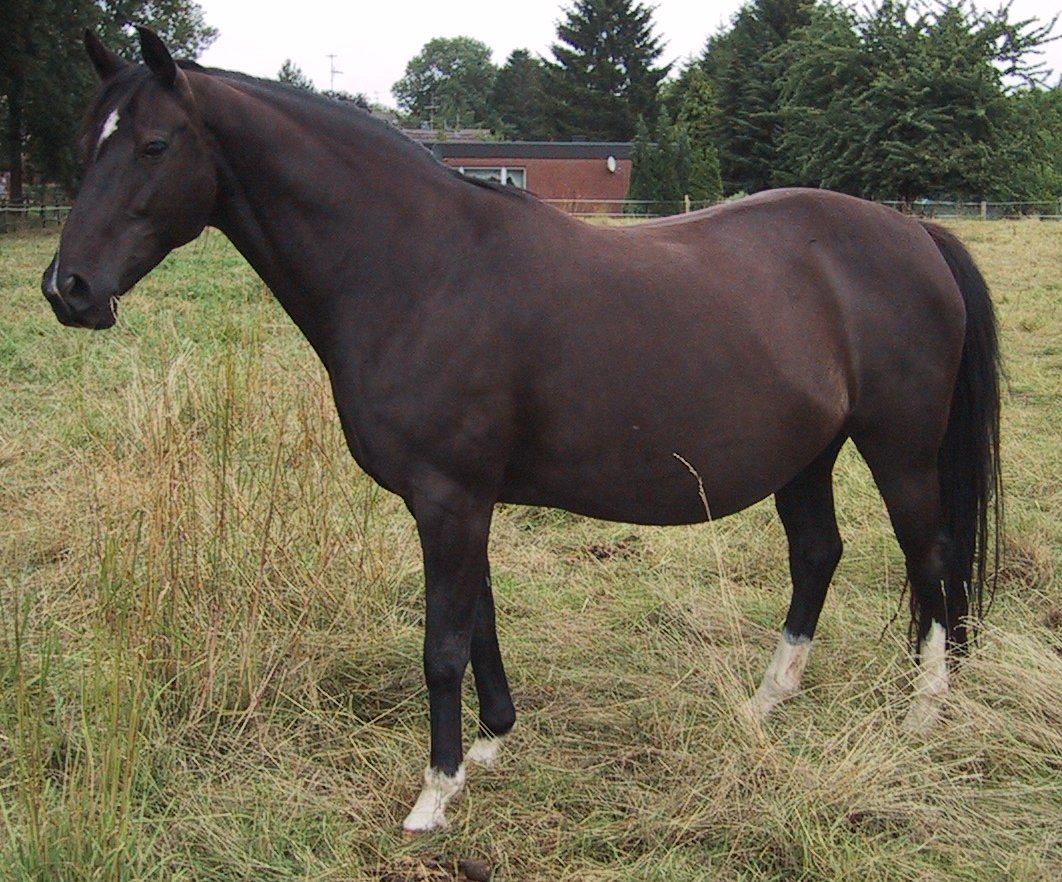

German Riding Pony: Appearance, Character, and Origin
The Popular German Riding Pony in a Breed Portrait The German Riding Pony is considered a true all-rounder, impressing with its athletic and elegant appearance, as well as its friendly, steady-nerved, and balanced character. This versatile horse breed, which originated in Germany, was specifically bred as a sport partner for children and teenagers and enjoys great popularity in equestrian sports. In the following article, you will learn everything important about the German Riding Pony, from its appearance and character to its history and origin. Profile: German Riding Pony Origin Germany Main Breeding Area Germany Distribution Throughout Europe Bred since 1965 Life Expectancy 20 - 25 years Height 138 to 148 cm Weight 300 - 450 kg Colour All coat colours Type Warmblood Character Intelligent, willing to perform, friendly, balanced, steady-nerved Body Compact, athletic build; Small head, well-formed neck; Suitable for Leisure, jumping, sport, dressage, competition Keeping and Care Uncomplicated keeping; Sufficient exercise and movement History and Origin of the German Riding Pony Origin of the German Riding Pony The roots of the German Riding Pony lie in Germany and date back to 1965. It is a relatively young horse breed, developed from the crossbreeding of various horse and pony breeds, including Welsh Ponies, Arabians, and English Thoroughbreds. The aim of the breeding was to create an ideal sport pony partner for children and teenagers. Development of the Breed The development of the German Riding Pony is characterized by a selective breeding program that emphasizes high intelligence, willingness to perform, and a friendly character as essential traits. It was particularly important to breed animals that could excel in both leisure riding and various competitive disciplines. Breeding experts deliberately combined the best characteristics of different breeds to develop an athletic and versatile pony. This careful approach has resulted in the German Riding Pony being known today for its balance, courage, and steady nerves, making it a reliable partner in various equestrian disciplines. The Appearance of the German Riding Pony Physical Characteristics The German Riding Pony is characterized by its elegant and athletic appearance. It has a medium-long, well-muscled back, a medium-long neck, and a sloping shoulder. The head is small and noble, with lively and expressive eyes, relatively small ears, and large, wide nostrils. A deep chest and a well-muscled croup complete the picture. Coat Colours The German Riding Pony comes in all coat colours, which contributes to its great versatility. Most commonly seen are bays, chestnuts, blacks, and greys. This variety in coat colours makes the German Riding Pony particularly interesting and unique. Each colour has its own charm and allows the pony to shine in different nuances and shades. Greys, in particular, are popular among many enthusiasts, as they often appear more noble and striking. German Riding Pony: Personality and Character Intelligence and Trainability The German Riding Pony impresses with its high intelligence and remarkable trainability. It quickly understands what is asked of it and shows great joy in learning. These qualities make it an ideal partner for beginners and advanced riders alike. Willingness to Perform and Ambition A German Riding Pony is known for its willingness to perform and its ambition. It always has plenty of energy, is motivated, and wants to be challenged both mentally and physically. This makes it an excellent sport partner. Due to its natural ambitions, the German Riding Pony is excellently suited for various disciplines such as dressage, jumping, and eventing. Its commitment and endurance ensure that it excels in competitions and training situations alike. Friendliness and Amenability The German Riding Pony shows unwavering friendliness and amenability. It is people-oriented and values the company of its human partners. These qualities make it particularly attractive for children and teenagers. Its amenable nature fosters a close relationship between rider and pony, making training and shared time even more enjoyable. This bond can significantly strengthen the trust and partnership between human and animal. Balance and Composure Despite its liveliness, the German Riding Pony maintains remarkable balance and composure. Even in stressful situations, it remains calm and shows great patience. Its composure makes it a reliable companion, especially in unfamiliar situations. This quality is particularly valuable when the pony is used as a leisure or sport partner and needs to remain calm at various events. Courage and Steady Nerves The German Riding Pony is characterized by its courage and steady nerves. It displays a confident demeanor and is not easily rattled, which makes it a reliable partner. These qualities are particularly important in eventing and show jumping, where unpredictable challenges can arise. Its courageous and steady-nerved nature allows the pony to master such situations with confidence and always maintain control. Suitability of the German Riding Pony for Children Why the German Riding Pony is suitable for children The German Riding Pony is particularly well-suited for children because it has a friendly, intelligent, and balanced nature. Thanks to its height of 138 to 148 centimetres, it is also ideally sized for young riders. The pony breed was specifically bred as a sport partner for children and teenagers. Benefits for Children Interacting with a German Riding Pony offers children numerous benefits. The pony is characterized by its high trainability and friendly, amenable nature. Such qualities promote trust and bonding between child and horse, which increases safety in equestrian sports. Another advantage for children is that the German Riding Pony, despite its lively and energetic nature, shows remarkable patience and composure. These qualities enable children to learn and improve riding skills in a safe and positive environment. The pony motivates young riders to remain mentally and physically active, thereby boosting their self-confidence and endurance. Life Expectancy and Health of a German Riding Pony Life Expectancy of a German Riding Pony A healthy German Riding Pony can reach a life expectancy of 20 to 25 years. This relatively long lifespan is supported by species-appropriate housing and needs-based feeding. Breed-Specific Diseases Since the German Riding Pony is a relatively young horse breed, there are hardly any hereditary diseases. However, these ponies tend to develop obesity and associated diseases such as laminitis or EMS if fed incorrectly. Breed-specific diseases in the German Riding Pony are closely linked to incorrect feeding. This pony breed is a good food converter and can thrive on little and sparse food. Overfeeding can quickly lead to diseases. Laminitis and EMS (Equine Metabolic Syndrome) are particularly common secondary diseases that can be caused by a diet too rich in energy. Therefore, feeding should always be adapted to the pony's activity level and performance. Health Tips To ensure the health of a German Riding Pony, it is important to observe a few points: Species-appropriate housing in an open stable or spacious box Regular exercise and pasture access Needs-based feeding with high-quality roughage Knowing these tips will help you maintain your pony’s health and happiness in the long run. The health of a German Riding Pony can be significantly promoted by certain measures. Species-appropriate housing is essential, meaning the pony gets enough space and movement, preferably in an open stable or a spacious box. Regular exercise and sufficient pasture access are also important to avoid obesity. Feeding should include high-quality roughage and be needs-based. Mineral feed can be supplemented as needed. Regular veterinary visits and vaccinations Hoof care and general hygiene Social interaction with other horses German Riding Pony: Keeping and Feeding Species-Appropriate Keeping Keeping a German Riding Pony in a species-appropriate manner is relatively straightforward. It prefers to be kept in an open stable, where it can move around a lot in the fresh air. Alternatively, the pony can also be kept in a spacious box, as long as it gets several hours of pasture or paddock time daily. The company of other horses is important, as horses should not be kept alone. Needs-Based Feeding A German Riding Pony tends to gain weight easily, so needs-based feeding is crucial. The basis of the diet is high-quality roughage such as hay or haylage. The pony should receive at least 1.5 to 2 kilograms of roughage per 100 kilograms of body weight. Additionally, mineral feed, which contains all necessary minerals and vitamins, can be important. Concentrated feed should be carefully weighed and usually serves only as a supplement to the roughage ration. Many German Riding Ponies do not require additional energy from concentrated feed, which is why one should always critically check whether the basic feed ration is already sufficient. Consultation with a veterinarian or a feed consultant is advisable to find the right balance. Importance of Nutrition Proper nutrition is essential for the health and willingness to perform of the German Riding Pony. Careful monitoring of food intake is necessary to avoid obesity and associated diseases. The basic feed ration should include sufficient high-quality roughage, supplemented with specific mineral feed as needed. Severe obesity can lead to serious health problems such as laminitis or EMS. Therefore, feeding should always be adapted to the pony's activity level and needs. A balanced and needs-based diet thus contributes significantly to the quality of life and longevity of the German Riding Pony. Gaits and Disciplines of a German Riding Pony Basic Gaits The German Riding Pony has three basic gaits: walk, trot, and canter. These are characterized by a great potential for movement. The walk is ground-covering and clear in rhythm, the trot is swinging and energetic, while the canter is uphill. All three gaits demonstrate the pony's elegance and dynamism, making it ideal for various riding disciplines. Suitable Disciplines The German Riding Pony is a true all-rounder and is particularly well-suited for children and teenagers as a sport pony. It excels in disciplines such as dressage, show jumping, and eventing. Due to its friendly, amenable, and steady-nerved nature, it is also a reliable partner in leisure riding. In dressage, the German Riding Pony impresses with its harmonious movements and its ability to quickly learn lessons. In show jumping, it often shows great courage and skill in overcoming obstacles. Eventing is also an ideal discipline, as the pony can score points with its balance and steady nerves. All these qualities make the German Riding Pony an excellent companion in many sporting activities. Costs and Price of the German Riding Pony Factors Influencing the Price The price of a German Riding Pony can vary greatly and depends on several factors, including: Age Training level Pedigree Health status Assumption that a well-trained, healthy pony with an excellent pedigree is more expensive than one without these attributes. Average Costs of a German Riding Pony The price for a German Riding Pony usually ranges between 5,000 and 40,000 Euros. This broad price range underlines the diversity and different qualities within the breed. It is a significant investment, and it is important to be clear about your exact needs and goals before buying a pony. Prices depend on the individual horse and the demands placed on the animal. A first-time purchase of a German Riding Pony should be well thought out, as ongoing maintenance costs must be considered in addition to the purchase price. German Riding Pony: All about appearance, character, and origin The German Riding Pony captivates with its elegant and athletic appearance, characterized by a well-muscled physique and a variety of coat colors. Its intelligent, friendly, and balanced character makes it particularly suitable for children and adolescents. The breed originated in Germany and was created from a targeted crossbreeding of various horse and pony breeds since 1965 to create a versatile sports partner. This combination of appearance, character, and origin makes the German Riding Pony an ideal all-rounder for sports and leisure. Questions about the German Riding Pony 1. How much weight can a German Riding Pony carry? A German Riding Pony can carry approximately 15 to 20 percent of its own body weight. As these ponies typically weigh between 300 and 400 kilograms, the maximum carrying capacity is between 45 and 80 kilograms. It is important to consider the rider's weight to ensure the pony's health and well-being. 2. Is the German Riding Pony suitable for beginners? Yes, the German Riding Pony is well-suited for beginners due to its balanced character and willingness to learn. These ponies are friendly, patient, and easy to handle, making them ideal partners for novice riders and children. Their reliability and good nature help inexperienced riders feel confident. 3. What makes the German Riding Pony so special? The German Riding Pony is characterized by its versatility, balanced character, and excellent suitability for equestrian sports. These ponies combine the elegance and temperament of thoroughbreds with the robustness and willingness to work of ponies. Their ability to excel in dressage, show jumping, and eventing makes them particularly attractive. 4. Which horses are called German Riding Ponies? German Riding Ponies are a specially bred pony breed developed in Germany. These ponies combine characteristics of thoroughbreds, Arabians, and native pony breeds to create an elegant and high-performing sport pony. They are primarily used for competitive sports and as leisure horses. 5. Are German Riding Ponies thoroughbreds? No, German Riding Ponies are not thoroughbreds, although they often have thoroughbred ancestry in their breeding lines. They are a mix of various pony breeds and thoroughbred lines to combine the best qualities of both worlds. The result is an elegant, athletic, and versatile pony. 6. When is one too heavy for a pony? One is too heavy for a pony if the rider's weight exceeds 20 percent of the pony's body weight. For a German Riding Pony weighing approximately 300 to 400 kilograms, the rider should therefore not weigh more than 60 to 80 kilograms. A rider who is too heavy can strain the pony and cause health problems. 7. Are German Riding Ponies susceptible to diseases? German Riding Ponies are generally robust and healthy animals. However, like all horses, they can be susceptible to certain diseases such as colic or hoof problems. Regular veterinary check-ups, a balanced diet, and good care help maintain their health. 8. How much space does a German Riding Pony need? A German Riding Pony needs sufficient space to move freely and graze. Large pastures that provide enough exercise and fresh grass are ideal. In addition, a stable or shelter should be available to provide protection from bad weather and sufficient space for rest periods. 9. What colors can German Riding Ponies have? German Riding Ponies can come in many different colors, including black, bay, gray, chestnut, and pinto. This variety of colors contributes to the attractiveness and popularity of this breed. Each color has its own beauty and makes each pony unique. 10. How old was the oldest German Riding Pony? The exact age of the oldest German Riding Pony is not documented, but ponies can often reach a considerable age. There are reports of ponies living over 30 years if they are well cared for. Careful care and healthy living conditions contribute significantly to their longevity. 11. How long does a pony live? Ponies can generally live between 25 and 35 years. With good care, a balanced diet, and regular veterinary attention, they can lead a healthy and long life. Their robust nature also contributes to their longevity. 12. Are ponies dangerous? Ponies are generally not dangerous if they are well-behaved and treated with respect. However, like all horses, they can react unexpectedly if startled or mistreated. It is important to approach ponies with calmness and patience and to understand their body language. 13. What colors can horses not recognize? Horses have dichromatic color vision, meaning they cannot distinguish colors like red and green as clearly as humans. They see the world more in shades of blue and yellow. Red appears more gray or brown to them, while green is perceived as a kind of yellow tone. 14. What does a German Riding Pony eat? A German Riding Pony mainly eats hay, grass, and special horse feed mixes that contain all the necessary nutrients. In addition, fruits and vegetables such as apples and carrots can be fed as treats. It is important to ensure a balanced diet to support the pony's health and performance. Sources: Commons: German Riding Pony Wikipedia: German Riding Pony News on the topic: German Riding Pony German Riding Pony Breeding Program Association of Pony and Small Horse Breeders Hanover Video German Riding Pony Other horse breeds: Arabian Horses Andalusian Horse Haflinger Horse Breed Overview of Horse Breeds Editorial Guidelines of Horse Vitality Company At Horse Vitality Company, we create every post according to strict quality standards, relying on reputable sources and scientific research. Our editors are proven experts in horse health and provide you with well-founded, trustworthy information. Expertise and Quality Assurance Qualified Authors: Our editors have extensive expertise in horse health and animal care. Double Check: Every article is additionally reviewed by a second expert to ensure accuracy and relevance. Sources and Transparency Reputable Sources: We only use trusted sources and scientific studies to substantiate the content. Disclosure: We disclose potential conflicts of interest and ensure transparency. Reader-Friendliness and Actuality Reader-Friendly Preparation: Our content is continuously optimized to make it as understandable and accessible as possible. Actuality: We regularly review and update our articles as needed to ensure they are always up-to-date. Interaction and Feedback Reader Orientation: Our goal is to provide you with initial guidance. For individual health or care questions, we recommend consulting a veterinarian or animal naturopath. Feedback Option: We invite our readers to provide feedback and ask questions. Your suggestions help us continuously improve our content and tailor it to your needs. These guidelines ensure that the content of Horse Vitality Company always meets the highest standards of expertise, authority, and trustworthiness.
Learn more
A Portrait of the Holsteiner Horse Breed
The Holsteiner: All About the Oldest German Horse Breed The Holsteiner horse breed, one of the oldest and most successful German horse breeds worldwide, impresses with its versatility and willingness to perform. From its historical significance as a carriage and working horse to its modern sporting successes in show jumping and dressage, this breed shows remarkable adaptability. With a life expectancy of up to 30 years and no breed-specific diseases, Holsteiners are an excellent choice for both sports and leisure riders. Profile: Holsteiner Origin Germany Main breeding area Schleswig-Holstein Distribution Throughout Europe Bred since 13th-14th century Life expectancy 25 - 30 years Height 160 to 175 cm Weight 650 - 800 kg Color Bay, Gray, Chestnut, Black Type Warmblood Character Intelligent, willing to perform, patient, sensitive, balanced Body Large, powerful build; Long, strong neck and pronounced hindquarters; Suitable for Show jumping, dressage, eventing, driving, leisure Keeping and care Large pastures and regular training; No special care necessary; History and Origin of the Holsteiner Early History As the name "Holsteiner" suggests, the origin of this horse breed lies in Schleswig-Holstein. Its history dates back to the Middle Ages, making it one of the oldest horse breeds in Germany. As early as the 14th century, the Holsteiner was bred in a monastery in Uetersen, and it was valued as an agricultural workhorse, carriage horse, and warhorse. Development of the Breed In 1874, the State Stud Traventhal was founded, and various small breeding associations for the Holsteiner were established. Already in 1883, these associations merged to form the "Zuchtverband in der Kremper Marsch". In 1935, the associations finally united to form the "Verband der Züchter des Holsteiner Pferdes" (Association of Breeders of the Holsteiner Horse). However, due to technical progress, the importance of the Holsteiner as a utility animal declined after World War II. In the 1960s, the Traventhal stud farm was dissolved due to a sharp decline in breeding. However, the Holsteiner Breeders' Association managed to restore the population through targeted breeding measures. Today, the Holsteiner is specifically used as an athletic and high-performing sport horse. This new breeding line was achieved by refining with Thoroughbreds to enhance the desired athletic qualities. Appearance of the Holsteiner Conformation The Holsteiner is characterized by a large and powerful build. With a height at the withers of 160 to 175 cm, it has a short to medium-long, muscular back, a long and strong neck, a broad chest and strong shoulders, and pronounced hindquarters. Its slender, powerful legs and elegant head with expressive eyes give it a majestic appearance. Coat and Coat Colors The Holsteiner's coat is relatively short, and the most common colors are bay, gray, and black. Chestnuts are rather rare, and pintos are not provided for in the breeding regulations. The most common coat colors of the Holsteiner are bay, gray, and black, which gives it a very noble appearance. It is striking that chestnuts are rare and the breeding of pintos is not provided for, meaning that solid-colored horses are the norm. These selected colors enhance the elegant appearance of the Holsteiner, which can often be admired at events and tournaments. The care of its short coat is uncomplicated, which also makes it a popular horse. Personality & Temperament of the Holsteiner Horse Breed Intelligence and Willingness to Learn A Holsteiner is characterized by its intelligence and quick comprehension. This horse breed learns quickly and shows a high willingness to perform. Holsteiners are attentive and ready to work, which makes them ideal sport and leisure partners. Suitability for Beginners and Children Due to its calm and patient nature and its balanced temperament, the Holsteiner is definitely suitable for beginners and children. However, it is important that young riders are accompanied by experienced adults to avoid undesirable situations. Holsteiners are known for their reliability and patience, which makes them a suitable choice for beginners and children. Despite their calm nature, it is still necessary for safety that the horses are kept and trained in a controlled environment. With the right guidance and care, Holsteiners can be ideal partners for riders of all ages. Health and Longevity of Holsteiners Average Life Expectancy The Holsteiner can reach an average age of about 25 to 30 years. This remarkable life expectancy reflects its robust health and good care, making it a long-lived companion. Common Health Problems No breed-specific diseases are known in the Holsteiner. However, due to its increased use in sports, diseases of the musculoskeletal system can occur. These are common problems among active sport horses. The most common health problems in Holsteiners include premature wear and tear of ligaments and tendons, arthritis, joint chips, and kissing spines. Premature wear and tear can result from acute overuse or inadequate training, while arthritis destroys joint cartilage and leads to pain. Joint chips are small bone fragments that move within the joint and can cause pain. Kissing spines occur when the spinous processes of the vertebrae touch each other, leading to severe pain or inflammation. Holsteiner Horses: Care and Keeping Species-Appropriate Keeping Species-appropriate keeping is crucial for the well-being and health of a Holsteiner. In addition to the basic needs of every horse, it needs plenty of space for free movement. Since the Holsteiner is quite large, care should be taken to ensure that its space is sufficient. In addition, fresh air and low dust exposure are important. If the Holsteiner is kept outdoors, good weather protection is essential. The company of other horses is also essential, as the Holsteiner is a social animal. Species-Appropriate Feeding A Holsteiner is rather undemanding and has no special requirements for feeding. However, it should always have high-quality roughage and water available. Since Holsteiners are considered somewhat easy keepers, the concentrated feed must always be adapted to the performance requirements. One of the most important aspects of feeding a Holsteiner is the quality of the roughage, as inferior hay or silage can lead to health problems. Water should always be available in sufficient quantities and clean. Concentrated feed should only be given in accordance with the physical exertion of the animal. Additionally, a balanced supply of minerals and vitamins contributes to maintaining health and performance. Abilities and Disciplines of Holsteiner Horses Gaits The Holsteiner has the gaits walk, trot, and canter. These are swinging, powerful, ground-covering, and graceful, which predisposes this horse breed to top-level sports. Suitable Disciplines (e.g., Show Jumping, Dressage, Vaulting) Due to its balanced temperament, beautiful, ground-covering movements, and high willingness to perform, a Holsteiner is suitable for a variety of disciplines. It is one of the most successful breeds in equestrian sports. Show jumping is undoubtedly the discipline for which the Holsteiner is best known. Thanks to its powerful hindquarters, it has excellent jumping ability and is very successful in both national and international show jumping competitions. A famous Holsteiner in show jumping, for example, was the gelding Meteor under his rider Fritz Thiedemann. He recorded around 150 victories and was even honored with a monument in Kiel. In addition, the Holsteiner, with its elegant and graceful appearance and ground-covering movements, has great talent for dressage and is also predestined as a vaulting horse with its powerful canter. The horse breed is also very popular in eventing. Due to its strength and endurance, it is also suitable for pulling carriages. And because of its excellent character traits and calm temperament, it is also very popular for leisure riding. Conclusion The Holsteiner is a horse breed of impressive versatility and elegance, distinguished by its outstanding willingness to perform and its balanced temperament. With origins in medieval Schleswig-Holstein, this warmblood breed has developed into a globally esteemed and successful sport horse. Holsteiners are characterized by their athletic build, intelligent and patient character traits, and their suitability for a variety of disciplines - be it in show jumping, dressage, or as a reliable leisure horse. This horse breed is truly a reliable partner and favorite of many horse lovers around the globe. Questions about the Holsteiner horse 1. Are Holsteiner horses suitable for beginners? Holsteiner horses can be suitable for beginners if they are well-trained and of a calm disposition. Their willingness to learn and reliability make them good partners, especially for riders interested in dressage and jumping. However, their temperament can sometimes be demanding, so it is important for beginners to be supported by an experienced trainer. 2. Is the Holsteiner a thoroughbred? The Holsteiner is not a thoroughbred, but a warmblood. This breed is known for its versatility and is mainly used in show jumping and dressage. Warmbloods are characterized by a combination of strength and endurance, which distinguishes them from purebred thoroughbreds. 3. What colors do Holsteiner horses have? Holsteiner horses come in various colors, with bay, black, and gray being the most common. Chestnuts are rarer among Holsteiners. The variety of colors contributes to the attractiveness of this breed. 4. Are Holsteiners good show jumpers? Yes, Holsteiners are excellent show jumpers and are among the best show jumping breeds in the world. Their powerful build, coupled with excellent technique and pronounced jumping talent, make them particularly successful in the show jumping arena. Many international show jumpers prefer Holsteiners due to their performance and reliability. 5. How much does a Holsteiner cost on average? The price of a Holsteiner can vary greatly, depending on age, training, and lineage, but on average it is between 10,000 and 30,000 Euros. Horses with special successes in sports or from renowned breeding lines can be significantly more expensive. A top horse can even cost several hundred thousand Euros. 6. Which horse breed is very people-oriented? Horse breeds such as the American Quarter Horse or the Haflinger are known to be very people-oriented. These horses often develop a close bond with their owners and are known for their friendly and good-natured disposition. Icelandic horses are also considered particularly people-friendly. 7. How long do Holsteiner horses live? Holsteiner horses have a life expectancy of about 20 to 30 years. With good care, a balanced diet, and regular veterinary attention, they can lead a healthy and long life. Their robust constitution also contributes to their longevity. 8. How much does a Holsteiner foal cost? The price for a Holsteiner foal can vary greatly, but usually ranges between 5,000 and 15,000 Euros. Factors such as lineage, potential, and breeding success of the parents influence the price. Foals from particularly renowned lines or with promising potential for sports can be significantly more expensive. 9. Are Holsteiner horses robust? Holsteiner horses are known for their robustness and resilience. Their strong build and good health make them long-lived and resilient horses. These characteristics contribute to their appreciation in sports and leisure alike. 10. What is the most expensive horse breed in the world? The most expensive horse breed in the world is often the English Thoroughbred, especially those used as racehorses. Top horses of this breed can cost several million Euros. Certain warmblood breeds, such as the Hanoverian or Holsteiner, can also fetch very high prices, especially if they have an outstanding lineage and sporting successes. 11. What characterizes the Holsteiner? The Holsteiner is characterized by its athletic build, outstanding jumping abilities, and versatility in sports. In addition, Holsteiners are known for their good character, willingness to perform, and strong nerves. These qualities make them sought-after horses in international equestrian sports. 12. How much do Holsteiner horses weigh? Holsteiner horses typically weigh between 500 and 700 kg, depending on their size and build. Their powerful musculature and robust build contribute to their weight, making them strong and powerful. 13. What is the largest horse breed in the world? The largest horse breed in the world is the Shire Horse. These horses can reach a shoulder height of up to 200 cm and are known for their immense strength and impressive size. Shire Horses are traditionally used for heavy draft work. 14. What is the oldest horse breed in the world? The oldest known horse breed in the world is the Arabian thoroughbred. This breed has a history spanning thousands of years and has influenced many modern horse breeds. Arabians are known for their endurance, beauty, and intelligence. 15. Is Holsteiner a horse breed? Yes, Holsteiner is a specific horse breed that originated in the Holstein region of Germany. This breed has made a name for itself worldwide due to its excellent qualities in show jumping and eventing. Holsteiners are selectively bred to combine the best athletic and character traits. Sources: Commons: Holsteiner Wikipedia: Holsteiner News on the topic: Holsteiner Breeding association in Germany Holsteiner Horse The Friesian Horse Society, a North American registry for Friesians, crosses, and Arabo-Friesians Thomas Nissen: Das Kloster Uetersen und die Holsteiner Pferdezucht In: Bauernblatt Schleswig-Holstein und Hamburg: Mitteilungsblatt der Bauernverbände Schleswig-Holstein und Hamburg, Organ der Landwirtschaftskammer Schleswig-Holstein (Rendsburg: Verlag Bauernblatt für Schleswig-Holstein 57/153 (2003)) Video: Holsteiner in breed portrait Other horse breeds: Andalusian Horse The Norwegian Fjord Horse Dülmen Wild Horse Overview page Horse Breeds Editorial Guidelines of the Horse Vitality Company At Horse Vitality Company, we create every post according to strict quality standards, relying on reputable sources and scientific research. Our editors are proven experts in equine health and provide you with well-founded, trustworthy information. Expertise and Quality Assurance Qualified Authors: Our editors possess extensive expertise in equine health and animal care. Double-Check: Every article is additionally reviewed by a second expert to ensure accuracy and relevance. Sources and Transparency Reputable Sources: We only use trustworthy sources and scientific studies to substantiate the content. Disclosure: We disclose potential conflicts of interest and ensure transparency. Reader-Friendliness and Actuality Reader-Friendly Preparation: Our content is continuously optimized to make it as understandable and accessible as possible. Actuality: We regularly review our articles and update them as needed to ensure they are always up-to-date. Interaction and Feedback Reader-Oriented: Our goal is to provide you with initial guidance. For individual health or care questions, we recommend consulting a veterinarian or animal naturopath. Feedback Option: We invite our readers to provide feedback and ask questions. Your suggestions help us continuously improve our content and tailor it to your needs. These guidelines ensure that the content of Horse Vitality Company consistently meets the highest standards of expertise, authority, and trustworthiness.
Learn more
Pura Raza Española Horse - Profile, Origin, and More
Introduction The Pura Raza Española (PRE), deeply rooted in Spanish culture and history, offers an impressive combination of strength and elegance. This article explores the charismatic appeal and versatile abilities of this noble horse breed. With their grace and remarkable talents in various equestrian disciplines, Pura Raza Española horses have captured the hearts of horse lovers worldwide. Immerse yourself in the world of the PRE and discover its rich heritage and unique characteristics. Profile: Pura Raza Española Origin Spain, deeply rooted in Spanish culture and history Main Breeding Area Originally primarily in Andalusia, now also widespread in other regions of Spain and internationally Distribution Popular worldwide, especially in the dressage and equestrian sports community Life Expectancy 25 to 30 years Size Average 150 to 165 cm Weight Approximately 400 to 500 kg Color Their color variety ranges from grey to black, brown, and dun. Type Warmblood Character Intelligent, energetic, obedient, with a balanced temperament Body Elegant, muscular build, distinctive head with large, expressive eyes, magnificent mane, arched neck Suitable for Various equestrian disciplines such as dressage, working equitation, show riding, and recreational riding Care and Management Regular exercise, adapted nutrition, and loving care Characteristics of Pura Raza Española Horses Physical Attributes The Pura Raza Española is characterized by an elegant, muscular build and distinctive head shapes with large, expressive eyes. The breed is known for its magnificent mane and arched neck, which gives it a majestic appearance. With an average height of 150-165 cm, these horses present an impressive sight that emphasizes their strength and elegance. Temperament and Intelligence The Pura Raza Española is known for its balanced temperament and high intelligence. These horses are eager to learn and sensitive, responding finely to the emotions of their human companions and forming strong bonds with them. Their emotional intelligence makes interactions with them particularly rewarding. The Pura Raza Española's ability to quickly adapt to new situations and learn from their riders makes them excellent partners in almost all equestrian disciplines. Their strong temperament, coupled with the ability to undergo intense training processes without losing their composure, strengthens their position as one of the preferred horse breeds for demanding equestrian sports. Athletic Abilities and Versatility The athletic abilities of the Pura Raza Española are exceptional and predispose them to disciplines such as dressage and high school. Their movements are powerful and harmonious, making them stand out not only in classical dressage but also in demanding forms of riding such as working equitation. Particularly impressive is their versatility, which allows them to be successful in both traditional and modern equestrian disciplines. Their ability to execute complicated maneuvers with elegance and precision makes the Pura Raza Española a favorite for show riding and demanding equestrian arts that challenge both rider and horse. Origin and History of Pura Raza Española Horses Ancient Roots The Pura Raza Española (PRE), known for its impressive elegance and strength, has its origins deep in Spanish culture. The history of this noble breed dates back to antiquity, where it was already highly valued by various civilizations on the Iberian Peninsula. Its importance and appreciation still permeate Spanish culture today. Medieval Development In the Middle Ages, the systematic breeding of the Pura Raza Española began, particularly promoted by the Spanish nobility. The breed became known for its strength and beauty and played an important role as both a riding and working horse. During this time, the foundation for the modern PRE breed was laid. Medieval breeders placed great importance on the purity and performance of these horses. They were often used in battles and festivities, highlighting their significance in society at the time. Selection and breeding were primarily based on characteristics such as temperament, endurance, and a special aptitude for "High School" horsemanship. These historical aspects still contribute to the legend of the PRE today. Modern Breeding and Recognition Since 1912, the breeding of the Pura Raza Española has been strictly regulated to preserve the purity and characteristic qualities of the breed. Official registration and recognition by Spanish breeding associations have established the PRE as one of the noblest horse breeds worldwide. Its distribution and popularity now reach global dimensions. Modern breeding focuses on maintaining the historical and genetic characteristics of the Pura Raza Española. International breeding programs and strict guidelines ensure high quality and standardization of the breed. Today, the PRE is valued not only in Spain but worldwide for its versatility and beauty, which promotes its adoption in various equestrian disciplines. Talents and Abilities of Pura Raza Española Horses Dressage and High School Pura Raza Española horses are distinguished by their natural inclination for collection and their impressive gaits, which makes them ideal for dressage and High School. Their ability to learn complex movements and execute them with graceful elegance sets them apart in this discipline and makes them favorites in both national and international competitions. Working Equitation The agility and speed of the Pura Raza Española predispose them to the exciting discipline of working equitation. This discipline tests a horse's strength and flexibility in a combination of dressage and obstacle riding, which ideally highlights the exceptional abilities of the PRE. In working equitation, Pura Raza Española horses must not only impress with precise dressage movements but also demonstrate their abilities in overcoming obstacles. They show not only speed but also remarkable obedience and a deep understanding of their riders' instructions. These challenges require high mental and physical condition from the horses, which is supported in the PRE by their pronounced intelligence and robustness. Show Riding and Other Disciplines Pura Raza Española horses also excel in show riding due to their striking presence and charisma. Their ability to present themselves and to captivate audiences with their beauty and elegance makes them stars in performances and parades. Furthermore, they are also talented and adaptable in other equestrian disciplines such as show jumping and eventing. Due to their versatility and high trainability, Pura Raza Española horses are also successful in disciplines outside of show riding. In show jumping, for example, they demonstrate their ability to show both power and precision as well as the necessary courage and determination. These qualities make them a valuable choice for riders who want to achieve success in various areas of equestrian sport. Their ability to quickly adapt to new challenges is further proof of their exceptional intelligence and balanced temperament. Applications and Uses of Pura Raza Española Horses Agriculture and Traditional Events Pura Raza Española horses are particularly well-suited for use in agriculture and traditional festivities due to their robustness and adaptability. Their strength and endurance enable them to work excellently even under difficult conditions, making them valuable partners for agricultural tasks. At the same time, their elegance and obedience are cherished attributes in cultural and historical performances, where they often represent the main attraction. Therapy and Companionship Pura Raza Española horses are also excellent therapy horses due to their gentle nature and balanced temperament. Their intuitive ability to respond to human emotions makes them ideal companions in therapeutic programs aimed at supporting people with physical or emotional challenges. Their presence can have a calming effect and significantly improve the well-being of patients. In therapy, Pura Raza Española horses are used in a variety of programs, ranging from supporting mental illnesses to promoting motor skills in physical impairments. Their empathy and patience are particularly valuable when it comes to building trust with patients and supporting their development. These horses offer not only physical therapy through riding but also emotional support, making them an integral part of many healing processes. Sport and Competition In sporting disciplines, Pura Raza Española horses distinguish themselves through their exceptional abilities and elegance. They are particularly predisposed to dressage and high school, where their naturally harmonious movements and ability for collection come into play. Their agility and speed also make them ideal candidates for disciplines such as working equitation. In the world of equestrian sports, they are highly valued at both national and international levels and frequently found on the winner's podium. The sporting successes of Pura Raza Española horses are not only due to their physical qualities but also to their mental abilities. They are known for their high intelligence and trainability, which makes them very responsive in training. The combination of strength, agility, and mental fortitude makes them outstanding participants in demanding sporting disciplines. Their presence and charisma in competitions fascinate both judges and audiences and underscore the prestigious image of this noble breed. Health and Longevity of Pura Raza Española Horses Average Lifespan Pura Raza Española horses are characterized by an impressive longevity. Their average life expectancy is between 25 and 30 years. This long life expectancy is partly due to their robust constitution and careful breeding, with individual lifespan heavily dependent on the quality of their keeping, care, and nutrition. Health Risks and Preventive Measures Pura Raza Española horses are considered robust, but like all breeds, there are specific health risks. A common ailment is laminitis, a painful inflammation of the sensitive laminae of the hoof. In addition, musculoskeletal disorders are not uncommon. Regular veterinary checks and breed-specific care are crucial to minimize these risks. The Pura Raza Española is particularly susceptible to laminitis, a condition that places high demands on the prevention and management of this disease. Early diagnosis and appropriate treatment are essential for the health of these horses. Furthermore, inappropriate stress often leads to problems with joints and tendons, emphasizing the importance of a correct and coordinated training routine. Importance of Proper Care and Nutrition The health and well-being of Pura Raza Española horses largely depend on adequate care and nutrition. A balanced, nutrient-rich diet is crucial for the development of strong hooves and a healthy musculoskeletal system. Equally important is regular and proper care to prevent diseases and ensure the quality of life of these noble animals. To keep Pura Raza Española horses healthy, a carefully balanced diet is required that meets their specific needs, especially to minimize the risk of laminitis. In addition to nutrition, comprehensive and regular hoof care is essential to maintain the structure and function of the hooves. Proper housing, sufficient exercise, and a stress-free environment also contribute to promoting the well-being of these horses and extending their life expectancy. Interesting Facts about Pura Raza Española Horses Medieval Support A remarkable characteristic of Pura Raza Española horses in the Middle Ages was their ability to pick up objects with their mouths to assist knights in armor. This intelligent and trainable nature of the horses played a crucial role by helping knights handle their equipment without having to dismount. Such a special ability underlines the close bond between the horses and their human companions. Official Recognition and Pedigree To be recognized as a true Pura Raza Española, stallions and mares must provide official proof of ancestry confirming their belonging to the recognized Spanish breeding lines. Without this proof, they are often referred to as Andalusians, which is a more general category of Spanish horses. This strict regulation ensures the preservation of the purity and unique characteristics of the breed. Official registration and recognition as a PRE is not only a sign of its quality, but also a key to maintaining the high standard that these noble animals embody. The distinction between PRE and Andalusian is crucial to secure and protect the true characteristics and quality of the Pura Raza Española. Traditional Riding and Doma Vaquera Pura Raza Española horses are particularly well-suited for Doma Vaquera, a traditional Spanish riding style originally developed by cattle herders. Their agility and coordination make them ideal for this demanding equestrian art, which requires quick turns and complex maneuvers. Doma Vaquera demands a high degree of skill and understanding between rider and horse, where the Pura Raza Española can fully demonstrate its abilities. This riding style not only reflects the practical needs of the herders but has also developed into a sport that honors the deep cultural connection and heritage of the Iberian Peninsula. Pura Raza Española horses showcase their elegance and intelligence in this demanding style, excelling in both functional working environments and competitions. Conclusion The Pura Raza Española, or PRE for short, is a horse breed that captivates with its elegance, intelligence, and powerful movement. Rooted in Spanish culture, the breed is characterized by its versatile abilities in dressage, working equitation, and show riding. Its long and careful breeding history has resulted in a robust and spirited horse that is valued in both the working world and therapeutic settings. Questions about the Pura Raza Española: 1. How expensive is a Pura Raza Española? Prices for Pura Raza Española (PRE) horses vary depending on age, training, lineage, and the individual's quality. They generally fall into one of the price categories mentioned above, with PREs possessing outstanding qualities and pedigrees tending to command higher prices. It is advisable to carefully plan the purchase of a PRE and seek advice from an experienced professional to ensure that the selected horse meets personal requirements and budget. Price Categories: I < $3,300 II $3,300 - $6,500 III $6,500 - $10,800 IV $10,800 - $16,200 V $16,200 - $32,300 2. Are Spanish horses ridden differently? Yes, Spanish horses, including the Pura Raza Española (PRE), offer a unique riding experience due to their characteristic features and training potential. Although they can be ridden in dressage just like other horses, the riding feel differs due to their expansive basic gaits and high potential for collection. These qualities make them particularly suitable for demanding dressage lessons where precision and harmony between rider and horse are required. 3. How tall do Pura Raza Española horses get? The average height at the withers for a Pura Raza Española is 150-165 cm, though individual variations may occur. This size gives the horses an impressive appearance and highlights their powerful elegance, making them a popular choice for various equestrian disciplines. 4. Can you jump with Spanish horses? While Pura Raza Españolas certainly possess the ability to jump and can clear smaller obstacles, they are less well-suited for show jumping compared to other breeds. Nevertheless, with appropriate training and care, they can develop some skill in jumping, but their strengths lie more in other riding disciplines such as dressage and working equitation. 5. How old do Pura Raza Española horses get? The life expectancy of a Pura Raza Española is between 25 and 30 years, provided they receive appropriate care, nutrition, and veterinary attention. This robust breed is known for its longevity and can bring joy to its owners for many years. 6. How long does a Spanish horse grow? Spanish horses, including Pura Raza Española, are late developers and only reach full maturity at 6-7 years of age. During this time, they go through various developmental stages and eventually reach their full size and physical maturity. Appropriate training and a balanced diet are crucial for the horse's health and well-being during this growth phase. 7. What feed for Spanish horses? For Pura Raza Española horses, a balanced diet tailored to their specific needs is recommended. Special feeds like marstall Condición, developed for Baroque and Iberian horse breeds as well as dressage horses, offer an ideal nutrient composition to support their health and performance. In addition to special feed, regular monitoring of feed intake and adequate water supply are crucial for the well-being of these noble animals. 8. What is the difference between an Andalusian and a PRE? The main difference between an Andalusian and a Pura Raza Española (PRE) lies in their lineage and recognition. A PRE is a purebred Spanish horse with complete papers, recognized by the breeding association, and meeting specific breeding standards. An Andalusian, on the other hand, can be a horse without complete papers, and the term is often used as a generic term for various Spanish horse breeds without specific breeding certificates. 9. Is a PRE a warmblood? Yes, Pura Raza Española horses belong to the warmblood category. This classification is based on their physical characteristics, temperament, and their use in various equestrian disciplines, where they are considered versatile and high-performing horses. 10. What diseases can PRE horses have? Like all horse breeds, PRE horses can suffer from various diseases, including laminitis, joint problems, and musculoskeletal disorders. Regular veterinary examinations and appropriate care are important to detect and treat diseases early. 11. How much do PRE horses weigh approximately? The weight range of Pura Raza Española (PRE) horses typically falls between 400 and 550 kilograms. This range varies depending on various factors such as the individual size of the horse, its build, and its current training condition. 12. What should PRE horses eat? PRE horses require a balanced diet that takes their specific needs into account. This includes high-quality hay or grass, supplemented with special horse feeds containing vitamins, minerals, and proteins. It is important to tailor feeding individually to each horse and to carry out regular veterinary examinations. 13. Can PRE horses carry heavy riders? Yes, PRE horses can generally carry heavier riders due to their robust constitution. However, it is important to consider the rider's weight in relation to the size and strength of the individual horse and to ensure that the horse is not overloaded. 14. What are the character traits of PRE horses? PRE horses are known for their balance, intelligence, and sensitivity. They form strong bonds with their human companions and are often willing to learn and adapt to new situations. 15. Are PRE horses good for beginners? PRE horses have a balanced temperament and are often good-natured, but they require a sensitive and experienced rider to reach their full potential. An experienced riding instructor can help beginners handle and ride PRE horses. 16. What is different about Spanish horses? Spanish horses are distinguished by their unique combination of intelligence, energy, and obedience. Their spirited southern nature meets remarkable mental balance, making them popular companions for riders. Their remarkable ability to remember allows them to receive solid training that is highly valued by riders. Sources: Commons: Pura Raza Espanola Wikipedia: Pura Raza Espanola News on the topic: Pura Raza Espanola Horses Association of Friends and Breeders of Purebred Spanish Horses e.V. National Association of Purebred Spanish Horse Breeders of Spain Llamas, Juan (1997). This is the Spanish Horse. Translated by Rabagliati, Jane. London: J.A. Allen. ISBN 978-0-85131-668-0. Raber, Karen (2005). "A Horse of a Different Color: Nation and Race in Early Modern Horsemanship Treatises". In Raber, Karen; Tucker, Treva J. (eds.). The Culture of the Horse: Status, Discipline, and Identity in the Early Modern World. New York: Palgrave MacMillan. ISBN 978-1-4039-6621-6. Video: Top 10 PRE (Pura Raza Espanola) Other horse breeds: Arabian Horses Icelandic Horse Friesian Horse Palomino Horse Andalusian Horse The Norwegian Fjord Horse Dülmen Wild Horse Horse Vitality Company Editorial Guidelines At Horse Vitality Company, we create every post according to strict quality standards, relying on reputable sources and scientific research. Our editors are proven experts in the field of equine health and offer you well-founded, trustworthy information. Expertise and Quality Assurance Qualified Authors: Our editors have extensive expertise in equine health and animal care. Double-Check: Every article is additionally reviewed by a second expert to ensure accuracy and relevance. Sources and Transparency Reputable Sources: We only use trustworthy sources and scientific studies to substantiate the content. Disclosure: We disclose potential conflicts of interest and ensure transparency. Reader-Friendliness and Actuality Reader-Friendly Presentation: Our content is continuously optimized to make it as understandable and accessible as possible. Actuality: We regularly review and update our articles as needed to ensure they are always up-to-date. Interaction and Feedback Reader Orientation: Our goal is to provide you with initial guidance. For individual health or care questions, we recommend consulting a veterinarian or animal naturopath. Feedback Option: We invite our readers to provide feedback and ask questions. Your suggestions help us to continuously improve our content and adapt it to your needs. These guidelines ensure that the content of the Horse Vitality Company always meets the highest standards of expertise, authority, and trustworthiness.
Learn more