

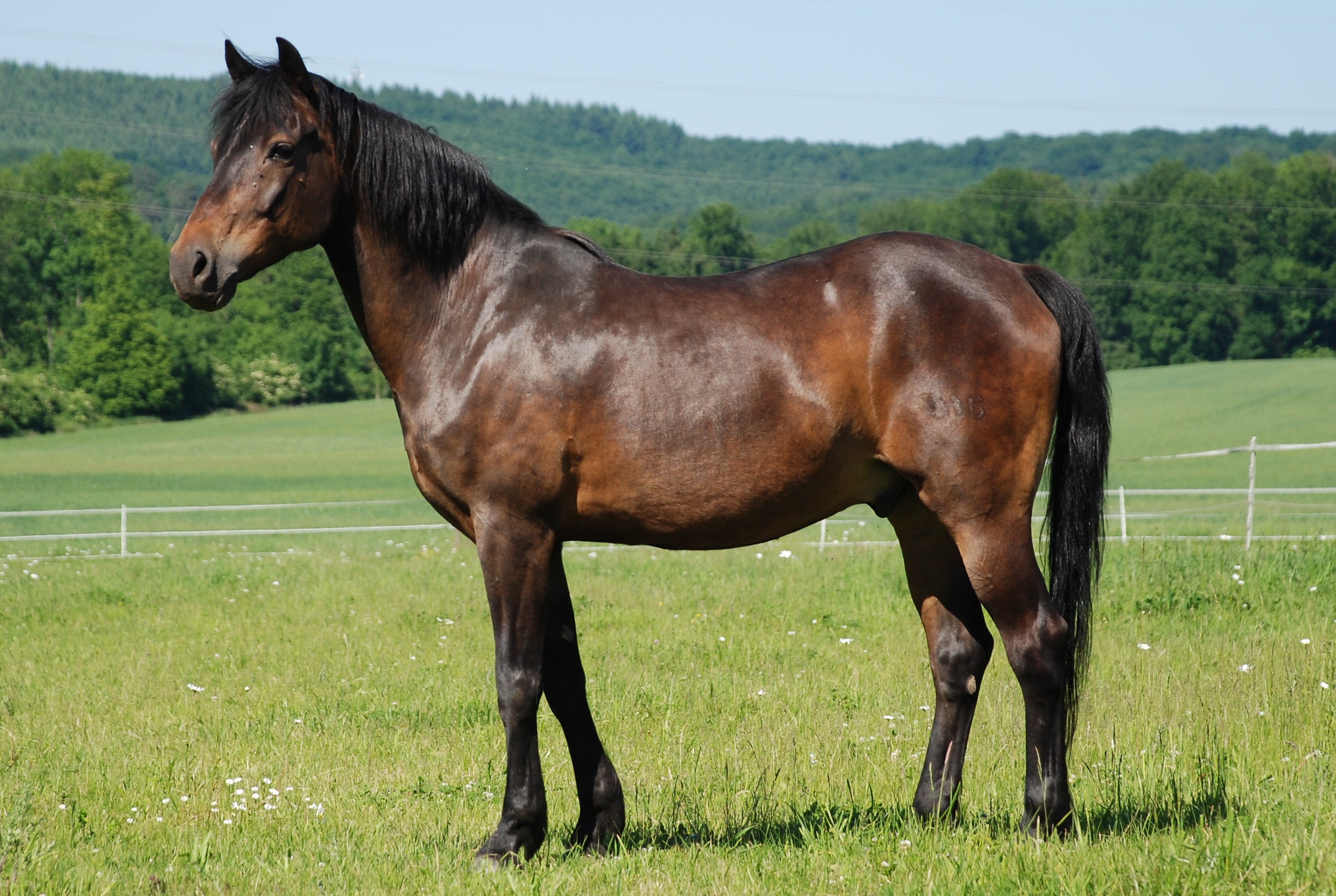
The Popular German Riding Pony in a Breed Portrait
The German Riding Pony is considered a true all-rounder, impressing with its athletic and elegant appearance, as well as its friendly, steady-nerved, and balanced character. This versatile horse breed, which originated in Germany, was specifically bred as a sport partner for children and teenagers and enjoys great popularity in equestrian sports. In the following article, you will learn everything important about the German Riding Pony, from its appearance and character to its history and origin.

Profile: German Riding Pony
| Origin | Germany |
| Main Breeding Area | Germany |
| Distribution | Throughout Europe |
| Bred since | 1965 |
| Life Expectancy | 20 - 25 years |
| Height | 138 to 148 cm |
| Weight | 300 - 450 kg |
| Colour | All coat colours |
| Type | Warmblood |
| Character | Intelligent, willing to perform, friendly, balanced, steady-nerved |
| Body |
Compact, athletic build; Small head, well-formed neck; |
| Suitable for | Leisure, jumping, sport, dressage, competition |
| Keeping and Care |
Uncomplicated keeping; Sufficient exercise and movement |
History and Origin of the German Riding Pony
Origin of the German Riding Pony
The roots of the German Riding Pony lie in Germany and date back to 1965. It is a relatively young horse breed, developed from the crossbreeding of various horse and pony breeds, including Welsh Ponies, Arabians, and English Thoroughbreds. The aim of the breeding was to create an ideal sport pony partner for children and teenagers.
Development of the Breed
The development of the German Riding Pony is characterized by a selective breeding program that emphasizes high intelligence, willingness to perform, and a friendly character as essential traits. It was particularly important to breed animals that could excel in both leisure riding and various competitive disciplines.
Breeding experts deliberately combined the best characteristics of different breeds to develop an athletic and versatile pony. This careful approach has resulted in the German Riding Pony being known today for its balance, courage, and steady nerves, making it a reliable partner in various equestrian disciplines.
The Appearance of the German Riding Pony
Physical Characteristics
The German Riding Pony is characterized by its elegant and athletic appearance. It has a medium-long, well-muscled back, a medium-long neck, and a sloping shoulder. The head is small and noble, with lively and expressive eyes, relatively small ears, and large, wide nostrils. A deep chest and a well-muscled croup complete the picture.
Coat Colours
The German Riding Pony comes in all coat colours, which contributes to its great versatility. Most commonly seen are bays, chestnuts, blacks, and greys.
This variety in coat colours makes the German Riding Pony particularly interesting and unique. Each colour has its own charm and allows the pony to shine in different nuances and shades. Greys, in particular, are popular among many enthusiasts, as they often appear more noble and striking.
German Riding Pony: Personality and Character
Intelligence and Trainability
The German Riding Pony impresses with its high intelligence and remarkable trainability. It quickly understands what is asked of it and shows great joy in learning. These qualities make it an ideal partner for beginners and advanced riders alike.
Willingness to Perform and Ambition
A German Riding Pony is known for its willingness to perform and its ambition. It always has plenty of energy, is motivated, and wants to be challenged both mentally and physically. This makes it an excellent sport partner.
Due to its natural ambitions, the German Riding Pony is excellently suited for various disciplines such as dressage, jumping, and eventing. Its commitment and endurance ensure that it excels in competitions and training situations alike.
Friendliness and Amenability
The German Riding Pony shows unwavering friendliness and amenability. It is people-oriented and values the company of its human partners. These qualities make it particularly attractive for children and teenagers.
Its amenable nature fosters a close relationship between rider and pony, making training and shared time even more enjoyable. This bond can significantly strengthen the trust and partnership between human and animal.
Balance and Composure
Despite its liveliness, the German Riding Pony maintains remarkable balance and composure. Even in stressful situations, it remains calm and shows great patience.
Its composure makes it a reliable companion, especially in unfamiliar situations. This quality is particularly valuable when the pony is used as a leisure or sport partner and needs to remain calm at various events.
Courage and Steady Nerves
The German Riding Pony is characterized by its courage and steady nerves. It displays a confident demeanor and is not easily rattled, which makes it a reliable partner.
These qualities are particularly important in eventing and show jumping, where unpredictable challenges can arise. Its courageous and steady-nerved nature allows the pony to master such situations with confidence and always maintain control.
Suitability of the German Riding Pony for Children
Why the German Riding Pony is suitable for children
The German Riding Pony is particularly well-suited for children because it has a friendly, intelligent, and balanced nature. Thanks to its height of 138 to 148 centimetres, it is also ideally sized for young riders. The pony breed was specifically bred as a sport partner for children and teenagers.
Benefits for Children
Interacting with a German Riding Pony offers children numerous benefits. The pony is characterized by its high trainability and friendly, amenable nature. Such qualities promote trust and bonding between child and horse, which increases safety in equestrian sports.
Another advantage for children is that the German Riding Pony, despite its lively and energetic nature, shows remarkable patience and composure. These qualities enable children to learn and improve riding skills in a safe and positive environment. The pony motivates young riders to remain mentally and physically active, thereby boosting their self-confidence and endurance.
Life Expectancy and Health of a German Riding Pony
Life Expectancy of a German Riding Pony
A healthy German Riding Pony can reach a life expectancy of 20 to 25 years. This relatively long lifespan is supported by species-appropriate housing and needs-based feeding.
Breed-Specific Diseases
Since the German Riding Pony is a relatively young horse breed, there are hardly any hereditary diseases. However, these ponies tend to develop obesity and associated diseases such as laminitis or EMS if fed incorrectly.
Breed-specific diseases in the German Riding Pony are closely linked to incorrect feeding. This pony breed is a good food converter and can thrive on little and sparse food. Overfeeding can quickly lead to diseases. Laminitis and EMS (Equine Metabolic Syndrome) are particularly common secondary diseases that can be caused by a diet too rich in energy. Therefore, feeding should always be adapted to the pony's activity level and performance.
Health Tips
To ensure the health of a German Riding Pony, it is important to observe a few points:
- Species-appropriate housing in an open stable or spacious box
- Regular exercise and pasture access
- Needs-based feeding with high-quality roughage
Knowing these tips will help you maintain your pony’s health and happiness in the long run.
The health of a German Riding Pony can be significantly promoted by certain measures. Species-appropriate housing is essential, meaning the pony gets enough space and movement, preferably in an open stable or a spacious box. Regular exercise and sufficient pasture access are also important to avoid obesity. Feeding should include high-quality roughage and be needs-based. Mineral feed can be supplemented as needed.
- Regular veterinary visits and vaccinations
- Hoof care and general hygiene
- Social interaction with other horses
German Riding Pony: Keeping and Feeding
Species-Appropriate Keeping
Keeping a German Riding Pony in a species-appropriate manner is relatively straightforward. It prefers to be kept in an open stable, where it can move around a lot in the fresh air. Alternatively, the pony can also be kept in a spacious box, as long as it gets several hours of pasture or paddock time daily. The company of other horses is important, as horses should not be kept alone.
Needs-Based Feeding
A German Riding Pony tends to gain weight easily, so needs-based feeding is crucial. The basis of the diet is high-quality roughage such as hay or haylage. The pony should receive at least 1.5 to 2 kilograms of roughage per 100 kilograms of body weight. Additionally, mineral feed, which contains all necessary minerals and vitamins, can be important.
Concentrated feed should be carefully weighed and usually serves only as a supplement to the roughage ration. Many German Riding Ponies do not require additional energy from concentrated feed, which is why one should always critically check whether the basic feed ration is already sufficient. Consultation with a veterinarian or a feed consultant is advisable to find the right balance.
Importance of Nutrition
Proper nutrition is essential for the health and willingness to perform of the German Riding Pony. Careful monitoring of food intake is necessary to avoid obesity and associated diseases. The basic feed ration should include sufficient high-quality roughage, supplemented with specific mineral feed as needed.
Severe obesity can lead to serious health problems such as laminitis or EMS. Therefore, feeding should always be adapted to the pony's activity level and needs. A balanced and needs-based diet thus contributes significantly to the quality of life and longevity of the German Riding Pony.

Gaits and Disciplines of a German Riding Pony
Basic Gaits
The German Riding Pony has three basic gaits: walk, trot, and canter. These are characterized by a great potential for movement. The walk is ground-covering and clear in rhythm, the trot is swinging and energetic, while the canter is uphill. All three gaits demonstrate the pony's elegance and dynamism, making it ideal for various riding disciplines.
Suitable Disciplines
The German Riding Pony is a true all-rounder and is particularly well-suited for children and teenagers as a sport pony. It excels in disciplines such as dressage, show jumping, and eventing. Due to its friendly, amenable, and steady-nerved nature, it is also a reliable partner in leisure riding.
In dressage, the German Riding Pony impresses with its harmonious movements and its ability to quickly learn lessons. In show jumping, it often shows great courage and skill in overcoming obstacles. Eventing is also an ideal discipline, as the pony can score points with its balance and steady nerves. All these qualities make the German Riding Pony an excellent companion in many sporting activities.
Costs and Price of the German Riding Pony
Factors Influencing the Price
The price of a German Riding Pony can vary greatly and depends on several factors, including:
- Age
- Training level
- Pedigree
- Health status
Assumption that a well-trained, healthy pony with an excellent pedigree is more expensive than one without these attributes.
Average Costs of a German Riding Pony
The price for a German Riding Pony usually ranges between 5,000 and 40,000 Euros. This broad price range underlines the diversity and different qualities within the breed.
It is a significant investment, and it is important to be clear about your exact needs and goals before buying a pony. Prices depend on the individual horse and the demands placed on the animal. A first-time purchase of a German Riding Pony should be well thought out, as ongoing maintenance costs must be considered in addition to the purchase price.
German Riding Pony: All about appearance, character, and origin
The German Riding Pony captivates with its elegant and athletic appearance, characterized by a well-muscled physique and a variety of coat colors. Its intelligent, friendly, and balanced character makes it particularly suitable for children and adolescents. The breed originated in Germany and was created from a targeted crossbreeding of various horse and pony breeds since 1965 to create a versatile sports partner. This combination of appearance, character, and origin makes the German Riding Pony an ideal all-rounder for sports and leisure.
Questions about the German Riding Pony
1. How much weight can a German Riding Pony carry?
A German Riding Pony can carry approximately 15 to 20 percent of its own body weight. As these ponies typically weigh between 300 and 400 kilograms, the maximum carrying capacity is between 45 and 80 kilograms. It is important to consider the rider's weight to ensure the pony's health and well-being.
2. Is the German Riding Pony suitable for beginners?
Yes, the German Riding Pony is well-suited for beginners due to its balanced character and willingness to learn. These ponies are friendly, patient, and easy to handle, making them ideal partners for novice riders and children. Their reliability and good nature help inexperienced riders feel confident.
3. What makes the German Riding Pony so special?
The German Riding Pony is characterized by its versatility, balanced character, and excellent suitability for equestrian sports. These ponies combine the elegance and temperament of thoroughbreds with the robustness and willingness to work of ponies. Their ability to excel in dressage, show jumping, and eventing makes them particularly attractive.
4. Which horses are called German Riding Ponies?
German Riding Ponies are a specially bred pony breed developed in Germany. These ponies combine characteristics of thoroughbreds, Arabians, and native pony breeds to create an elegant and high-performing sport pony. They are primarily used for competitive sports and as leisure horses.
5. Are German Riding Ponies thoroughbreds?
No, German Riding Ponies are not thoroughbreds, although they often have thoroughbred ancestry in their breeding lines. They are a mix of various pony breeds and thoroughbred lines to combine the best qualities of both worlds. The result is an elegant, athletic, and versatile pony.
6. When is one too heavy for a pony?
One is too heavy for a pony if the rider's weight exceeds 20 percent of the pony's body weight. For a German Riding Pony weighing approximately 300 to 400 kilograms, the rider should therefore not weigh more than 60 to 80 kilograms. A rider who is too heavy can strain the pony and cause health problems.
7. Are German Riding Ponies susceptible to diseases?
German Riding Ponies are generally robust and healthy animals. However, like all horses, they can be susceptible to certain diseases such as colic or hoof problems. Regular veterinary check-ups, a balanced diet, and good care help maintain their health.
8. How much space does a German Riding Pony need?
A German Riding Pony needs sufficient space to move freely and graze. Large pastures that provide enough exercise and fresh grass are ideal. In addition, a stable or shelter should be available to provide protection from bad weather and sufficient space for rest periods.
9. What colors can German Riding Ponies have?
German Riding Ponies can come in many different colors, including black, bay, gray, chestnut, and pinto. This variety of colors contributes to the attractiveness and popularity of this breed. Each color has its own beauty and makes each pony unique.
10. How old was the oldest German Riding Pony?
The exact age of the oldest German Riding Pony is not documented, but ponies can often reach a considerable age. There are reports of ponies living over 30 years if they are well cared for. Careful care and healthy living conditions contribute significantly to their longevity.
11. How long does a pony live?
Ponies can generally live between 25 and 35 years. With good care, a balanced diet, and regular veterinary attention, they can lead a healthy and long life. Their robust nature also contributes to their longevity.
12. Are ponies dangerous?
Ponies are generally not dangerous if they are well-behaved and treated with respect. However, like all horses, they can react unexpectedly if startled or mistreated. It is important to approach ponies with calmness and patience and to understand their body language.
13. What colors can horses not recognize?
Horses have dichromatic color vision, meaning they cannot distinguish colors like red and green as clearly as humans. They see the world more in shades of blue and yellow. Red appears more gray or brown to them, while green is perceived as a kind of yellow tone.
14. What does a German Riding Pony eat?
A German Riding Pony mainly eats hay, grass, and special horse feed mixes that contain all the necessary nutrients. In addition, fruits and vegetables such as apples and carrots can be fed as treats. It is important to ensure a balanced diet to support the pony's health and performance.
Sources:
- Commons: German Riding Pony
- Wikipedia: German Riding Pony
- News on the topic: German Riding Pony
- German Riding Pony Breeding Program
- Association of Pony and Small Horse Breeders Hanover
- Video German Riding Pony
Other horse breeds:
Editorial Guidelines of Horse Vitality Company
At Horse Vitality Company, we create every post according to strict quality standards, relying on reputable sources and scientific research. Our editors are proven experts in horse health and provide you with well-founded, trustworthy information.
Expertise and Quality Assurance
- Qualified Authors: Our editors have extensive expertise in horse health and animal care.
- Double Check: Every article is additionally reviewed by a second expert to ensure accuracy and relevance.
Sources and Transparency
- Reputable Sources: We only use trusted sources and scientific studies to substantiate the content.
- Disclosure: We disclose potential conflicts of interest and ensure transparency.
Reader-Friendliness and Actuality
- Reader-Friendly Preparation: Our content is continuously optimized to make it as understandable and accessible as possible.
- Actuality: We regularly review and update our articles as needed to ensure they are always up-to-date.
Interaction and Feedback
- Reader Orientation: Our goal is to provide you with initial guidance. For individual health or care questions, we recommend consulting a veterinarian or animal naturopath.
- Feedback Option: We invite our readers to provide feedback and ask questions. Your suggestions help us continuously improve our content and tailor it to your needs.
These guidelines ensure that the content of Horse Vitality Company always meets the highest standards of expertise, authority, and trustworthiness.


