

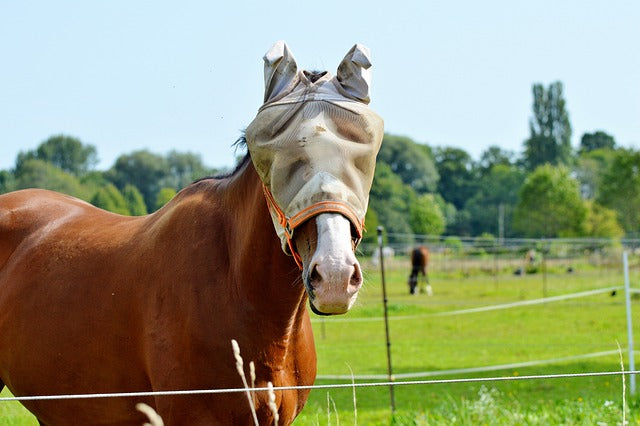
When mosquitoes, horseflies, and ticks take over again
Insect bites are a nuisance for horses and their owners. Especially in summer, small pests like mosquitoes and horseflies are out and about, making life difficult for your horse. Skin irritations, itching, and swelling are the most common symptoms. To help you know how to assist your horse quickly and effectively, we've compiled the most important information and tips. Learn how you can treat and prevent bites to avoid unnecessary suffering and serious health risks.

Symptoms of insect bites
Skin irritations and allergic reactions
Insect bites can lead to unpleasant skin irritations and allergic reactions in your horse. These typically manifest as itching, swelling, and restlessness. Particularly sensitive horses react more intensely to bites, with stronger swelling and intense scratching at the bite site, sometimes so severe that they injure themselves.
Local reactions vs. Systemic reactions
Local allergic reactions to insect bites are the most common form and appear as swollen and itchy areas. These reactions usually subside on their own and are mostly harmless.
In contrast, systemic reactions are more serious and occur in some horses. Symptoms can include changes in breathing, pustules, and fever. In such cases, it is advisable to consult a veterinarian immediately, as these reactions can be life-threatening.
Local reactions are generally limited to the bite site and include simple swelling and itching. Systemic reactions, however, affect the entire organism and pose a serious danger. Therefore, observe your horse closely and act quickly to avoid serious health problems.
Different insect bites and their effects
The effects of insect bites can vary greatly depending on the insect. For example, blackflies often cause summer eczema, while bites from keds can trigger painful rashes and panicked behavior. Ticks are particularly insidious, as they can transmit dangerous diseases like Lyme disease.
Blackflies can cause not only itching and pustules but also hair loss and open, festering wounds. In rare and extreme cases, these bites can lead to severe reactions such as toxic shock or heart and respiratory problems. With tick bites, you must be particularly vigilant, as they often go unnoticed and can lead to serious health problems weeks later. Here, the rule is: contact the veterinarian immediately if your horse shows colic-like symptoms or skin changes.

The effects of insect bites on horses
Pain and discomfort
Insect bites cause severe pain and discomfort in horses. Especially in summer, when the activity of mosquitoes and horseflies increases, your horses can suffer from constant bites. They become restless and constantly try to scratch themselves, which can worsen the situation. This can lead to serious impairments in your animal's well-being and requires careful and regular monitoring.
Skin lesions and hair loss
Itching and severe skin reactions like redness and swelling are common symptoms of insect bites in horses. Blackfly bites, in particular, often lead to serious skin lesions that can cause your horse great pain and discomfort. If your horse rubs itself due to the itching, bald patches and open, festering wounds often develop.
Skin lesions and hair loss are not only a visual problem but can also entail serious medical complications. Open wounds are more susceptible to infections and can lead to further health problems if not treated promptly and carefully. Hair loss is a clear sign that the horse is suffering from insect bites and requires quick treatment.
Systemic reactions and complications
In extreme cases, systemic reactions can occur that go far beyond skin irritations. Your horse may develop breathing difficulties or show symptoms such as fever and pustules. Such reactions are rare, but they require immediate action as they can lead to toxic shock or even circulatory damage and damage to the heart and respiratory system.
Systemic reactions are particularly dangerous and must be examined by a veterinarian immediately. An uncontrolled condition can mean severe health complications for your horse. Timely intervention can minimize the risk and ensure your horse's well-being. Always keep an eye on possible symptoms and react immediately to any signs of discomfort.
First aid for insect bites in horses
Cool and soothe the skin
To relieve your horse's pain and itching and treat the insect bite, you can use cool compresses. Cloths soaked in cold water or vinegar water are particularly effective. This simple measure helps to soothe the affected area and reduce itching. It can also help alleviate bumps and swelling associated with an insect bite in horses.
Treating an insect bite in a horse: Cleaning and caring for the bite site
It is important when treating insect bites that the bite sites are truly clean. Make sure there is no stinger or foreign body before proceeding with further care. Applying a cut onion to the bite site can also be helpful.
The bite sites should be thoroughly cleaned to prevent infection. Use a disinfectant to ensure the wound remains clean. This is especially important if the bite is under the saddle or girth, as there is a risk that the area could rub raw and become inflamed. Avoid riding until the bite has subsided. Bumps and edema on the belly after an insect bite are a common problem during the summer months.
Use of topical creams and ointments
For sore, abraded bites, creams and ointments can be applied to support the wound healing process and relieve pain. These products help to soothe irritated skin and promote healing. This is especially recommended if the horse reacts strongly to insect bites.
Be sure to choose an ointment that is suitable for horses and has anti-inflammatory and pain-relieving properties. Application should be regular to achieve optimal effect and support the skin in its healing process.
Prevent irritation and infections
Ensure your horse doesn't rub at the bite sites to prevent irritation and infections. If necessary, cover the affected areas with a bandage or prevent access by using an eczema rug.
Most difficulties and complications arise when the horse scratches or rubs the bite sites. This can lead to open wounds and infections. Therefore, avoid any form of additional irritation and ensure a calm and hygienic environment for your horse until the bites have fully subsided.
Mosquito bites in horses: Prevention is key
Use of fly sprays and repellents
An essential step in preventing insect bites in horses is the use of fly sprays and repellents. These sprays repel flies and mosquitoes by suppressing your horse's scent and making it unattractive to insects. Be sure to apply the spray after showering, when the horse is dry, and definitely avoid the mucous membranes.
A proven home remedy for insect bites in horses is the HVC Fly Spray. This natural product offers protection against mosquitoes, ticks, and horseflies while conditioning the coat. With soothing ingredients like aloe vera and glycerin, it moisturizes and has a cooling effect on your horse's skin.
The spray also contains neem oil, which is effective against pests, and eucalyptus oil, which has antibacterial properties. Citronella oil helps eliminate unpleasant odors and has a mild antiseptic effect, while peppermint oil relaxes muscles. Additionally, tea tree oil has anti-inflammatory properties and relieves itching. Shake well before use and spray generously onto the coat for optimal protection and care.
Protective gear: Fly masks and eczema rugs
Fly sheets and eczema rugs offer effective physical protection against insect bites. These rugs encase your horse's body with a net, preventing annoying insects from reaching the skin. Choose the right size to avoid rubbing. Make sure the rug fits properly and completely covers the horse.
Fly masks and eczema rugs are particularly important in summer when insect bites are more frequent. This protective gear not only prevents bites but also significantly reduces your horse's stress and restlessness. A well-fitting rug can greatly enhance your horse's comfort and well-being and prevent it from injuring itself through constant rubbing.
Good hygiene and regular care
A key measure to prevent insect bites is regular care of your horse. Regular brushing and cleaning remove dirt and parasites and keep the coat healthy. Hygiene plays an essential role in minimizing insect attacks.
Through regular care, you can also identify potential problems early on. Check your horse for signs of insect bites and pay particular attention to areas that may be infested with ticks. A clean environment and a well-groomed coat make your horse less attractive to insects and simultaneously improve its general health and well-being.
Most common insects: Mosquitoes, flies, and ticks
Mosquitoes and their role in itching from bites in horses
Mosquitoes often cause painful and itchy bites in horses. These small insects can cause great stress and restlessness in your horse due to the multitude of their bites. The bites lead to swelling and skin irritations, causing the horse to constantly rub itself. In particularly sensitive horses, this can even lead to infections.
Flies: From irritation to infection
Horseflies and keds are not only a source of itching but can also cause serious skin problems. Their bites are painful and often lead to rashes, edema, or pus-filled areas.
Keds are particularly persistent and cause nervous to panicked behavior in horses. The bites of these insects can become inflamed and pose a risk of infection. It is important to identify these insects early and take appropriate measures to protect your horse.
Ticks: The silent threat to horse health
Ticks are a silent threat and often difficult to detect. They embed themselves in your horse's coat and can transmit serious diseases like Lyme disease. These symptoms often appear only weeks after the bite, making diagnosis difficult.
Ticks not only cause skin irritations and changes but can also transmit life-threatening diseases. Therefore, it is essential to regularly check your horse for ticks and keep an eye on any bite sites and symptoms.

Complications and consequences of insect bites in horses
Anaphylaxis and toxic shock
A severe complication of an insect bite in horses is anaphylaxis, which can lead to toxic shock. This manifests as sudden circulatory and respiratory problems. If you notice your horse showing breathing difficulties, swelling, or unusual behavior after an insect bite, you should consult a veterinarian immediately. Prompt action can be life-saving here.
Skin infections and abscesses
Skin infections and abscesses are possible consequences of insect bites. Bacteria can enter through the open wound and cause inflammation. The affected area becomes increasingly painful and shows redness or swelling. In extreme cases, pus-filled areas can form, requiring professional treatment.
It is essential to keep your horse's bite sites clean to prevent infections. Use antiseptic solutions and watch for symptoms of infection such as swelling or pus. For persistent or worsening wounds, you should definitely consult a veterinarian to prevent serious complications.
Systemic diseases and long-term effects from insect bites in horses
Systemic diseases and long-term effects are also risks that can result from insect bites. Ticks, for example, transmit dangerous diseases like Lyme disease, which can cause serious long-term problems. Symptoms often appear weeks later and are then difficult to treat.
Some of the systemic diseases transmissible through insect bites can permanently harm your horse. Regular checks and preventive measures such as tick repellents are essential. Always make sure to check your horse for unusual symptoms such as fever, lameness, or changes in behavior to react promptly.
Conclusion
Insect bites in horses can lead to unpleasant symptoms such as skin irritations, itching, and restlessness, and often require adequate care and prevention. By using fly sprays and eczema rugs, and cooling or treating the affected areas with ointments, you can provide relief to your horse. It is also important to regularly check for ticks, as they can transmit dangerous diseases. Make sure to keep the bites clean and consult a veterinarian for more serious reactions or infections. This way, you can ensure your horse's well-being even during insect season.


