

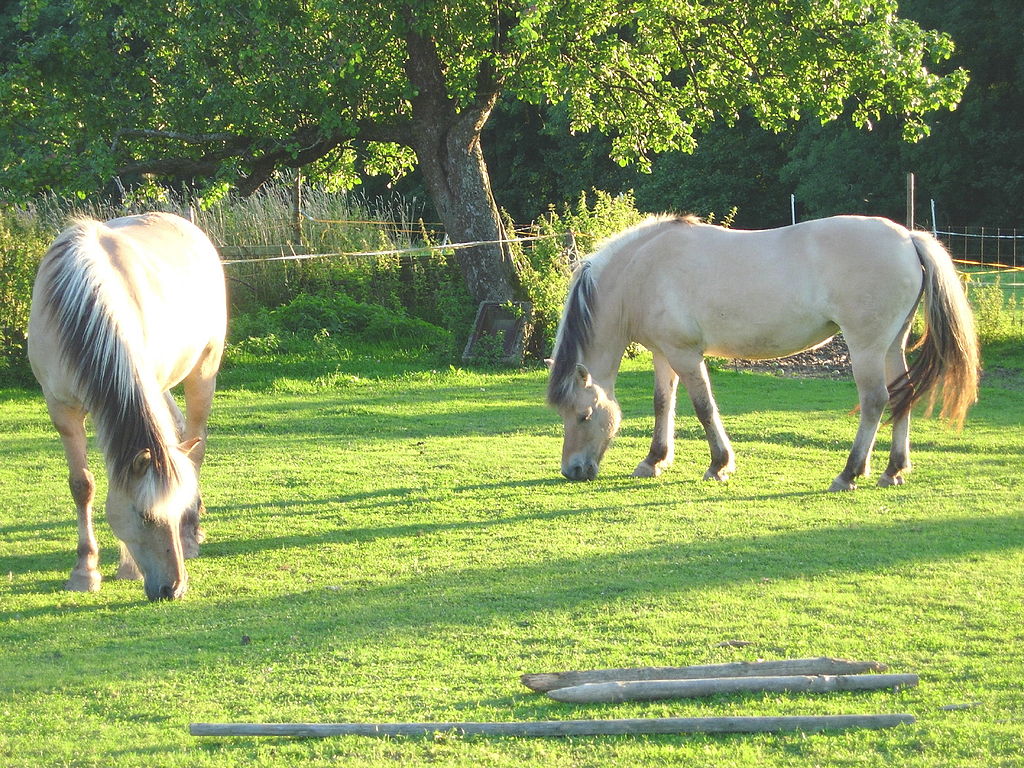
The Norwegian: The Robust Fjord Horse in Breed Portrait
The Norwegian Fjord Horse, often simply referred to as "Fjord Horse", impresses with its unique appearance and robust nature. This horse breed, which is one of the oldest in Europe, is not only known for its striking coloration and characteristic, two-toned upright mane, but also for its hardiness and versatility. In our comprehensive article, we illuminate all facets of the Fjord Horse – from its history and typical characteristics to specific challenges in keeping and feeding. An ideal companion through thick and thin that should not be missing in any stable.
Profile: Fjord Horse
| Origin | Norway |
| Main Breeding Area | Norway |
| Distribution | Worldwide, but mainly in Europe and North America |
| Life Expectancy | 25 to 30 years |
| Size | 135 to 150 cm |
| Weight | 400 - 500 kg |
| Color | Dun with black or black and white mane |
| Type | Small horse or pony, baroque build |
| Character | Calm, friendly, intelligent, willing to learn, stubborn |
| Body | A compact and sturdy build with muscular proportions. |
| Suitable for | Beginners and experienced riders, therapy horse, pleasure horse, working animal |
| Keeping and Care | Open stable keeping preferred, requires sufficient exercise and an adapted, fiber-rich diet. |
Physical Characteristics of the Norwegian Fjord Horse
Build and Size
The Norwegian Fjord Horse is characterized by a compact and sturdy build, often described as baroque. With a height at the withers between 135 and 150 centimeters, the Fjord Horse is considered a small horse or pony, which also makes it attractive for younger or smaller riders.
Coat Color and Pattern
A prominent feature of Fjord horses is their coat color, which occurs exclusively as dun, with a mane that usually appears in black or black and white. This striking appearance makes them unmistakable.
This uniform coloration in all Fjord horses results from strict breeding selection that prioritizes the preservation of these typical characteristics. The coloration not only serves beauty but was historically also advantageous for camouflage in Norway's natural, rocky landscape. Especially the mane with its dark central stripe, flanked by lighter hair, is a striking and beloved characteristic of the breed.
Head Shape and Features
The Fjord horse has a large, well-proportioned head with a straight to slightly convex nasal line and large nostrils, which favor it for breathing in colder climates. Small, finely set ears complete the harmonious appearance.
The specific head shape with generous nostrils not only facilitates breathing in cooler and wetter conditions but also gives the Fjord horse its characteristic, expressive face, which is particularly appreciated by horse lovers. These features are particularly advantageous when working in harsh environments, making the breed a robust and resilient partner.
Body Proportions and Musculature
The significantly muscular body proportions of the Norwegian Fjord horse, including an elastic back and strong shoulders, support its versatility in riding and driving disciplines. The muscular back and broad croup give the Fjord horse exceptional strength and endurance.
The pronounced musculature is not only aesthetically pleasing but also serves functional purposes that have helped Fjord horses over time to overcome difficult terrain and pull heavy loads. These strong physical characteristics are one reason why Fjord horses are so popular as working horses in agriculture and forestry, as well as in pleasure riding. Their compactness and powerful build make them reliable partners for a variety of tasks.

Temperament and Behavior
General Nature and Personality
The Norwegian Fjord Horse is known for its calm and friendly nature. This breed is often described as the "Buddha" among horses, as it is exceptionally tranquil and balanced. These qualities make them ideal companions for beginners and experienced riders alike.
Intelligence and Trainability
Norwegian Fjord horses are characterized by high intelligence and good trainability. They learn quickly and enjoy being involved, which facilitates training. Their abilities in various equestrian disciplines are highly valued by riders.
The intelligence of Fjord horses not only allows for versatile use in areas such as dressage and show jumping but also increases their performance in demanding tasks. Breeders and trainers appreciate their quick grasp and willingness to learn new tasks. This makes them ideal candidates for show sports, as well as for challenging leisure activities.
Energy Level and Activity Requirements
The energy level of Norwegian Fjord horses is moderate. They require an adequate amount of daily exercise to remain healthy and content. Their compactness and agility help them master even more demanding physical activities well.
Fjord horses are known for their stamina and can excel in extended trail rides or other long-lasting physical activities. Their moderate activity requirements make them a good choice for riders looking for an active but not overly demanding horse.
Socialization and Interaction with Humans
The Norwegian Fjord horse is excellent with people, making it an outstanding family horse. Its friendly and open nature helps it quickly form bonds with its owners and caregivers.
The ability of Fjord horses to socialize well also makes them ideal therapy horses. Their calm and balanced nature not only provides safety during riding lessons but also promotes the emotional well-being of the people they interact with. This is particularly valuable in therapeutic settings where horses are used to promote mental health.
Suitability and Use
Riding Style and Disciplines
The Norwegian Fjord horse stands out for its versatility in various riding disciplines. It is not only an excellent pleasure and trail riding horse but is also increasingly represented in dressage and show jumping. Thanks to its robust build and balanced temperament, it is suitable for demanding rides as well as for use in driving sports.
Rider's Age and Experience Level
The Norwegian Fjord horse is particularly suitable for beginners due to its calm and balanced character. It provides security and, thanks to its intuitive and careful nature, is also an excellent choice for young-at-heart seniors. The Fjord horse is patient and forgiving, making it an optimal teacher for novice riders.
The Fjord horse's characteristic calm and composure make it an ideal partner for riders of all ages. Even if it is considered an easy-to-handle beginner's horse, it should never be forgotten that its "pony qualities" can also bring a certain stubbornness and willfulness. Experienced riders, however, can achieve excellent results in handling these horses with clear instructions and consistency, successfully integrating them into discipline-oriented training.
Therapeutic Riding and Equine-Assisted Activities
In recent years, the Norwegian Fjord horse has been increasingly used in therapy. Its calm nature and sensitivity predispose it for use in therapeutic facilities, where it serves as emotional support for people with various disabilities.
The therapeutic qualities of the Norwegian Fjord horse are not only evident in emotional support. The horses are often used in programs for children and adults with physical, emotional, or social challenges, where they help to build trust and self-confidence. Their gentle yet assertive nature creates an ideal therapeutic environment in which patients can make progress in their personal development.
Trail Riding and Outdoor Activities
The Norwegian Fjord horse is a loyal companion for trail rides and other outdoor activities. Thanks to its hardiness and endurance, it can cover long distances with minimal provisions and enables unique experiences in nature.
Its strong physical constitution and natural sure-footedness make the Norwegian Fjord horse an ideal partner for extended rides in varied terrain. It is perfectly suited for long distances over diverse and sometimes difficult surfaces. Riders can rely on the intuition and abilities of the Fjord horse, which easily wades through rivers and climbs steep slopes, making it an excellent mount for adventure riders.
Care and Management
Housing and Living Conditions
The Norwegian Fjord horse prefers open stable keeping, which allows it to move freely and enjoy the weather. Adequate weather protection is important, although the breed is robust enough to withstand harsh weather conditions well. Avoid overcrowded conditions, as these can affect the horses' health and well-being.
Nutrition and Diet
Norwegian Fjord horses require a low-calorie diet that should consist mainly of hay and straw. Avoid excessive concentrate feed and sweet feed, as the horses are prone to metabolic diseases. A high-quality mineral feed can be added to meet nutritional requirements.
Due to their sensitivity to overfeeding and their predisposition to laminitis, it is essential to strictly control feed intake. A too high energy content, as often found in Central European pastures, can lead to serious health problems. Regular feed analyses and adapted feeding plans are therefore indispensable to prevent the development of metabolic disorders.
Exercise and Fitness
Regular exercise is essential for the Norwegian Fjord horse to ensure its physical health and mental stability. Training should consist of both riding and ground work to strengthen the muscles evenly and promote flexibility. Make sure to gradually increase the load, especially since the horses are considered late bloomers.
It should be noted that too early or too intensive loading can cause irreparable damage to the musculoskeletal system, as Norwegian Fjord horses are not fully load-bearing until about five years of age. A carefully coordinated training plan is crucial for maintaining the health of these enduring and robust horses.
Health Problems and Veterinary Care
While Norwegian Fjord horses generally have good health, they are susceptible to metabolic disorders such as laminitis. Regular veterinary check-ups and attentive monitoring of feed intake are necessary to prevent such problems. Also, pay attention to skin problems such as summer eczema, which can be attributed to allergic reactions.
In addition to regular health checks, it is advisable to place the horses on a low-calorie diet and equip them accordingly for protection against skin irritations. Close contact with the veterinarian is essential to be able to react early to signs of illness and to initiate the correct preventive measures. This can effectively prevent many of the typical health problems.
Health and Well-being of the Norwegian Fjord Horse
Common Health Problems
The Norwegian Fjord horse is generally known as robust, but due to its breed-specific characteristics, it tends to have specific health problems. Metabolic diseases such as laminitis are not uncommon and can be exacerbated by improper feeding. The breed also frequently suffers from skin problems, including summer eczema, which can be attributed to allergic reactions to insect bites.
Preventive Care and Maintenance
An adapted diet and regular exercise are crucial to maintain the health of the Norwegian Fjord horse. Regular hoof care and avoiding excessive body weight can help prevent laminitis. The use of eczema blankets and insect repellent can also help minimize skin problems.
Good preventive care for the Norwegian Fjord horse includes not only a balanced diet and regular physical activity but also observing behavioral changes that could indicate health problems. Regular veterinary check-ups help to detect and treat possible diseases early. Thus, prevention is not only a matter of care but also of attention and knowledge of the specific needs and susceptibilities of this horse breed.
Nutrition and Supplements
The diet of the Norwegian Fjord horse should be low in calories but rich in fiber to prevent metabolic disorders. Main components of the diet should be hay and straw, while concentrate feed should only be used in small amounts during high exertion. High-quality mineral feed can provide important nutrients that may be lacking in the basic diet.
Proper nutrition plays a central role in maintaining the health of the Norwegian Fjord Horse. Feeding too much energy can quickly lead to obesity and related diseases. It is crucial to consider the individual needs of each horse and adjust feeding accordingly, especially for less active horses. Supplements should be given after consulting a veterinarian to avoid over or under-supply.
Veterinary Care and Treatment Options
Regular veterinary examinations are crucial for the Norwegian Fjord Horse to ensure its general health and to detect problems early. Treatments for specific diseases such as laminitis may include dietary adjustments, medication, and special hoof care.
Professional veterinary care makes it possible to create customized treatment plans tailored specifically to the needs of each horse. Early diagnoses through regular check-ups can often significantly reduce the duration and intensity of treatment, thereby sustainably improving the horse's well-being. Adhering to vaccination and deworming schedules is also an important aspect of preventive veterinary medicine for this horse breed.

History and Origins of the Norwegian Fjord Horse
Ancient Roots and Development
The origins of the Norwegian Fjord Horse can be traced back to Celtic breeds and Viking horses. These horses were already adapted to the harsh climate of the British Isles, which helped them adapt ideally to the even harsher conditions in Norway.
Norwegian Heritage and Cultural Significance
The Norwegian Fjord Horse is deeply rooted in Scandinavian culture. Originally, these robust horses lived mainly on the windy west coast of Norway and became popular as working and riding horses throughout the country as the Vikings settled down.
In their role as working animals and loyal companions during the Viking Age, Fjord horses were indispensable for transport and fieldwork. Their endurance and adaptability to difficult environments made them valued horses not only in Norway but later also internationally. This heritage is an integral part of regional history and culture and contributes to Norway's national pride to this day.
Modern Breeding and Conservation Efforts
Modern breeding efforts aim to both preserve and develop the breed. A balance is sought between maintaining robust health and adapting to more athletic performance. Breeders pay close attention to the health and well-being of the animals.
The breeding of the Norwegian Fjord Horse is highly regulated to ensure genetic diversity and protect the breed from hereditary diseases. Modern challenges include avoiding inbreeding while promoting typical characteristics such as gentle temperament and physical robustness. Such efforts are crucial to the continued existence of this historically valuable horse breed.
Similar Breeds and Crossbreeding
Similarities exist between the Norwegian Fjord Horse and the Przewalski's horse from Mongolia, although no direct genetic relationship exists. Nevertheless, the morphology shows certain parallels that are of interest in research.
Crossbreeding is not at the center of efforts for the Norwegian Fjord Horse, as the focus is on the pure preservation and strengthening of the genetic characteristics of this ancient horse breed. Crossbreeding programs with other breeds are rare and often subject to strict control, as it is important to preserve the integrity of this culturally significant horse breed.
Purchase and Costs
Buying a Fjord Horse
The purchase of a Norwegian Fjord Horse requires careful consideration of one's own needs and the capacity of the horse. In addition, potential buyers should ensure that the horse is well-socialized and has received appropriate basic training to enable a positive start to their shared future.
Costs and Budget Considerations
Depending on their training level and pedigree, Norwegian Fjord Horses can cost between 3,000 and 10,000 Euros. Highly trained horses or those with proven success in equestrian sports tend to be in the higher price range.
The cost of a Norwegian Fjord Horse varies greatly depending on the animal's age, training, and health condition. In addition to the purchase price, potential buyers should also factor in the ongoing costs for upkeep, feed, veterinary care, and any training fees. A good piece of advice is to set aside a budget for emergency treatments, as unexpected hoof and metabolic diseases can arise.
Breeder Selection and Research
When choosing a breeder, interested parties should prefer demonstrably reputable breeding establishments that prioritize responsible breeding and the well-being of the horses. It is also advisable to review references and studbooks to ensure that the animals are healthy and well-cared for.
A careful selection process for breeders is essential to ensure that the horses grow up in optimal conditions. Good breeders are transparent about the living conditions and genetic health of their animals. It is recommended to visit several breeding farms and exchange experiences with other Fjord horse owners. A critical evaluation of breeding practices can protect against unpleasant surprises.
Registration and Pedigree
Registering a Norwegian Fjord Horse in a studbook is an important aspect that not only confirms the purity of the breed but also provides valuable information about its lineage and potential hereditary health risks.
The pedigree of a Norwegian Fjord Horse provides information about its genetic line and is essential for breeders who want to maintain or improve the breed's quality. Registered horses often have a higher value because their ancestry is verified and they often come from tested and recognized breeding lines. These documents are often required for equestrian sports and breeding.
Conclusion
The Norwegian Fjord Horse impresses with its robustness, versatility, and balanced temperament, making it an excellent leisure and therapy horse. With its characteristic coat color and striking mane, it is not only an optical highlight but also a reliable partner in various equestrian sports. This small horse combines historical roots with modern breeding and proves to be ideal for beginners and experienced riders alike. A truly lovable Nordic light with enormous potential.
The Norwegian Fjord Horse impresses with its robustness, versatility, and balanced temperament, making it an excellent leisure and therapy horse. With its characteristic coat color and striking mane, it is not only an optical highlight but also a reliable partner in various equestrian sports. This small horse combines historical roots with modern breeding and proves to be ideal for beginners and experienced riders alike. A truly lovable Nordic light with enormous potential.
Questions about Fjord Horses
1. Is a Fjord horse suitable for beginners?
Yes, the Norwegian Fjord horse is an excellent choice for beginners and children who want to enjoy riding. These friendly and good-natured animals are patient companions and are well-suited for recreational activities in the saddle.
2. What is the difference between a Norwegian and a Fjord horse?
The term "Norwegian" is an informal name for the Norwegian Fjord horse. The official breed name is "Norwegian Fjord horse." These horses originate from the western districts of Norway and are characterized by their robustness and friendly nature.
3. Are Fjord horses ponies or horses?
Fjord horses are more ponies than large horses. They have a compact build and a shoulder height between 135 and 150 centimeters. Despite their size, they are strong and can safely carry adults.
4. How many Fjord horses are there in the world?
Unfortunately, the population of the Norwegian Fjord horse is declining, and there are currently only about 5,500 specimens left in Norway. Breeding this unique breed therefore requires special attention and efforts for its survival.
5. What do Fjord horses eat?
The main diet of Fjord horses consists of hay and grass. In addition, they are often fed whole oats, as this strengthens their chewing muscles and promotes digestion. A balanced diet is important to maintain their health and vitality.
6. How big can a Fjord horse get?
A fully grown Fjord horse can reach a shoulder height of up to 150 centimeters and weigh between 400 and 500 kilograms. Despite their compact size, they are strongly and robustly built.
7. What is undesirable in Fjord horses?
White markings are undesirable in Fjord horses, but a small star on the forehead is tolerated in mares and geldings. The breeding associations attach importance to the animals conforming to the breed-typical characteristics and having a uniform appearance.
8. Is a Fjord horse a warmblood?
Yes, the Norwegian Fjord horse belongs to the warmblood group. It is characterized by its powerful build and balanced temperament. These characteristics make it a versatile partner for various riding and driving tasks.
9. Where does the Fjord horse come from?
The Norwegian Fjord horse originates from the western districts of Norway, also known as "Vestland." There, they have adapted to the rough and demanding environment over centuries and have become an integral part of Norwegian culture.
10. How much does a Fjord horse weigh?
A Fjord horse has an average weight between 400 and 500 kilograms, depending on the size, age, and condition of the individual animal. Despite their compact appearance, they are surprisingly strong and can carry larger loads.
11. Where do Fjord horses live?
Fjord horses are found not only in Norway but also in other countries such as Denmark, the Netherlands, and Germany. The breeding associations in these countries are also committed to preserving this unique breed and promoting the exchange of breeding animals and genetic material.
12. Are Norwegians and Fjord horses the same?
Yes, "Norwegian" is an informal term for the Norwegian Fjord horse. However, the official breed name is "Norwegian Fjord horse." These animals are closely linked to Norwegian culture and have a long tradition as working and leisure horses.
13. Is a Fjord horse suitable for beginners?
Yes, the Norwegian Fjord horse is an excellent choice for beginners and children who want to ride for pleasure. These friendly and good-natured animals are patient companions and are well-suited for recreational activities in the saddle.
14. When should a Fjord horse be broken in?
Fjord horses should not be broken in before the age of four or five to avoid hindering their physical and mental development. Solid basic training and education are important so that they can later serve as reliable leisure horses.
15. How long does a Fjord horse live?
Fjord horses have an above-average life expectancy and can often live between 30 and 35 years. They are robust animals and often remain active and healthy even in old age.
16. Can Fjord horses jump?
Yes, Fjord horses can certainly jump. Due to their natural abilities and agility, they are well-suited for jumping exercises up to a height of about 125 centimeters. With appropriate training, they can also achieve remarkable performances in this discipline.
17. Are Fjord horses wild horses?
Although Fjord horses are domesticated animals, they most resemble the original Asian wild horse, the Przewalski's horse, in their appearance and behavior. Their robust constitution and adaptability make them viable animals in various environments.
18. What colors are Fjord horses?
Yes, typical for the Norwegian Fjord horse is its dun color, which occurs in various shades. Most Fjord horses are brown dun with different light and dark color tones. Grey dun is a less common but also popular color variant.
19. Are Fjord horses stubborn?
Fjord horses are known for their reliability and balanced temperament, but they can also be headstrong. Like many ponies, they sometimes have a mind of their own and can appear stubborn. However, with consistent and empathetic training, good results can be achieved.
20. How much does a Fjord Pony cost?
A Fjord horse with a pedigree and appropriate training can cost between 5,000 and 10,000 Euros, depending on the animal's age, training level, and lineage. When buying a Fjord horse, it is important to choose reputable breeders and ensure a comprehensive health check to guarantee the animal's quality.
Sources:
- News on the topic: Norwegian Fjord Horse
- Fjord Horse Interest Group e.V. - Appearance
- Fjord Horse Interest Group (IGF) e.V
- Canadian Fjord Horse Association
- Bunzel-Drüke, Finck, Kämmer, Luick, Reisinger, Riecken, Riedl, Scharf & Zimball: "Wild pastures: Practical guide for year-round grazing in nature conservation and landscape development. Arbeitsgemeinschaft Biologischer Umweltschutz im Kreis Soest e. V. (ABU), Bad Sassendorf-Lohne, 2nd edition, 2009. ISBN 978-3-00-024385-1
Other horse breeds:
Editorial Guidelines of Horse Vitality Company
At Horse Vitality Company, we create every contribution according to strict quality standards, relying on reputable sources and scientific research. Our editors are proven experts in the field of equine health and provide you with well-founded, trustworthy information.
Expertise and Quality Assurance
- Qualified Authors: Our editors possess extensive expertise in equine health and animal care.
- Double-Check: Every article is additionally reviewed by a second expert to ensure accuracy and relevance.
Sources and Transparency
- Reputable Sources: We only use trusted sources and scientific studies to substantiate our content.
- Disclosure: We disclose potential conflicts of interest and ensure transparency.
Readability and Timeliness
- Reader-Friendly Preparation: Our content is continuously optimized to be as understandable and accessible as possible.
- Timeliness: We regularly review our articles and update them as needed to ensure they are always up-to-date.
Interaction and Feedback
- Reader-Oriented: Our goal is to provide you with initial guidance. For individual health or care questions, we recommend consulting a veterinarian or animal naturopath.
- Feedback Option: We invite our readers to provide feedback and ask questions. Your suggestions help us continuously improve our content and tailor it to your needs.
These guidelines ensure that the content of Horse Vitality Company always meets the highest standards of expertise, authority, and trustworthiness.


