

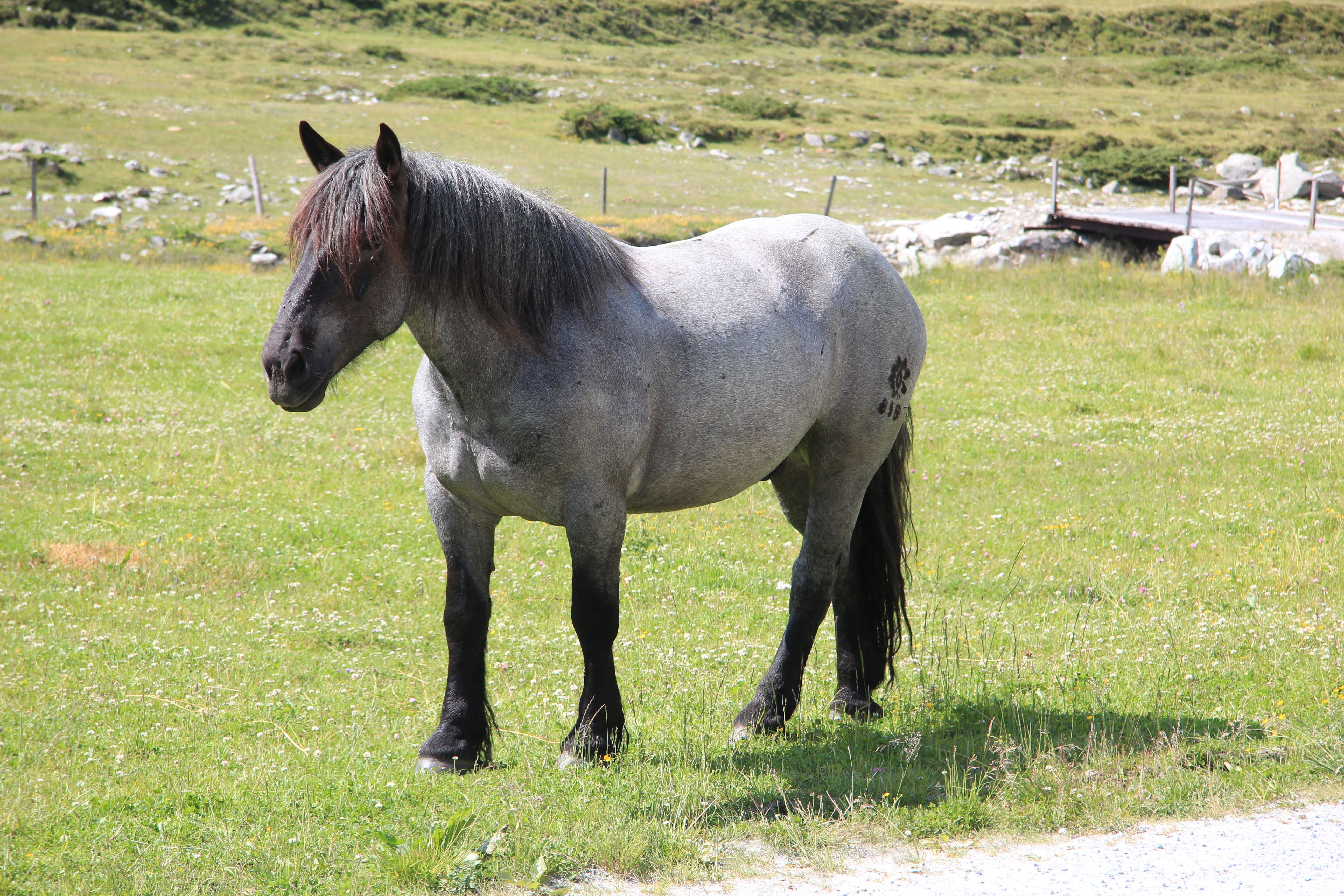
The Noriker: The Coldblood from the Mountains
The Noriker is an impressive cold-blooded horse breed, known for its imposing size, strength, and versatility. In this blog post, you will learn all the essential information about the Noriker, from its history and appearance to its character and keeping. This horse breed is characterized by its calmness, serenity, and balance, making it an ideal partner for leisure activities. Learn how to optimally feed your Noriker and which disciplines are particularly suitable to leverage its strengths.

Profile: German Riding Pony
| Origin | Austria |
| Main Breeding Area | Austria, Germany |
| Distribution | Austria, Germany |
| Bred Since | 16th century |
| Life Expectancy | 20 - 25 years |
| Height | 155 to 165 cm |
| Weight | 650 - 800 kg |
| Color | All coat colors |
| Type | Coldblood |
| Character | Calm, serene, intelligent, willing to work, sociable |
| Body |
Strong, muscular build; Expressive eyes, wide nostrils; |
| Suitable for | Leisure riding, driving sport, workhorse |
| Keeping and Care |
Uncomplicated keeping; Lean feeding; Sufficient turnout and exercise; |
History and Origin of the Noriker
The Ancient Roots of the Noriker
The Noriker is one of the oldest horse breeds in Europe. Its origins lie in the former Roman province of Noricum, which is now part of the Alpine region of Austria. In early history, the Noriker was an indispensable workhorse, used in agriculture and for transporting goods. Its impressive strength and endurance also made it a popular warhorse.
Breeding and Development
The targeted breeding of the Noriker began with the founding of the Salzburg stud farm Rief in 1565. Here, dedicated breeders and precise regulations were introduced to refine the breed. The influence of Neapolitan, English, and Spanish stallions is still visible today and shapes the elegant appearance of these horses. Since 1903, the Noriker has been registered in a studbook and bred in pure breeding, which ensures the high quality and homogeneity of the breed.
Initially, Noriker breeding was rather arbitrary and uncoordinated. However, this changed fundamentally with the founding of the Salzburg stud farm Rief and the opening of a studbook in 1565. Breeders began to cross in Italian, English, and Spanish stallions to refine the Noriker. This influence ensured that the Noriker became not only robust and strong but also more elegant. Since 1903, the breed has been managed in a studbook, ensuring pure breeding and high-quality standards.
Physical Characteristics of Noriker Horses
Build and Size
The Noriker is characterized by a compact, massive, and muscular build. With an average height at the withers of 158 to 165 cm, it belongs to the larger cold-blooded horse breeds. Its strong back, powerful hindquarters, and relatively short and wide neck give the Noriker its imposing appearance. This combination makes it suitable for both pulling heavy loads and leisurely rides.
Coat and Color
The Noriker's coat is relatively dense and long, making it ideal for various weather conditions. This horse breed is also known for its great color variety. You will find almost all coat colors, including bays, blacks, and chestnuts. Grey horses, however, are very rare and particularly striking among Norikers. There are also unusual patterns such as leopard and splash white markings.
Noriker coat colors range from bays and blacks to rare greys and striking patterns such as leopard and splash white markings. This variety makes them interesting not only for enthusiasts but also for shows and special occasions. The dense texture of the coat also provides additional protection against weather influences, ensuring your Noriker can cope even in harsher climates.
Musculature and Bone Structure
Norikers have strongly developed musculature and a robust bone structure, typical of cold-blooded horse breeds. Their strong legs and broad chest give them stability and strength, which are particularly advantageous for heavy work or pulling loads. These physical characteristics contribute to the versatility of the Noriker, allowing it to excel in demanding disciplines.
The muscular and well-developed body structure of the Noriker enables it to pull heavy loads and perform demanding tasks. Its strong legs and broad chest ensure not only excellent stability but also high endurance. These physiological features make it a reliable working and leisure partner, excelling in both heavy agricultural work and relaxed rides.
The Noriker: Temperament and Character
Calm and Serene
The Noriker is known for its calmness, serenity, and balance. It is not easily perturbed and keeps a cool head even in stressful situations. These qualities make it a confident partner you can rely on at all times.
Intelligent and Willing to Work
As a former workhorse, the Noriker brings an excellent work ethic. It is enduring, enjoys working, and is very eager to learn, making it a versatile partner.
Due to its past as a draft and workhorse in agriculture, the Noriker has a strong need to work and to please. It is always attentive and shows a remarkable willingness to learn and master new tasks, making it suitable for diverse applications.
Loyal and People-Oriented
A Noriker strives to build a deep bond with its owner and the people around it. It always wants to please and is always loyal.
The loyalty of the Noriker is evident in its consistently people-oriented behavior. Once trust is established, it becomes an unshakeable companion. This horse breed is known for working closely with its caregivers and maintaining a strong bond.
Sociable and Harmonious
The Noriker often shows pronounced social behavior towards other horses. It generally gets along well with other horses and can be a peaceful and harmonious stablemate.
Thanks to its sociable nature, the Noriker can easily be kept with other horses. This characteristic promotes harmonious integration into mixed herds and contributes to the general calm and balance in the stable.
Health and Longevity of Noriker Horses
Average Life Expectancy
A Noriker has an average life expectancy of 20 to 25 years. This impressive cold-blooded horse breed is known for its robustness, and with proper care and appropriate keeping, your Noriker can lead a long and healthy life.
Common Health Problems
Despite their robustness, Norikers are prone to certain breed-specific diseases. Common health problems include Equine Metabolic Syndrome (EMS), arthritis, Polysaccharide Storage Myopathy (PSSM), and mud fever. These conditions can significantly impair your horse's well-being and quality of life, which is why it is important to recognize symptoms early and act accordingly.
Equine Metabolic Syndrome (EMS) affects metabolism and can lead to severe obesity, muscle wastage, and laminitis, among other things. Arthritis is a degenerative joint disease that causes pain and lameness. Polysaccharide Storage Myopathy (PSSM) is a genetic muscle disease that leads to muscle wastage and pain. Mud fever is a skin condition characterized by redness, swelling, and itching in the pasterns.
Prevention and Care
Proper care and prevention are crucial to ensure your Noriker's health. A balanced diet, regular exercise, and avoiding obesity can prevent many health problems. Make sure your horse gets enough forage in the form of hay or haylage, and that concentrates are fed sparingly.
To prevent diseases like EMS and PSSM, it is important to monitor your Noriker's weight and ensure sufficient exercise. Regular vet visits and targeted mineral supplementation can help detect and treat health problems early. This way, you can ensure your Noriker lives a long and healthy life.
Care and Keeping of the Noriker
Accommodation and Environment
A Noriker is a robust horse breed that copes well with extreme weather conditions. It does not need a stable with a blanket, but prefers a mud-free open stable with a sufficiently large shelter. A Noriker should never be kept alone; contact with conspecifics is essential for its social compatibility. The Noriker feels most comfortable in a group and can live out its pronounced social behavior.
Nutrition and Feeding
Although Norikers used to require a lot of energy as workhorses, this is often not the case today. Therefore, you should adjust needs and feeding amounts precisely. Your base should be forage such as high-quality hay or haylage and water.
Concentrates and mineral feed should only be used if necessary, as Norikers quickly tend to become overweight, which in turn can lead to health problems such as Equine Metabolic Syndrome. Carefully balanced feeding prevents the development of breed-specific diseases and keeps your Noriker healthy.
Exercise and Activity
Daily exercise is essential for the Noriker's health. Sufficient activity helps prevent obesity and related health problems. The Noriker is excellently suited for relaxed rides or trail rides.
Due to its calm and serene temperament, you can use it in various ways, whether in driving sports, light dressage lessons, or even in forestry. It is important to offer your Noriker varied and regular exercise to promote both its physical and mental health.

Suitable Training and Disciplines for Norikers
Gaits and Movement
The Noriker possesses the three basic gaits: walk, trot, and canter. Despite its impressive size and mass, it is characterized by very sure-footed and powerful movements. It surprises with a harmonious and swinging gait, which makes it appear safe and elegant in all three gaits.
Suitable Disciplines
Due to its calm temperament and versatile applications, the Noriker is suitable for various disciplines. This powerful breed is still used particularly in forestry and driving sports. The Noriker is also an ideal partner in leisure activities, such as relaxed rides, trail rides, or light dressage lessons.
Its robust and strong conformation, as well as its serene nature, make the Noriker a perfect horse for working in nature, such as pulling logs. Due to its imposing appearance, it is often used for shows and parades. If you are looking for a horse that is versatile and at the same time calm and confident, the Noriker is an excellent choice. Thanks to its serenity, it also proves itself in the role of a leisure horse, perfectly suited for family outings and outdoor activities.
Training Tips and Advice
When training a Noriker, you should pay attention to its natural strengths and character traits. Give it enough time to learn new tasks, and focus on calm and enduring exercises. Make sure you offer it a balanced mix of physical and mental stimulation.
- Train consistently and calmly
- Incorporate versatile exercises
- At least 2 hours of exercise daily
- Use positive reinforcement and praise
If you gradually and regularly give your Noriker new challenges, you will have a loyal and willing partner by your side.
You can find more information about training methods on our page. It is important to invest patience and time in the training phase, as the Noriker benefits from a continuous and gentle approach. Through calm and consistent training, you prevent overexertion and simultaneously foster trust and bonding between you and your horse. Positive reinforcement and regular praise are crucial in this regard.
- Proceed patiently and empathetically
- Avoid stress and overexertion
- Provide regular, positive feedback
If you always keep an eye on your Noriker and consider its individual needs, you can find and implement the best training method for it.
Conclusion
The Noriker is an impressive horse breed from the Alpine region, characterized by its massive build, calm and serene nature, and versatility. With a rich history as a draft and working horse, the Noriker today demonstrates its strength in both forestry and leisure. If you are looking for a robust, people-oriented, and willing horse breed, the Noriker could be the ideal partner for you. Pay attention to species-appropriate housing and feeding to unleash its full potential.
Questions about the Noriker:
1. Are Noriker suitable for beginner riders?
Noriker are well-suited for beginner riders because they have a calm and good-natured temperament. Their patience and reliability make them ideal partners for inexperienced riders. Due to their robustness, they are also easy to care for and versatile.
2. Are Noriker good as riding horses?
Noriker are good as riding horses, especially for pleasure riding and therapeutic riding. They offer a comfortable, safe ride and have a friendly and cooperative nature. However, due to their stature, they are less suitable for competitive disciplines such as dressage and show jumping.
3. What weight can a rider have on a Noriker?
A Noriker can easily carry riders weighing up to 120 kg. These horses are powerfully built and have strong muscles that allow them to safely carry even heavier riders. It is important not to overload the horse to protect its health.
4. Is the Noriker a cold-blooded horse?
Yes, the Noriker belongs to the cold-blooded horses. This breed is characterized by its robust stature, strength, and calmness. Coldbloods have traditionally been bred for heavy work and draft tasks.
5. Are Noriker capable of galloping?
Noriker can gallop, although due to their massive build, they are not as fast and agile as light riding horses. Their gallop is calm and even, making them pleasant partners for relaxed rides. They are not suitable for high-speed races, but rather for comfortable riding.
6. Which horse breed is best for beginners?
For beginners, horses like Haflingers, Quarter Horses, or Icelandics are best suited. These breeds are known for their calm temperament, good nature, and reliability. A well-trained horse with a friendly disposition greatly facilitates getting started with riding.
7. Are Noriker late developers?
Noriker are considered late developers and often only reach their full physical maturity at five to six years of age. This slow development ensures robust health and a long lifespan. It is important to consider this when training and exercising the horses.
8. When should a Noriker be broken in?
Noriker should ideally be broken in at around three to four years of age. At this point, they are physically and mentally ready to begin training. Too early a load can lead to health problems, so patience is crucial.
9. Can you jump with a Noriker?
Although Noriker were mainly bred as draft and working horses, they can also perform light jumps. They are not suitable for high or technical jumps, but they can easily overcome smaller obstacles. Their calm temperament makes them reliable partners in this area as well.
10. Is an Icelandic horse able to carry 70 kg?
Yes, Icelandic horses can easily carry riders weighing 70 kg. These robust, small horses are known for their strength and endurance. They are surprisingly powerful for their size and can safely carry even heavier riders.
11. Are Noriker susceptible to diseases?
Noriker are generally robust and resilient horses that are not particularly susceptible to diseases. However, as with all horses, good care and regular veterinary attention are important to maintain their health. They are less prone to typical horse diseases than some other breeds.
12. How fast can a Noriker run?
Noriker are not known for their speed, but they can reach a moderate speed at trot and canter. Their main advantage lies in their endurance and strength, not in their speed. However, they are ideal for long, leisurely rides.
13. What feed is suitable for Noriker?
Noriker require a balanced diet consisting of hay, grass, and a small amount of concentrated feed. They should have access to fresh water and minerals to support their health. Due to their robustness and work capacity, they do not require special feeds.
14. Which horse breed is the largest in the world?
The largest horse breed in the world is the Shire Horse, which can reach a shoulder height of over 1.80 meters. These impressive horses are known for their size, strength, and calmness and were traditionally used for heavy agricultural work.
15. How much can a Noriker pull?
Noriker are strong draft horses and can easily pull loads of several tons. Their strength and endurance make them ideal for agricultural work and pulling heavy carts. The exact pulling power depends on the individual condition and training of the horse.
Sources:
- Commons: Noriker Horses
- Wikipedia: Noriker
- News on the topic: Noriker
- Breed description and photos of the Noriker
- Working Group of Noriker Breeders Austria
- Noriker at the Vienna Zoo
- Noriker Portrait on kaltblut-pferd.com
- Thomas Druml & Gertrud Grilz-Seger: The Noriker Horse, Volume II. Vehling, Graz 2012, ISBN 978-3-85333-222-1.
Other horse breeds:
Editorial Guidelines of the Horse Vitality Company
At Horse Vitality Company, we create every article according to strict quality standards and rely on reputable sources and scientific research. Our editors are proven experts in the field of equine health and provide you with well-founded, trustworthy information.
Expertise and Quality Assurance
- Qualified Authors: Our editors have extensive expertise in equine health and animal care.
- Double Check: Every article is additionally reviewed by a second expert to ensure accuracy and relevance.
Sources and Transparency
- Reputable Sources: We only use trustworthy sources and scientific studies to underpin the content.
- Disclosure: We disclose potential conflicts of interest and ensure transparency.
Reader-Friendliness and Actuality
- Reader-Friendly Preparation: Our content is continuously optimized to make it as understandable and accessible as possible.
- Actuality: We regularly review our articles and update them as needed to ensure they are always up-to-date.
Interaction and Feedback
- Reader Orientation: Our goal is to provide you with initial guidance. For individual health or care questions, we recommend consulting a veterinarian or animal naturopath.
- Feedback Option: We invite our readers to provide feedback and ask questions. Your suggestions help us continuously improve our content and tailor it to your needs.
These guidelines ensure that the content of the Horse Vitality Company always meets the highest standards of expertise, authority, and trustworthiness.


