

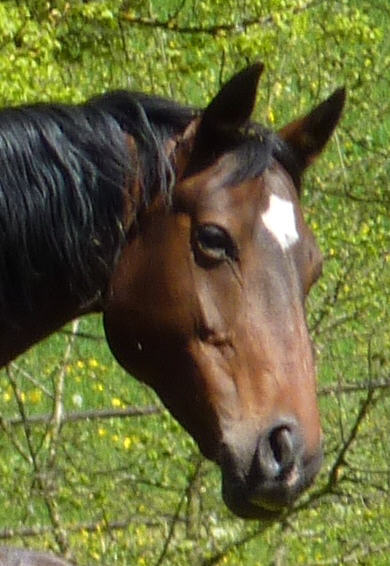
The Württemberger: Traditional Horse Breed from Southern Germany
Welcome to a journey of discovery about the fascinating Württemberger horses! This versatile and elegant horse breed originates from the historic federal state of Baden-Württemberg and impresses in both equestrian sports and leisure. Here you will learn everything about their impressive origin, elegant appearance, and balanced character of these wonderful animals. Immerse yourself in the world of the Württemberger and discover why they have a dedicated fan base and what special qualities make them so unique.

Profile: Württemberger Horse
| Origin | Germany |
| Main breeding area | Baden-Württemberg |
| Distribution | Throughout Europe |
| Bred since | 1895 |
| Life expectancy | 25 - 30 years |
| Height | 165 to 175 cm |
| Weight | 550 - 600 kg |
| Color | All basic colors, most commonly black, bay, and chestnut |
| Type | Warmblood |
| Character | Good-natured, balanced, willing to perform |
| Body |
Large, elegant, harmonious, modern |
| Suitable for | Dressage, show jumping, leisure and driving horse |
| Care and Keeping |
The Württemberger has no special requirements for care and keeping |
Origin of the Baden-Württemberger
Origin and History of the Breed
The origin of the Baden-Württemberger can be directly deduced from the name of the horse breed. Its breeding has a very long tradition and was bred from the beginning in Germany in the federal state of Baden-Württemberg. A significant place for breeding was the Marbach State Stud, which was founded as early as 1460 by Count Eberhard V. Originally, the horses were bred as heavy working horses, although there was no uniform breeding line at that time.
Development of the Breeding Line
A studbook and thus a uniform breeding line only came into existence in 1895. From this point on, the mares of the stud were crossed with Arabian stallions to improve their riding abilities. Other cold-blooded breeds such as Suffolk and Clydesdales were also crossbred, but only briefly, to avoid too strong a build.
After World War II, fewer working horses were needed, which led to the decision to further refine the Baden-Württemberger and strengthen its athletic characteristics. This led to the introduction of the stallion Julmond into breeding. The old, rather sturdy breeding line, also called Altwürttemberger, is continued as an independent breed, but is now endangered.
Description of the Appearance of Württemberger Horses
Build and Proportions
The physique of the Baden-Württemberger horse is a harmonious interplay of power and elegance, making it a modern sport horse. With a height of 165 to 175 cm, you often see stallions at the upper end of this scale. The head is dry and expressive with large eyes, complemented by a slightly arched, long neck. The back is strong and offers your saddle a stable seat, while the limbs are slender and well-muscled, guaranteeing high jumping power and a secure gait.
Coat Colors and Characteristics
The Baden-Württembergers show a variety of coat colors, with all basic colors being permitted. Most commonly, you will encounter bays, dark bays, and blacks. Greys and chestnuts are less common.
The coat of the Baden-Württembergers is not only diverse in coloration but also a reflection of their special breeding history. The striking bays and dark bays are a frequent sight, while greys and chestnuts are a rarer but fascinating exception. This variety in coat colors makes Württemberger horses not only eye-catching in the stable but also in competitions. The powerful bodies and elegant lines of these horses emphasize their athletic appearance, making them a favored riding and driving horse.
The Württemberger: Description of its Character
Willingness to Work and Temperament
The Baden-Württemberger is characterized by its high willingness to work and a balanced temperament. These horses are easy to motivate and follow their rider's instructions with remarkable precision. This makes them excellent partners in competitive sports, especially in dressage and show jumping. Their elegant appearance combined with their strength and stamina makes them coveted sport horses.
Dealing with People and Riders
In dealing with people and riders, Baden-Württembergers are good-natured and open. They are sensitive creatures that require safe and gentle handling. A patient and respectful rider will gain the trust of these horses and be able to fully exploit their athletic abilities.
The sensitive nature of the Baden-Württemberger means that rough riding errors are not well tolerated. Horses of this breed react to uncertainties and rough handling with nervousness and shyness. Therefore, they are less suitable for beginners. With a patient and experienced rider, however, these horses unfold their true class and are reliable and successful in numerous equestrian disciplines.
Special Characteristics of the Baden-Württemberger
Rideability and Athletic Abilities
A prominent feature of the Baden-Württemberger is its excellent rideability. These horses show a special harmony and balance under saddle, which makes them ideal partners for dressage and show jumping. Thanks to their high jumping ability and their light-footedness, they excel in these disciplines and often achieve remarkable success.
Suitability as a Leisure and Driving Horse
The versatility of the Baden-Württemberger makes it not only an ideal sport horse, but also a reliable leisure and driving horse. With their strong and elegant appearance as well as their calm and good-natured nature, they are perfect companions for experienced riders on leisurely rides and can also excel in harness.
Even though the sensitive nature of the Baden-Württemberger means that they must be guided precisely and benevolently, this characteristic is particularly positive in their willingness to learn and their trust in their owners. If you treat these noble animals with patience and respect, you will gain a partner who stands faithfully by your side and also cuts a good figure as a driving horse at events. Make sure you guide Württemberger horses with a gentle hand to strengthen their trust and avoid nervousness.

Famous Horses among the Baden-Württemberger
Successful Horses in Sport
Among the Baden-Württembergers, there are numerous horses that have achieved great success in sport. Particularly noteworthy are the mare Girasol, who won the Grand Prix freestyle with her rider Nadine Capellman in 2013, and the stallion Ulysse des Prés, who is one of the most successful show jumpers worldwide. Such sporting successes demonstrate the high performance and versatility of the Württemberger breed in equestrian sport.
Famous Horses in Breeding
The Baden-Württemberger also have some famous representatives in breeding. An outstanding example is the stallion Ulysse des Prés, who is considered almost decisive as a breeding stallion. His offspring are highly sought after and known for their athletic performance.
Ulysse des Prés has had a significant influence on the breeding of the Baden-Württemberger through his sporting successes and his outstanding offspring. Many breeders chose his line, which further improved the quality and reputation of this horse breed. As a reader looking for a reliable, elegant, and powerful sport horse, you might indeed come across offspring of this famous stallion, which enriches and confirms your choice even further.
Buying and Selling Baden-Württembergers
Stud Farms and Breeders
The search for a suitable Baden-Württemberger horse often begins at renowned stud farms and breeders. Here you will meet experienced professionals who have a long tradition in breeding this special warmblood breed. A well-known breeding area in Germany is Baden-Württemberg, where the animals are carefully raised and trained. Direct contact with a stud farm allows for sound advice and the opportunity to visit the parent animals and the horses' training environment.
Sales Platforms and Dealers
If you do not want to contact a stud farm directly, various sales platforms and dealers are available. Ehorses is one of the best-known platforms where both dealers and private individuals offer their horses for sale. Here you can browse a variety of options and find the right horse for you.
When buying through sales platforms and dealers, special caution is advised. Unknown sellers or platforms can entail higher risks regarding the quality and health of the horses. However, ehorses offers a wide selection and gives you access to various offers, often with detailed information and pictures of the animals. Nevertheless, be careful and take your time for a thorough check and possibly a viewing of the horse before making a decision.
Conclusion
If you are looking for a versatile and good-natured riding horse with a long breeding tradition, then the Baden-Württemberger is the right choice for you. This warm-blooded breed from Germany combines elegance and strength and impresses with both its attractive appearance and its balanced character. The horses show particular talent in dressage and show jumping, making them excellently suited for ambitious riders. However, their sensitivity requires patient and gentle handling so that you can exploit the full potential of your Württemberger.
Questions about the Württemberger Horse Breed
1. What is the life expectancy of Württemberger horses?
Württemberger horses can reach an age of about 25 to 30 years if they are well cared for and kept healthy. Their life expectancy depends on various factors such as nutrition, keeping, and regular veterinary care.
2. How much does a fully grown Württemberger horse weigh?
A fully grown Württemberger horse typically weighs between 500 and 700 kilograms. The exact weight depends on gender, size, and muscle mass.
3. Is it still possible to ride a 30-year-old horse?
A 30-year-old horse may still be ridden in some circumstances, but this depends heavily on its physical condition and health. Light, gentle activities are often possible, but intensive riding should be avoided.
4. Can horses live to be 40 years old?
Yes, in rare cases, horses can live up to 40 years. However, such an old age is unusual and requires excellent care and good genetic predispositions.
5. Which horse breed lives the longest?
Pony breeds such as Shetland Ponies and Welsh Ponies are known for their high life expectancy, which can often be 30 years or more. Their robustness and resilience contribute to their longevity.
6. How old would a 27-year-old horse be in human years?
A 27-year-old horse is approximately equivalent to an 81-year-old human. This conversion is based on comparing the lifespans and signs of aging in horses and humans.
7. When should a horse retire?
A horse should retire when it shows signs of aging or has health problems that make riding unsafe. This can vary depending on the horse and its individual health condition, typically between 20 and 25 years or earlier.
8. How old is the oldest horse in Germany?
The oldest known horse in Germany lived to be over 40 years old. However, such cases are rare and require special care and health management.
9. Which horse breed is considered particularly demanding?
Thoroughbreds, especially English Thoroughbreds, are considered particularly demanding in terms of keeping and training. They are often temperamental and require experienced riders and handlers.
10. Which horse breed is the rarest worldwide?
The rarest horse breed in the world is the Akhal-Teke from Turkmenistan. This breed is known for its unique, metallic-sheened coat and its endurance.
11. How long can an older horse still be ridden?
An older horse can often perform light work well into old age, as long as it is healthy and has no pain. Regular veterinary check-ups are important to assess the horse's resilience.
12. How much exercise does an older horse need?
Even older horses need regular exercise to stay fit and prevent muscle loss. Light activities such as walks and gentle training are ideal to maintain their mobility and quality of life.
13. What is the best age for a horse?
The best age for a horse is often between 7 and 14 years. During this time, they are usually fully trained, experienced, and physically in top form.
14. Should a horse be ridden daily?
Daily riding is not strictly necessary, but regular exercise is important. Riding three to four times a week, combined with breaks and other forms of exercise, ensures balanced training.
15. When should one stop riding a horse?
One should stop riding a horse if it has health problems, shows pain, or is no longer resilient due to age. Regular veterinary examinations help determine the right time.
Sources:
- Commons: Württemberger
- Wikipedia: Württemberger
- News on the topic: Württemberger horse
- Pferdezuchtverband Baden-Württemberg e.V. (Horse Breeding Association Baden-Württemberg)
- Marbach State Stud
- Breeding objective for the German Sport Horse, German Equestrian Federation, Warendorf
Further Horse Breeds:
Editorial Guidelines of Horse Vitality Company
At Horse Vitality Company, we create every post according to strict quality standards, relying on reputable sources and scientific research. Our editors are proven experts in the field of equine health and offer you well-founded, trustworthy information.
Expertise and Quality Assurance
- Qualified authors: Our editors have extensive specialist knowledge in equine health and animal care.
- Double-check: Every article is additionally reviewed by a second expert to ensure accuracy and relevance.
Sources and Transparency
- Reputable sources: We only use trustworthy sources and scientific studies to substantiate the content.
- Disclosure: We disclose potential conflicts of interest and ensure transparency.
Reader-friendliness and topicality
- Reader-friendly presentation: Our content is continuously optimized to make it as understandable and accessible as possible.
- Timeliness: We regularly review our articles and update them as needed to ensure they are always up-to-date.
Interaction and Feedback
- Reader-oriented: Our goal is to provide you with initial guidance. For individual health or care questions, we recommend consulting a veterinarian or animal naturopath.
- Feedback option: We invite our readers to provide feedback and ask questions. Your suggestions help us continuously improve our content and tailor it to your needs.
These guidelines ensure that the content of Horse Vitality Company always meets the highest standards of expertise, authority, and trustworthiness.


