

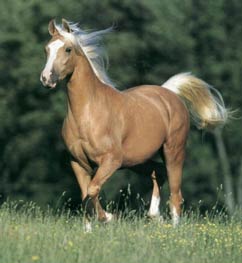
Palomino – The Golden Horse
Palominos are particularly striking with their special golden coat color. These majestic animals are not only known as a distinct horse breed in the USA but are also appreciated worldwide for their beauty and elegance. Their shiny golden coat and friendly nature make them a popular riding horse for beginners and children.
Palominos descend from various breeds and show significant differences in size. These noble horses have existed for centuries in Europe, America, and Asia and have a fascinating history. The name "Palomino" describes not only their golden coloring but also their unique appearance.
Although Palominos do not exhibit specific hereditary diseases, it is still important to ensure their health with regular checks by a veterinarian and farrier. With a life expectancy of approximately 30 years, Palominos are robust and reliable companions, also suitable for demanding riding tasks.
Profile: Palomino Horse
| Origin | Spain, USA |
| Main breeding area | USA |
| Distribution | Worldwide, especially in North America, Europe, and Australia. |
| Life Expectancy | 25 to 30 years |
| Size | 140 cm to over 170 cm |
| Weight | 400 - 600 kg |
| Color | A shiny gold with a silver mane and a silver tail. |
| Type | Warmblood, Thoroughbred cross, Half-blood – depending on the cross |
| Character | Very patient and balanced |
| Body | Harmonious build with well-proportioned limbs and an elegant appearance |
| Suitable for | Leisure riding, Western riding, Dressage, Jumping, and Shows |
| Care and Maintenance | They should also be regularly brushed and groomed to keep their shiny coat in the best condition. |

The History and Origin of the Palomino
Historical Significance and Royal Origins
Palomino horses have existed for centuries in Europe, America, and Asia and were highly valued by the Spanish. Queen Isabella of Bourbon owned several of these majestic animals. These royal connections led to Palominos also being referred to as Isabellas. The breeding of Palominos traces back to these royal origins, and their unique golden color has made them coveted and exclusive animals.
Worldwide Distribution of the Palomino
Palominos are recognized as a distinct horse breed in the USA, while in other countries they are mainly considered a color breed. These animals originated in various regions worldwide, including Europe, America, and Asia. Although the United States recognizes Palomino horses as a separate breed, they are also popular in other parts of the world and are considered a symbol of beauty and elegance.
The Definition of Palomino as a Horse Breed and Color Type
The term Palomino describes horses with golden coats and silver manes and tails. Due to their unique color gene and royal heritage, Palominos are of great importance both as a breed and as a color type. The careful breeding and selection of Palominos are based on their special coloring and friendly character, which makes them ideal riding horses for beginners and children.
The definition of Palomino as a breed and color type shows the complexity and beauty of these animals, which are valued and revered for both their appearance and their behavior.
Appearance of the Palomino
Definition of Color Characteristics and Genetics
The Palomino is characterized by its golden coat, which is lightened by the Cream gene, giving the mane and tail a white or silver tone. This extraordinary coloring is fascinating and makes the horse stand out. The USA recognizes the Palomino as a distinct breed, while in other countries it is considered a color breed.
Distinction from Other Color Types
Palominos are not to be confused with other golden horses, such as Isabellas, although they are often referred to as such. The special coloring and genetic properties of the Palomino clearly distinguish it from other color types. In the USA, they are recognized as an independent breed, while internationally they are considered a color breed.

Breeding and Bloodlines
Breeding Standards and Selection of Parent Animals
Palomino horses are carefully bred to meet specific standards. When selecting parent animals, it is important to pay attention to the correct bloodlines. For example, Quarter Horses and horses with a Stock or Western horse type should primarily be used for breeding, while cold-bloods or Shetland Ponies should be avoided. A balanced temperament and strong nerves are also crucial criteria in the selection of parent animals.
Diversity in Size and Types of Palominos
Palominos exhibit a diversity in size and types, attributable to their various ancestries. In the USA, four different types of Palominos appear, including the noble Pleasure type, the warmblood-like Riding type, the Stock type or "the Western horse", and the Saddlebred type. This diversity makes the breed suitable for both riding and driving purposes, as Palominos can be used in various disciplines.
The different types and sizes of Palominos offer a wide range of uses for riders. From elegant, Arabian-like Pleasure types to robust, stocky Western horses, the versatility of Palominos makes them popular horses in various riding disciplines.
Known Bloodlines and Their Characteristics
Some well-known Palomino bloodlines have evolved over centuries and produced specific characteristics. The crossing of Palomino mares and stallions can lead to different results, so knowledge of known bloodlines is of great importance in breeding practice. Some of these lines are characterized by particular size, temperament, or quality of movement.
The selection of parental bloodlines is crucial for breeding high-quality Palominos. By targeted pairing of animals with specific characteristics, breeders can strengthen desired traits in offspring and ensure the continuation of their lines.
Importance of the Cream Gene in Breeding Practice
The Cream gene, responsible for the characteristic golden coat color of Palominos, plays a crucial role in breeding practice. The inheritance of this gene influences the coloring of the offspring and is therefore an important aspect in the selection of parent animals. Breeders must consider the Cream gene to ensure that the desired coat color is preserved in Palomino offspring.
The genetic predisposition of Palominos is largely determined by the Cream gene, which produces the breed's unique coat color. Through the targeted selection of animals with this gene, breeders can preserve and further develop the characteristic appearance of Palominos.
Character of Palomino Horses
Behavioral Tendencies of Different Bloodlines
Palominos show different behavioral tendencies due to their diverse bloodlines. Quarter Horses, for example, are known for their balance and strong nerves, which means Palominos of this type are often considered very relaxed and obedient. When choosing a Palomino as a riding partner, it is therefore important to consider the specific character traits of the respective bloodline.
Suitability for Novice Riders and Children
Thanks to its friendly and calm character, the Palomino is ideally suited for beginners and children who want to learn to ride. Endowed with patience and intelligence, they offer a safe and pleasant riding experience. Their obedient nature makes them reliable partners for novice riders of all ages.
Most Palominos exhibit a friendly and good-natured character, which is particularly important for children. Their ability to learn easily and their patience make them perfect companions for learning to ride. Due to their calm nature, even inexperienced riders can quickly gain confidence and feel safe interacting with these majestic animals.
Uses and Suitability of Palominos
Use in Western Riding and Shows
Palominos are particularly popular in the USA for Western riding and shows. They are used in various Western riding disciplines and also prove to be impressive show horses. With their majestic appearance and friendly character, they captivate audiences and impress riders alike. Their calm and obedient nature makes them ideal partners for both beginners and experienced riders.
Palominos in Sport and Leisure
Palominos are found in a variety of sports and leisure activities. They are not only excellent for Western riding and shows, but also for jumping, dressage, and driving. Their versatile applicability and balanced temperament make them great leisure horses for novice riders and experienced riders alike.
Whether in the arena or on the trail, Palominos prove to be reliable partners who enjoy movement and working with people. Their diligent and rhythmic gait, paired with patience and intelligence, makes them versatile all-rounders in sport and leisure.
Dressage, Jumping, and Driving Suitability
With their harmonious build and rhythmic movements, Palominos are also suitable for dressage, jumping, and driving. Their abilities and potential in these disciplines make them coveted partners for riders seeking versatile challenges. Thanks to their friendly nature and adaptability, they prove to be eager to learn and high-performing in various sports.
Palominos can be successfully used in various sports and lead their riders to impressive achievements and successes. Their versatility and talent make them popular candidates for dressage, jumping, and driving, where they impress with their charm and quality.
Note: Palominos are characterized by their versatility and suitability for various sports and leisure activities, making them coveted partners in the equestrian world.
Care and Keeping
Care and Health of Palomino Horses
Housing Palominos requires ample opportunities for movement, whether through pasture grazing or the use of open stables. Consistent and loving care is essential to ensure the horses' well-being. Regular check-ups by the veterinarian and farrier are indispensable to detect and treat health problems early.
Nutrition and Feeding Principles
Palominos require a balanced diet tailored to factors such as age, training status, and housing conditions. Roughage and concentrated feed for support are essential, especially if the horses are physically active. Individual needs should be considered to ensure optimal provision.
Further information on nutrition and feeding principles can help you better understand your Palomino's needs.
Health Prevention and Life Expectancy
The health of Palominos is of great importance for their quality of life and longevity. Regular health checks, vaccinations, and deworming are important to detect and treat potential diseases early. The life expectancy of Palominos is approximately 30 years, with individual factors such as breed affiliation and care having an influence.
Famous Palomino Horses in Film and Television
Palomino horses have a long history of fame and popularity in film and television. One particularly famous Palomino was Bamboo Harvester, who appeared as Ed, the talking horse, in the US comedy series "Mister Ed". The stallion entertained audiences for six seasons and received two Patsy Awards, equivalent to the Oscars for animal performers, for his performance. Another well-known Palomino film horse was Trigger, who was seen alongside Roy Rogers in numerous Western films. These examples demonstrate the versatility and talent of Palomino horses in the entertainment industry.
The Palomino in the Horse Breed Society
The Palomino holds a special position in the horse breed society as a color breed or even a breed of its own. While the USA recognizes Palominos as a distinct horse breed, other countries mainly view them as a color breed. Breed associations like the Palomino Horse Association (PHA) and the Palomino Horse Breeders of America (PHBA) play an important role in the recognition and dissemination of these unique horses. Thanks to their unique color, friendly character, and versatility, Palominos are highly valued not only in the entertainment industry but also in the equestrian world.
Conclusion
After extensively examining the Palomino horse, we can conclude that this breed is truly a fascinating and versatile animal. With its golden coat and friendly character, the Palomino captivates not only horse lovers but also beginners and children. Thanks to its balanced temperament, strong nerves, patience, and intelligence, it is suitable for riding and driving as well as for leisure.
It is important to emphasize that the health of the Palomino horse should be the focus. Although no breed-specific hereditary diseases are known, and the animals are generally considered robust, it is essential to perform regular check-ups with the veterinarian and farrier. Only then can the life expectancy of approximately 30 years, which in some cases is even exceeded, be ensured.
The history of the Palomino horse is characterized by prominent representatives such as Bamboo Harvester or Trigger, who gained worldwide recognition through their film and television appearances and reflect the intelligence and balanced temperament of this breed.
Overall, we can say that the Palomino is a wonderful and fascinating creature with a unique appearance, convincing both as a riding and show horse and as a loyal companion in the leisure sector. Owning a Palomino horse means cultivating a special bond with an exceptional and versatile animal.
Questions about the Palomino Horse
1. Is a Palomino a separate horse breed?
Yes, Palominos are often referred to as "Isabellen" (Cremello or Perlino). In the USA, they are recognized as a separate breed, but in other countries, they are considered more of a color breed.
2. What is the difference between a Palomino and a Dun?
The main difference lies in the coat color. Palominos have a golden coat and a light mane and tail, while Duns have a light coat but dark manes and tails.
3. How does a Palomino come about?
Palominos occur when a chestnut horse carries a cream gene, which lightens its coat and makes it golden. If a chestnut has two cream genes, it becomes a cremello.
4. Is a Haflinger a Palomino?
No, Haflingers are not Palominos, although they share similar characteristics like a light coat and mane. Haflingers are a distinct horse breed known for their characteristic appearance and robust nature. Unlike Palominos, which are a specific color breed due to their golden coat and white long hair, Haflingers typically have a light brown coat with a characteristic light mane and tail.
5. How tall is a Palomino horse?
Palominos vary in size, but typically they range between 140 cm and 170 cm. These majestic horses can reach a variety of heights, with their stature and proportions often influenced by various factors such as bloodlines, individual growth, and environment.
6. What does a Palomino horse look like?
Palominos are known for their shiny, golden coat and white long hair, which gives them a distinctive and elegant appearance. Their radiant look makes them striking and sought-after horses. Although they are not recognized as a separate breed in many countries, but rather considered a color type, Palominos are popular and valued for their beauty and charm.
7. Are Palominos suitable for beginners?
Yes, generally Palominos are suitable for beginners due to their calm and balanced temperament. These horses are often patient and reliable, making them ideal companions for novice riders seeking safety and trust in their riding partner.
8. Where do Palominos come from?
Palominos have a long history and have been bred in various parts of the world for centuries. They were known and desired in Europe, America, and Asia. The origins of these fascinating horses date back a long time and reflect the diversity and beauty of horse breeding history.
9. What is the difference between a Palomino and a Haflinger?
Haflingers are usually chestnuts with light manes and tails, while Palomino is a specific color breed known for its golden coat. While Haflingers are valued for their robustness and reliability, Palominos are known for their unique appearance and gentle nature. Both breeds have their own characteristics that make them unique and valued horses.
Source:
- Commons: Palomino Horse
- Wikipedia: Palomino Horse
- News on the topic: Palomino Horse
- The Palomino Horse
- The Palomino Horse Association, founded 1936
- Palomino Horse Breeders of America, founded 1941
- Sidney David Markman: Horse in Greek Art (= Johns Hopkins University studies in Archaeology. 35). The Johns Hopkins Press, Baltimore MD 1943 (Reprint: Biblo & Tannen Booksellers & Publishers Incorporated, New York NY 1969, ISBN 0-8196-0247-7).
Other horse breeds:
- Arabian Horses
- Icelandic Horse
- Friesian Horse
- Andalusian Horse
- The Norwegian Fjord Horse
- Dülmen Wild Horse
Editorial Guidelines of Horse Vitality Company
At Horse Vitality Company, we create every post according to strict quality standards and rely on reputable sources and scientific research. Our editors are proven experts in horse health and offer you well-founded, trustworthy information.
Expertise and Quality Assurance
- Qualified Authors: Our editors have extensive expertise in horse health and animal care.
- Double Review: Each article is additionally reviewed by a second expert to ensure accuracy and relevance.
Sources and Transparency
- Reputable Sources: We only use trustworthy sources and scientific studies to substantiate the content.
- Disclosure: We disclose potential conflicts of interest and ensure transparency.
Reader-friendliness and topicality
- Reader-friendly presentation: Our content is continuously optimized to make it as understandable and accessible as possible.
- Up-to-date: We regularly review our articles and update them as needed to ensure they are always current.
Interaction and Feedback
- Reader-oriented: Our goal is to provide you with initial guidance. For individual health or care questions, we recommend consulting a veterinarian or animal naturopath.
- Feedback Option: We invite our readers to provide feedback and ask questions. Your suggestions help us continuously improve our content and tailor it to your needs.
These guidelines ensure that the content of the Horse Vitality Company consistently meets the highest standards of expertise, authority, and trustworthiness.


