

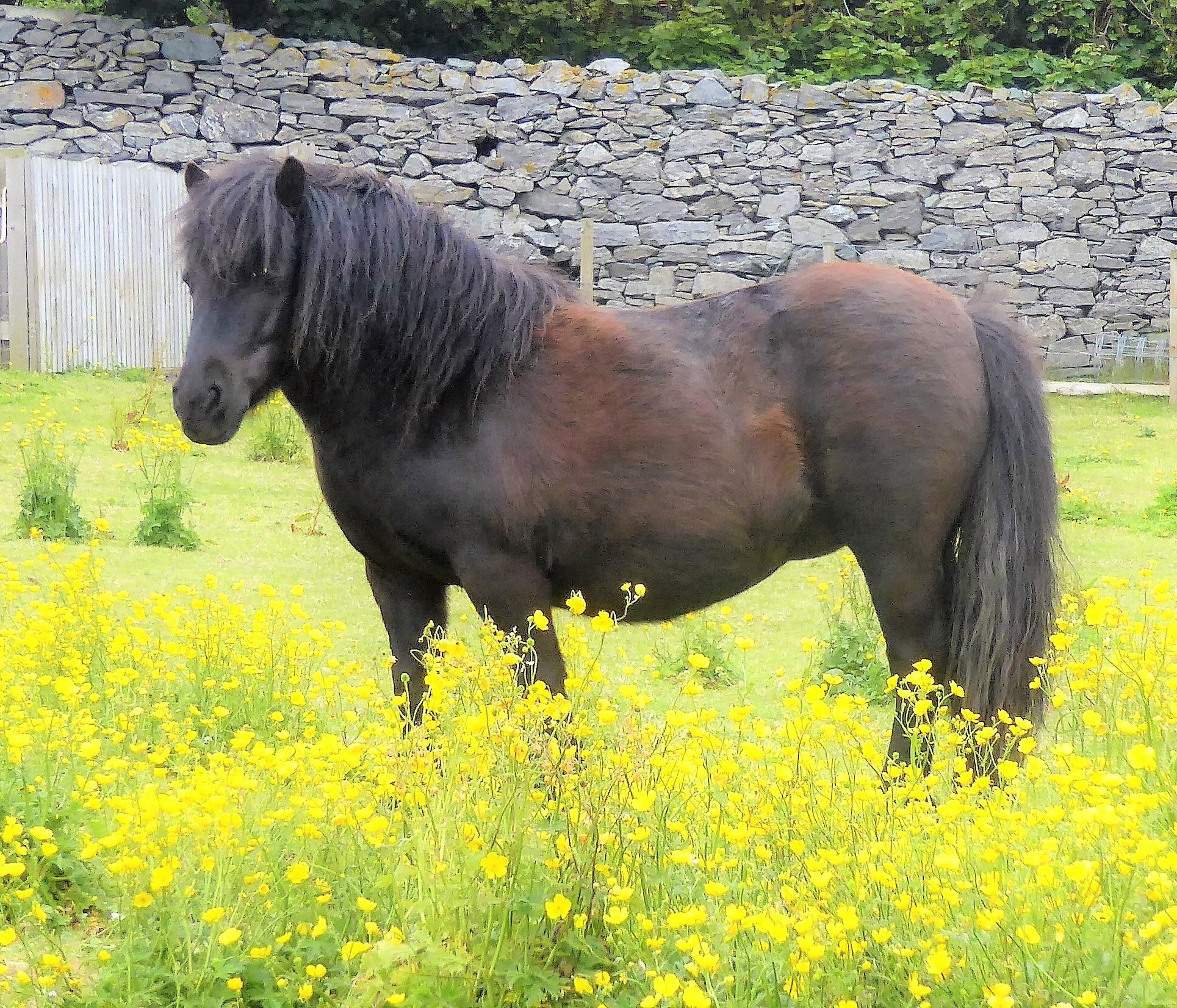
Small Pony, Big Heart: The Shetland Pony
The Shetland pony is one of the most popular and well-known pony breeds in the world. In this breed profile, you will get a comprehensive overview of this small, yet extremely robust and intelligent pony breed. Explore the exciting history and origin of the Shetland pony, learn more about its characteristic appearance and friendly nature, and discover how best to keep and feed your Shetland. With important information on typical diseases and practical care tips, you'll be well-equipped to optimally accompany this extraordinary pony companion.

Profile: Shetland Pony
| Origin | Scotland |
| Main Breeding Area | England |
| Distribution | Europe, USA |
| Bred since | 1890 |
| Lifespan | 25 - 30 years |
| Size | 87 to 107 cm |
| Weight | 150 - 200 kg |
| Color | All colors, except tiger spotted |
| Type | Pony |
| Character | Friendly, good-natured, intelligent, self-confident, lively |
| Body |
Compact, short build; Small head, broad forehead, large eyes; Dense mane, strong neck; |
| Suitable for | Leisure, carriage pony, therapy pony |
| Keeping and Care |
Uncomplicated keeping; Sufficient exercise and movement, open stable living with other horses; |
History of the Shetland Pony
Origins
The Shetland Pony, often affectionately called "Shetty," originated in the Shetland Islands, located about 200 kilometers north of Scotland. This region is known for its maritime climate with mild winters and cool summers. The first traces of ponies date back to the Stone Age and show that they were once brought to the islands by Scottish peoples, the Picts.
Development of the Breed
From the 19th century onwards, Shetland ponies gained popularity as working horses in agriculture and later as pit ponies in mining. Because of their small size and robustness, they were used for pulling carts. This use led to a price increase between 1840 and 1890, as demand rose sharply. However, attempts were also made to enlarge the ponies by crossing them with other breeds, which endangered the originality of this breed.
In 1870, Lord Londonderry founded several studs to promote the pure breeding of Shetland Ponies. His efforts were successful, as the ponies continued to be bred even after the dissolution of his studs in 1899. In addition, the "Shetland Pony Studbook Society" was founded in 1890 to secure and preserve the breed.
Characteristics of the Shetland Pony
Physical Appearance
The Shetland pony is characterized by its compact and robust build. It has a rectangular body with short and strong legs, a broad chest, and well-muscled hindquarters. The head is proportionate to the body with a broad forehead, small erect ears, and large, dark eyes that give the pony an alert and friendly appearance.
Coat and Color
The dense and long coat of the Shetland pony provides excellent protection against cold and wet weather. It has a dense mane and tail, as well as light feathering on the fetlocks. Basically, all coat colors exist in the Shetland pony, but tiger spots are not allowed.
The variety of coat and color variations makes the Shetland pony particularly attractive. A good coat is a sign of the pony's robustness and adaptability, especially in harsh climates. It is important that the coat is regularly cared for to avoid possible skin problems.
Size and Weight
A typical Shetland pony usually measures up to 107 cm at the withers. It weighs between 150 and 200 kilograms. Its small size makes it particularly popular with children and for use in circuses and driving.
Despite their small stature, Shetland ponies are very strong and can carry a weight of up to 50 to 60 kilograms. It is important to load the pony according to its size and age to avoid health problems. The physical strength and longevity of this pony breed are impressive and offer many uses for humans.
The Shetland Pony: Temperament and Intelligence
Friendly and Good-Natured Disposition
The Shetland pony is known for its friendly and good-natured disposition. It is often very people-oriented and enjoys contact with its owner. This characteristic makes the Shetland particularly attractive to children, as it is patient and loving in interaction. However, make sure that even a good-natured Shetland pony is sufficiently occupied and correctly educated to avoid undesirable behavior.
Intelligent and Eager to Learn
The Shetland pony is extremely intelligent and willing to work. It learns quickly and shows a high readiness to master new tasks. This pony needs both physical and mental challenges to be content and not get bored. If it is underchallenged, it may try to assert its own will, which is often misinterpreted as "stubborn" behavior.
Its intelligence makes the Shetland pony an ideal companion for liberty dressage, learning circus lessons and tricks, and in driving sports. A varied training program that takes into account the natural abilities of the Shetland is therefore crucial. Remember that a bored pony will find creative ways to interact with its surroundings, which can sometimes lead to undesirable behavior. Therefore, it is important to keep training exciting and age-appropriate.
Care and Keeping of a Shetland
Housing and Fencing
To keep your Shetland Pony in a species-appropriate way, suitable housing is crucial. Due to their original origin, Shetlands are very robust and feel particularly comfortable in an open stable with a sufficiently large shelter. The fencing should be deep enough so that they cannot slip underneath it. Make sure your pony always has access to dry ground and protection from adverse weather conditions.
Nutrition and Feeding
The nutrition of your Shetland Pony should be adapted to its original feeding habits. As good feed converters, they can thrive on sparse forage and tend to be overweight. The basis of their diet should be high-quality hay or haylage. Concentrates are usually not necessary and should only be given in small amounts.
To regulate feed intake and prevent obesity, special racks or feed nets can be helpful. Mineral feed should only be supplemented after consultation with your veterinarian or a feed advisor. These measures not only help you keep your Shetland Pony healthy but also promote its quality of life.
Health Problems and Veterinary Care
Like many horse breeds, Shetland Ponies can also be susceptible to certain health problems. Breed-specific diseases include laminitis, scratches, summer eczema, and Equine Metabolic Syndrome (EMS). Early detection and treatment are crucial for a good prognosis.
Regular veterinary check-ups are essential to detect and treat diseases early. Especially for laminitis and EMS, which are promoted by overfeeding and incorrect feeding, adapted feeding and care are important. Your veterinarian can help you create a suitable nutrition and care plan to ensure the long-term health of your pony.
Uses of the Shetland Pony
Riding and Driving
Due to its size and strength, the Shetland Pony often serves as an ideal beginner's horse for children. It is known for its friendliness and patience, which makes it an excellent partner for riding. In addition, the Shetland is also very popular in driving sports, as it is nimble and versatile. Its sure-footedness makes it ideal for pulling small carts.
Therapy and Assistance
Small horses like the Shetland Pony have been used for several years as everyday companions for blind people and in therapy. Their intelligence and long lifespan make them reliable partners. Particularly in assistance for the blind, they perform similar tasks to guide dogs and provide valuable support in daily life.
The Shetland Pony is also excellently suited for therapeutic purposes. Due to its friendly and good-natured disposition, it is often used in therapy for children and people with special needs. The interaction between human and animal promotes emotional and physical well-being and can contribute to a significant improvement in quality of life.
Shows and Competitions
The Shetland Pony frequently participates in shows and competitions. Despite its small size, it performs remarkably well in these events, whether in driving sports, liberty dressage, or circus lessons. The versatility and impressive character of the Shetland make it particularly successful in these disciplines.
In shows and competitions, Shetland Ponies shine with their sure-footed and nimble movements. They demonstrate their talent not only in riding and driving but also in artistic disciplines such as liberty dressage and the teaching of tricks and circus lessons. Their hardworking and intelligent character makes them popular participants in various competition formats and always generates admiration.

Breeding and Registration of Shetland Ponies
Shetland Pony Studbook Society
The Shetland Pony Studbook Society was founded in 1890 and has made it its mission to ensure and preserve the purity and quality of the Shetland Pony breed. This society contributes significantly to the promotion and preservation of this ancient pony breed and ensures that only purebred Shetlands are registered in the studbook. Through its work, it has preserved the characteristics and the typical charm of the Shetland Pony.
Breeding Goals and Challenges
The breeding goals for Shetland Ponies are clearly defined: to breed a robust, friendly, and versatile pony. However, the challenges include preserving the health and original characteristics of the breed.
A major goal in Shetland Pony breeding is to find the perfect balance between size and robustness. Since some breeders in the past tried to enlarge the ponies by crossing them with larger breeds, the challenge today is to restrain these influences and still breed a strong, but compact pony. Furthermore, it is important to minimize typical health challenges such as laminitis and scratches through targeted breeding measures and adapted keeping conditions. Only through careful selection of breeding animals and thorough knowledge of genetic predispositions can the long-desired balance be achieved.
Conclusion
The Shetland pony, also known as "Shetty," is a fascinating pony breed due to its history, physical characteristics, versatile uses, and good-natured traits. Whether as a working horse, child's companion, or even a guide pony – the Shetland pony impresses with its intelligence, robustness, and adaptability. With this comprehensive breed profile, you gain valuable insights into the care, keeping, and characteristic peculiarities of this unique pony, so you are better prepared to find a suitable Shetland and care for it accordingly.
Questions about the Shetland Pony
1. How much does a Shetland pony cost?
The cost of a Shetland pony varies depending on age, lineage, training, and health status. On average, the price can range from 500 to 3000 Euros. Particularly well-trained or award-winning ponies can be even more expensive.
2. How much weight can a Shetland pony carry?
A Shetland pony can generally carry about 20 percent of its own body weight. Since these ponies weigh an average of between 150 and 200 kg, they can carry a maximum of about 30 to 40 kg. This makes them particularly suitable for small children or light loads.
3. What should you know about Shetland ponies?
Shetland ponies are known for their robustness, intelligence, and strong personality. They are relatively small, usually between 90 and 107 cm tall, but very strong for their size. They are also easy to care for but need sufficient exercise and mental stimulation.
4. How much space does a Shetland pony need?
A Shetland pony needs sufficient space to move, ideally about 0.5 to 1 hectare of pasture per pony. In addition, they need a shelter or stable that provides protection from bad weather.
5. Can you keep Shetland ponies in the garden?
It is theoretically possible to keep a Shetland pony in the garden, but the garden should be sufficiently large and meet the pony's needs. This includes enough freedom of movement, pastureland, and a safe shelter. The neighbors should also agree to keeping animals.
6. How long does a Shetland pony live?
Shetland ponies have a relatively long lifespan and can often live to be 25 to 30 years old. With good care and keeping, lifespans of over 30 years are even possible.
7. Can Shetland ponies be ridden?
Yes, Shetland ponies can be ridden, but due to their small size and carrying capacity, they are primarily suitable for children. Adults should refrain from riding due to their weight.
8. Can you ride a Shetland pony at 80 kg?
With a weight of 80 kg, it is not recommended to ride a Shetland pony. These ponies are designed for significantly lighter riders and could experience health problems from such a weight.
9. Is it possible to ride a Shetland pony at 100 kg?
A Shetland pony is unable to carry a 100 kg rider, as this is far beyond its carrying capacity. It is important to respect the pony's health limits to avoid causing harm.
10. Are Shetland ponies often ill?
Shetland ponies are considered very robust and resilient. However, like all animals, they have certain health risks and require regular care and veterinary check-ups to stay healthy.
11. Are Shetland ponies suitable for riding?
Shetland ponies are well suited for riding by small children, as they are gentle and patient. However, they are not suitable for larger children and adults due to their low carrying capacity.
12. How do you keep a Shetland pony?
Keeping a Shetland pony requires sufficient space, a suitable pasture, and shelter from bad weather. They need regular care, sufficient exercise, and a balanced diet. Social contact with other ponies or animals is also important.
13. Which ponies are suitable for beginners?
For beginners, calm and well-trained ponies such as Welsh Ponies, Connemaras, or Haflingers are suitable. These breeds are known for their good nature and reliability.
14. What can you do with a Shetland pony?
You can do various activities with a Shetland pony, such as children's riding, carriage driving, groundwork, and small tricks. They are also well suited for use in animal-assisted therapy and as loving companions.
15. How big should a pasture for two ponies be?
For two ponies, the pasture area should be at least 1 to 2 hectares to ensure sufficient space and forage. Larger areas are ideal as they offer more freedom of movement and support natural foraging.
Sources:
- Commons: Shetland pony
- Wikipedia: Shetland pony
- News on the topic: Shetland Pony
- Swiss Shetland Pony Association (SSPV)
- Swiss Association for Ponies and Small Horses (SVPK) – Shetland Pony Section
- The Shetland Pony Stud-Book Society
- Interest Group of Shetland Pony Breeders in Germany
- Volkmar Hallensleben and Johannes Erich Flade: Shetlandponys in Deutschland – Geschichte, Hengstlinien, Gestüte. Verlag Sandra Asmussen, Gelting 2001, ISBN 3-935985-08-8.
More horse breeds:
Editorial Guidelines of Horse Vitality Company
At Horse Vitality Company, we create every contribution according to strict quality standards and rely on reputable sources as well as scientific research. Our editors are proven experts in the field of horse health and offer you well-founded, trustworthy information.
Expertise and Quality Assurance
- Qualified Authors: Our editors have extensive expertise in horse health and animal care.
- Double Check: Every article is additionally reviewed by a second expert to ensure accuracy and relevance.
Sources and Transparency
- Reputable Sources: We only use trustworthy sources and scientific studies to substantiate the content.
- Disclosure: We disclose potential conflicts of interest and ensure transparency.
Reader-Friendliness and Actuality
- Reader-Friendly Presentation: Our content is continuously optimized to make it as understandable and accessible as possible.
- Actuality: We regularly review our articles and update them as needed to ensure they are always up-to-date.
Interaction and Feedback
- Reader Orientation: Our goal is to provide you with initial guidance. For individual health or care questions, we recommend consulting a veterinarian or animal health practitioner.
- Feedback Option: We invite our readers to give feedback and ask questions. Your suggestions help us to continuously improve our content and adapt it to your needs.
These guidelines ensure that the content of Horse Vitality Company always meets the highest standards of expertise, authority, and trustworthiness.


