

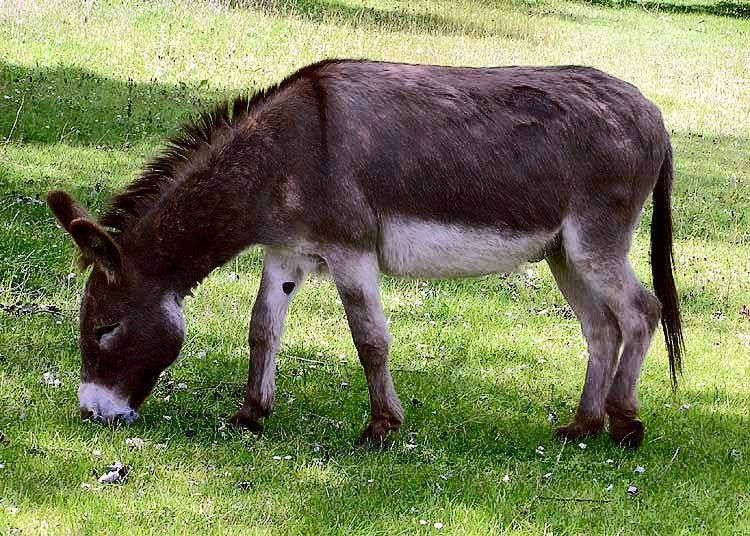

If you care for a donkey, you should be aware of the essential differences between the anatomy and physiology of donkeys and horses, especially concerning laminitis. These differences significantly influence your donkey's health and can be crucial for how diseases are treated. Often, an incorrect assessment of donkey hoof health leads to serious misjudgments and potentially even euthanasia. Learn more here about the specific needs and differences your donkey requires to stay healthy and vital.
Key findings:
- The anatomy of donkey hooves differs significantly from that of horses, particularly in terms of the shape and texture of the pedal bone and the structure of the hoof capsule.
- Donkeys have greater flexibility in their tendons and ligaments, which makes them more prone to problems like luxations and less frequently leads to club feet.
- When assessing laminitis, it must be considered that internal changes often occur earlier than external changes in the hoof capsule, which can lead to misjudgments in treatment.
Anatomy of Laminitis in Donkeys
The anatomy of laminitis in donkeys is multifaceted and shows some important differences from horses, which are essential for understanding and treating diseases. These differences concern not only the general requirements for husbandry and feeding, but also the specific structure of the hooves, which require targeted treatment.
Comparison of Hoof Structure between Donkey and Horse
The hoof structure of donkeys fundamentally differs from that of horses. Donkeys have a thicker toe wall and fewer laminae, which increases the stability of the hooves. While the hoof capsule appears similar in its overall shape, the internal anatomical structures, such as the shape and size ratio of the pedal bone, are significantly different.
Anatomical Features of the Pedal Bone in Donkeys
The donkey's pedal bone is characterized by its smaller size and less height compared to that of a horse. It lacks pedal bone wings, meaning the hoof cartilages receive less support. These deviations have a direct impact on the stability and load-bearing capacity of donkey hooves, especially during the development of laminitis.
An important point to note is that the donkey's pedal bone is slimmer and longer in proportion to its circumference. This means donkeys receive less support from surrounding structures and are particularly susceptible to diseases like laminitis. The less pronounced bone density in the pedal bone also makes them more vulnerable. Therefore, X-rays of donkey legs are crucial to correctly assess the impact of laminitis. Don't forget that it's important not to compare donkey hooves in isolation with horse hooves!
Differences in the Hoof Capsule
The hoof capsule of donkeys shows marked differences compared to horses. It is shaped differently in the heel area and has a thicker toe wall. This structure provides the donkey hoof with a stable foundation, which is crucial in laminitis.
Specifically, the stronger hoof walls and the thicker sole of the donkey's hoof make it more robust against external influences. While changes can occur in laminitis, they are often less obvious than in horses. It is important to know that even with significant internal changes, the external features of the hoof capsule can remain intact for a long time, making the detection and treatment of laminitis more complicated. Therefore, always pay attention to subtle signs and treat hoof problems immediately!
Physiological Differences
Flexibility of Tendons and Ligaments
Donkeys' tendons and ligaments are significantly more flexible than those of horses. This increased pliability can lead to more frequent problems such as luxations or subluxations. Therefore, when assessing your donkey's mobility, you should consider the different physiological characteristics compared to horses.
Effects on Mobility and Stability
The pronounced flexibility of tendons and ligaments has direct effects on the donkey's mobility and stability. They are less prone to club feet, but dropped fetlocks can occur more frequently, especially if the hooves are neglected.
These physiological characteristics can mean that your donkey is less stable in certain situations than a horse. In the case of hoof problems, such as laminitis, it is important to recognize that the stability-related differences can lead to a loss of mobility and the ability to bear weight perfectly. Make sure to trim your donkey's hooves regularly to avoid long-term problems.
Blood Circulation and Nutrient Supply to the Hoof
The blood circulation in donkeys' hooves also differs significantly from that of horses. Donkeys have a larger volume of blood vessels in their hooves, which leads to better nutrient supply.
Improved blood circulation allows essential nutrients to be distributed more efficiently to the hoof structures, which can positively influence health conditions. However, you should consider that despite these advantages, internal changes, especially with laminitis, often become visible only late. Regular checks and treatments are therefore crucial to ensure your donkey's long-term health.
Laminitis: Definition and Causes
What is Laminitis?
Laminitis is a painful hoof condition that can affect donkeys, horses, and other hooved animals. This condition involves inflammation of the laminae, which connect the pedal bone to the hoof capsule. This inflammation can take both acute and chronic forms, posing significant difficulties for the affected animal.
Causes of Laminitis in Donkeys
The causes of laminitis in donkeys are diverse and can include nutritional, hormonal, and mechanical factors. Often, unfavorable feeding, obesity, or a sudden change in diet trigger inflammation of the hoof laminae. Metabolism Booster can help reduce the risk of laminitis due to nutritional factors.
Specifically, feeding with rich grass or grains can lead to increased insulin sensitivity in donkeys, which negatively affects blood circulation in the hooves. Additionally, trauma-related factors, such as inadequate hoof care or ill-fitting shoeing, can promote the disease. It is important to recognize and treat these causes early to prevent serious secondary diseases.
Risk Factors and Predisposing Conditions
In donkeys, there are various risk factors for the development of laminitis. These include obesity, previous hoof problems, and a genetic predisposition.
Predisposing conditions include, in addition to obesity, frequent grazing in spring and summer, when the grass is particularly nutrient-rich. Stress, whether from changes in the herd or environment, also plays a crucial role. A comprehensive understanding of these risk factors enables you to better care for your donkeys and significantly reduce the risk of laminitis.
Clinical Presentation of Laminitis in Donkeys
Symptoms and Behavioral Changes
In donkeys, laminitis often manifests in subtle symptoms. They may show reluctance to move, and frequent posture changes are observed. These changes are often associated with slight pain expressions, which manifest as a cautious gait.
Impact of Laminitis on Quality of Life
Your donkey's quality of life can be significantly impaired by laminitis. A restriction of mobility often leads to behavioral changes: your donkey might become less active and even show signs of depression.
Persistent laminitis can make your donkey unable to move freely or participate in social interactions. It is important that you recognize the associated impairments early to take appropriate measures to manage the disease and thus maintain your donkey's quality of life.
Differential Diagnosis Compared to Horses
When diagnosing laminitis in donkeys, you should keep differential diagnoses in mind, which may differ from those in horses. Donkeys often show different symptoms and require special considerations, as their anatomy and physiology differ from those of horses.
The distinction between laminitis and other diseases is crucial. In the case of donkeys, problems such as subluxations or luxations are more commonly observed, which makes diagnosis more complex. For this, it is important to carefully compare X-rays and clinical findings to initiate preventive measures early and avoid false-positive diagnoses.
Diagnostic Procedures
X-ray Examinations and Their Significance
X-ray examinations are crucial for assessing internal changes in a donkey's pedal bone. They allow you to precisely analyze the structure and position of the pedal bone and thus better understand how diseases like laminitis can affect the hooves. Note that the bone density of the donkey's pedal bone differs considerably from that of a horse, requiring a precise assessment.
Assessing Hoof Condition
Assessing hoof condition involves a careful inspection of the hoof capsule, sole, and hoof walls. You should look for external changes such as lamellar separation or a "dished" toe wall. While these changes are often not immediately visible, they can indicate serious problems such as laminitis, which can also lead to internal damage.
A precise assessment of the hoof condition is essential to detect possible damage early and take appropriate measures. Pay particular attention to whether there are signs of horn changes or hoof abscesses. Often, the outer hoof capsule of a donkey remains relatively stable, while internal changes are barely perceptible. Regular hoof checks can help you identify potential problems early and thus ensure your donkey's health.
Role of Veterinarians and Farriers in Diagnostics
Veterinarians and farriers play an important role in diagnosing hoof problems. They bring the necessary expertise to assess and treat both external and internal health problems insightfully. Their expertise is crucial for making an informed decision about the best course of action for your donkey's treatment.
The collaboration of veterinarians and farriers is crucial to ensure the donkey's health. Veterinarians can identify internal changes in the pedal bone through their X-ray examinations, while farriers can provide valuable information about the condition of the hoof capsule. Together, they can develop a comprehensive treatment strategy that addresses both acute and chronic hoof problems. Regular care by both professionals is key to preventing serious hoof damage. Make sure that communication between you and these professionals is open and clear to achieve the best results for your donkey.
Treatment Options
Acute Treatment of Laminitis
In acute laminitis, quick action is required. It is important to immediately relieve the donkey from painful movement and examine the hooves. Immediate hoof trimming by a specialist can help improve pressure distribution and relieve pain. In addition, anti-inflammatory drugs and other suitable medications should be used to support and ensure your donkey's well-being.
Long-term Therapy Approaches and Management
Long-term therapy approaches include a combination of husbandry adjustments, dietary control, and regular hoof care. By carefully analyzing feeding and husbandry conditions, you can significantly reduce the risk of laminitis. In addition, it is crucial to regularly check and trim the hooves as needed to promote healthy hoof structure in the long term.
Furthermore, it is advisable to create an individual treatment plan tailored to your donkey's specific needs. The use of stable hoof shoes may be necessary in some circumstances to optimally support the hooves during healing. Regular veterinary check-ups and close cooperation with hoof care providers are indispensable to document progress and make adjustments.
Importance of Prevention and Regular Hoof Care
The prevention and regular hoof care are crucial to prevent laminitis. Many risk factors can be minimized through a balanced diet and adaptation of living conditions. Make sure your donkey always has access to fresh water and appropriate feed to avoid obesity and related health problems.
Regular hoof care is also of great importance. You should not only check the hooves regularly but also consult a farrier to ensure optimal hoof health. A well-maintained hoof prevents inflammation and injuries and significantly increases your donkey's quality of life. Remember that changes in foot structure can often indicate internal problems, which is why regular checks are beneficial.
Conclusion
Laminitis in donkeys is a serious issue that requires special attention. It is crucial to understand the essential differences between donkey and horse hooves to protect your donkey's health. Donkeys have a unique anatomy that affects not only their hooves but also associated structures. These differences influence how laminitis progresses in donkeys and how it should be treated.
An important point is that the flexibility of tendons and ligaments in donkeys is higher than in horses. This can lead to more frequent problems like luxations, which must be considered in hoof care. The hoof horn quality is also different; donkeys have thicker toe walls, which makes them somewhat more stable. Nevertheless, these differences mean that internal changes in donkeys are often harder to detect and can quickly lead to serious problems.
These are common questions we receive about laminitis in donkeys:
1. How is laminitis in a donkey treated?
Treating laminitis in donkeys requires a comprehensive strategy that includes both medical and nutritional approaches. First, a veterinarian should be consulted to determine the severity of the condition. Typically, a combination of hoof relief, cooling the hooves, pain medication, and possibly homeopathic remedies is recommended. Additionally, careful adjustment of the diet is important to avoid sugar and starch-containing feed components, while favoring fiber-rich and high-quality hay.
2. What is laminitis in donkeys?
Laminitis in donkeys is an inflammatory disease of the sensitive laminae of the hoof, which can lead to damage of the connection between the hoof wall and the coffin bone. This condition can be painful and result in lameness and difficulty walking. Laminitis is often triggered by overfeeding, especially with sugary feed, and metabolic disorders.
3. Are donkeys susceptible to laminitis?
Yes, donkeys are susceptible to laminitis, especially if they are overfed or experience sudden dietary changes. Obesity, high sugar content in feed, and lack of exercise are risk factors. Donkeys have a similar susceptibility to horses, particularly if their diet is not well-controlled.
4. What feed causes laminitis?
Feed rich in sugar and starch can trigger laminitis in donkeys. This includes fresh grass, concentrated feed, grains, and molasses-containing feedstuffs. Especially in spring, when grass has a high fructan content, feeding should be adjusted. It is important to monitor the sugar content in the feed to minimize the risk of laminitis.
5. Which breeds are prone to laminitis?
While many donkey breeds can develop laminitis, some breeds are more susceptible than others. Especially overweight donkeys, such as mini donkeys or certain breeding lines, have a higher risk of developing laminitis. Donkeys already suffering from other metabolic diseases are also more at risk, which is why careful feeding and care are important.
6. Is laminitis curable?
Laminitis can be treated, but a complete cure depends on the severity of the disease and how quickly treatment is initiated. With early detection and appropriate measures, it is possible to alleviate symptoms and support the healing process. However, the destruction of the sensitive laminae cannot always be fully reversed.
7. How long does it take for laminitis to heal?
The healing time for laminitis varies greatly and depends on the severity of the condition and the donkey's response to treatment. Generally, the healing process can take several months to a year, as the sensitive laminae need time to regenerate. Regular check-ups by the veterinarian are important to monitor progress and adjust treatment if necessary.
8. How can I prevent laminitis in a donkey?
To prevent laminitis in donkeys, a balanced diet is crucial. Be sure to control the sugar content in the feed and avoid overfeeding with concentrated feed or fresh grass. Regular exercise and appropriate hoof care are also important. In addition, you should avoid sudden dietary changes and gradually accustom the animals to new types of feed. Regular monitoring of weight and general health by the veterinarian can help to identify risk factors early and take action.
Sources:
- List of donkey breeds
- News on the topic: Laminitis in donkeys
- Stine Rossel et al.: Domestication of the donkey: Timing, processes, and indicators. In: Proceedings of National Academy of Sciences of the USA. Volume 105 (10), March 2008, pp. 3715–3720. doi:10.1073/pnas.0709692105 (Press release ( of March 27, 2009, in the Internet Archive))
Editorial Guidelines of Horse Vitality Company
At Horse Vitality Company, we create every post according to strict quality standards, relying on reputable sources and scientific research. Our editors are proven experts in the field of equine health and provide you with well-founded, trustworthy information.
Expertise and Quality Assurance
- Qualified Authors: Our editors possess extensive expertise in equine health and animal care.
- Double-Check: Every article is additionally reviewed by a second expert to ensure accuracy and relevance.
Sources and Transparency
- Reputable Sources: We only use trustworthy sources and scientific studies to substantiate our content.
- Disclosure: We disclose potential conflicts of interest and ensure transparency.
Reader-Friendliness and Actuality
- Reader-Friendly Preparation: Our content is continuously optimized to make it as understandable and accessible as possible.
- Actuality: We regularly review our articles and update them as needed to ensure they are always up-to-date.
Interaction and Feedback
- Reader-Oriented: Our goal is to provide you with initial guidance. For individual health or care questions, we recommend consulting a veterinarian or animal naturopath.
- Feedback Option: We invite our readers to provide feedback and ask questions. Your suggestions help us continuously improve our content and tailor it to your needs.
These guidelines ensure that the content of Horse Vitality Company always meets the highest standards of expertise, authority, and trustworthiness.


